Ep.24 - NHL Goaltender Discovers Coin Collecting - Collin Delia #podcast #numismatics #rarecoins
Hey folks, welcome back to the Cabbage Coins podcast. I know I've taken a little bit of a break. I took about a two week hiatus. I was over in lovely Italia or Italy. I really appreciate all the comments on the videos I posted while I was over there.
Tony Gryckiewicz:Went around to some coin shops for about a good week. I spent some time really hunting for US coins, also just open to whatever else was was out there. But I'm back. I'm well rested. I'm well fed from the time over in Italy.
Tony Gryckiewicz:And today we have a podcast with Colin Delia. We met over Instagram and I think I've mentioned this before is that Instagram is a wonderful community for coins. I got started on Instagram, the whole genesis of the name Cabbage Coins comes from my Instagram profile because I had one called Tony Gray Cabbage because my last name is Grekevich and it sounds like Gray Cabbage and was a nickname I had and I started selling coins. I started to, then I launched a new page called them, calling them cabbage coins and that is the whole genesis of the name. And I've been on Instagram doing this since about 2021 and there's a huge community of people that are selling coins, buying coins, posting their collections, and Colin and I connected over the DM and I think we talked back and forth about this $19.14 half dollar that we're gonna show here today as part of your collection.
Tony Gryckiewicz:But we finally got the deal done, and then you graciously offered to be a podcast guest. So this is Collin Delia. Colin, you know, I want you to tell us a little bit. I actually don't know like about your profession outside of coins. And also you've recently made a move over to Europe.
Tony Gryckiewicz:You're actually broadcasting this from is it Norway? Is that right?
Collin Delia:Sweden, actually.
Tony Gryckiewicz:Sweden. Why did you move out there first off? And what do you do for a living? And how did you get into coins?
Collin Delia:Yeah. Thanks for having me on. Firstly, super stoked to, be able to chop it up with you a little bit here. My family and I moved out here to pursue, just a career my furthering my career in hockey. You know, I started playing hockey when I was four years old, played through college, and this is, like, I think my ninth or tenth year playing professionally.
Collin Delia:So there's a yeah. A lot of different places that you can play, and we we played in North America and, you know, fortunate enough to play, for the Blackhawks, for, the Vancouver Canucks and, you know, and a couple other organizations. But, yeah, this is just, kind of the the life, you know, of of a hockey player, you know, just following I your
Tony Gryckiewicz:need I just need to pause you, man. So Sure. You are a professional hockey player? Yeah. Yeah.
Tony Gryckiewicz:I had no okay. I had no idea. Okay. Mean, I remember your Instagram profile pic was of so do you play goalie? Is that right?
Tony Gryckiewicz:Yeah. Yeah. Okay. So alright. So I just never put two two together.
Tony Gryckiewicz:Okay. So we have our first professional sports athlete on the podcast, Kyle and Delia. Okay. Alright. So you played for the Chicago Blackhawks.
Tony Gryckiewicz:Is that right? Vancouver Canucks? Yep. And now you are out in Sweden.
Collin Delia:Yep. Out in Sweden, trying my hand here, seeing what it's like.
Tony Gryckiewicz:That's incredible. I mean, I'm so I'm super stoked. It's fun.
Collin Delia:You know, it's I'm very fortunate, very blessed to, you know, be able to, you know, try to live in another country just based on my vocation. And my family lives with me, obviously. Like, my two kids, both of them are in Swedish preschool. So they're just completely we're completely immersed in it. You know?
Tony Gryckiewicz:That's super cool, man. That is
Collin Delia:I don't know,
Tony Gryckiewicz:I guess I'm all starstruck a little bit. I grew up watching a lot of hockey, and, I, you know, visited the hockey hall of fame. My parents took me to the hockey hall of fame. I remember when I was 16 years old, and I love NHL hockey. So that's super cool that you, professional hockey player that is that is really, really dope.
Tony Gryckiewicz:So coins, this is about coins. You collect barber halves. So why did you pick the barber half series?
Collin Delia:Why didn't I I mean, it really started just the barber series in general is super fascinating to me. Even it kind of started like the Genesis was initially with call them barber Nichols. People know him more so as like V Nichols or Liberty Head Nichols, but same same engraver. Started there collecting like proof Cameo and deep Cameo specimens. And then I kinda just continued up the chain, you know, dimes, quarters, halves.
Collin Delia:I just really like the design type. I like the story. I like that the coin is just the coinage in general. It was the workhorse of its time and maybe like underappreciated in in some sense. And, you know, a lot of examples do exist and, you know, good to VG and lower F.
Collin Delia:But yeah, just finding like mint state examples is super fascinating to me. I don't do too much in proof, mainly stick to the business strikes, but yeah, I just, I really like them.
Tony Gryckiewicz:Yeah. I do think it's an underappreciated series. You're right. It was a workhorse coin. There was millions and millions that were minted.
Tony Gryckiewicz:We're going to go over, you know, some of these mintages today. There's a lot of these coins are minted, but they were used every single day. So business strike examples that are in mint state condition that are in higher grades. This is a challenging task for any collector. Because of this, I always seek out and I try to keep at least MS 63 to 65 level barber halves in my inventory.
Tony Gryckiewicz:It is tough to do. I don't currently have any right as of the second. I mean, you you took from me my point, my best coin, which which, you know, super stoked that that it landed in a world class collection like this, which we're going to look at here. And it is a tough series to collect. And this is one of these where people do ask me about like, are proof strikes more valuable than business strikes?
Tony Gryckiewicz:And I think that's somewhat of a misconception. These are completely designed differently. They're the production process, manufacturing processes is very different from proofs versus business strikes. Proofs are made for collectors back in the time when they were designed and made back in the early nineteen hundreds. Were made for collectors.
Tony Gryckiewicz:They produced, I don't know, 25 to a 100 to two fifty or something of the proofs. They put them aside and they stayed in collections and in drawers and things like that. Business strike went on into the population for coins to still exist and last and survive to today in a bit, in a mid state kind of condition. It's a bit of an unusual or special, special things. What you have for us to look at is now this is your collection, right?
Tony Gryckiewicz:Yeah, that's correct. Okay. All right. So without any further ado, folks, I'm going to show you a collection here of Barbara Half Dollars, and we're going to talk through the kind of pros and cons of the dos and the don'ts and the things you want to look for in collecting this particular series. Okay.
Tony Gryckiewicz:So these are not in any particular order. What we have up first, this is our $19.00 8 Denver, half dollar, the $19.00 8 Denver half dollar, you have it in a mid state 65. 3,280,000 of these were produced. So why did you select this coin or what was the story behind acquiring this one?
Collin Delia:I think first off, some important context to notate is that typically I do go for, more attractively toned coins just overall. Think, I think white coins are great, but my flavor is kind of like these album toned coins or envelope toned coins, and just kind of I think you kinda go down a rabbit hole in in some sense when you are a collector. For me, like part of my journey was learning about like the different types of toning that can be imparted on coins. And on this particular example, there's this really cool in hand, there's just really cool mint frost, you know, that envelops the the surface and then that just has this like radial toning pattern to me that I'm no expert, but just some sort of album storage and part of some some really cool colors, know, whether it be from, you know, the the reaction, from say like an old national album, maybe it's a sulfur in there or even these old, Dansko folders, the, colored Dansko folders, like they had some really, really, high reactivity. So I I typically like to go after fully struck pieces as well.
Collin Delia:That's really important in in my collection. And you can usually tell certain issues, typically New Orleans mint issues don't come. I'm very fully struck and there are exceptions, but where I usually like to look is the Laurel wreath on the obverse, like you'd like to see a lot of those leaves just to be very detailed and full. And if they're not, I mean, it's, it's not a huge deal. I think it depends on the overall eye appeal.
Collin Delia:Like, is it distracting in any way? And then additionally, the, hair, you know, above the forehead, under, Liberty, I find that to be very important. You want to see as much detail as you can. And then the radial stars, One one specific date and mint combo that I find to be typically pretty mushy is like a 13 d. I recently just bought a 13 d and I think it's the the fourth or the fifth star down tends to be a bit more filled in.
Collin Delia:Yeah. And like there's a lot of great resources, know, David Lawrence, wrote a book in 1991 just about the Barbara Half Dollar series and that's kind of, as of now, that's kind of like the Bible and there's been additional publications I think since then, but I'd say that's the most, one of the most in-depth.
Tony Gryckiewicz:Yeah. This particular piece, you have this very complete coverage of the color that's across the entire reverse side. It's really got lovely color. I mean, I I really love the reverse of this coin. I think this coin has got a incredible color.
Tony Gryckiewicz:This is probably where it's sitting in the back of back of the album. And then on the front of the album, you have a considerable amount of of ring kind of circular toning that is on the periphery of the of the coin. And and this is a terminal here by by the edges, but at the same time, yeah, definitely you can see through here this kind of mid frost. This is a good sign in terms of originality and frostiness that you wanna that you wanna see. You're you're mentioning about the about the the the strike, and I know that I've looking kinda ahead and some of these, you have a couple other ones like this 1892.
Tony Gryckiewicz:This is a this is a '92 o. So this is, this is a New Orleans issue, which are usually more poor struck. Right? And this one's actually incredibly struck. Mhmm.
Collin Delia:Yeah. I think that's also part of the intrigue of the series, for me is evaluating specimens and, you know, not getting too giddy. Really trying to take your time and find something that aligns with your values and your goals, like as a collector. I think there should be somewhat of a good harmony in your collection. That's not to say that I don't have, you know, some some white coins, but, I definitely tend to lean more into the the toned specimens for sure.
Tony Gryckiewicz:Yeah. And this one was absolutely gorgeous. I mean, both sides. This coin is a MS 63 only, but I would say that the original Frost that I see in this coin is even better than the first one. I think it's definitely better struck than the first one.
Tony Gryckiewicz:You can also see this incredible this is what we're talking about. The amount of the the the detail in the hair right above the the brow of liberty. It's very well defined through there. And, I mean, overall, it's a very clean cheek. It's got my opinion, it's got it all.
Tony Gryckiewicz:I feel like this coin could be potentially submitted for reconsideration or a regrade. Maybe I could see this coin being in a 64 personally.
Collin Delia:Yeah. That would be great.
Tony Gryckiewicz:Have you ever done that? Have you ever pursued any, like, regrades on some of your collection?
Collin Delia:Yeah. From time to time. It it really just is a is a function of time, you know, when when it permits. You know, the the summers can be, you know, pretty pretty structured and pretty rigid. Try to spend as much time with my family as I can.
Collin Delia:And there's really not much downtime, you know? So we're we're training a lot, you know, pretty much throughout the whole summer. Okay. So, yeah, like I have some some ability here and there, but it's few and far between. I think it's, it's actually, I think worth noting, on the reverse, some particular aspects of striking to be aware of are the, wing tips, you know, of Okay.
Collin Delia:Of the eagle itself. That's also another aspect I like to be aware of. The shield of the eagle. Usually on, I would say, our right eagle's left, top corner there, you can see a little bit of softness. Yep.
Collin Delia:And even into, I'd say, like the shoulder, upper wing portion there. That's really another place to kind of look and see just to kind of categorize aspects of of the fullness of the strike. But, yeah, like, can see a lot of detail in the wings there. And then lastly, I'd say on the reverse, be aware of the arrow feathers and the eagle's talon or the eagle's
Tony Gryckiewicz:hand. Okay.
Collin Delia:Sometimes depending on, you know, the quality of the strike, you can see a lot of detail, sometimes not so much. Like, it's super variable. Yeah. Oftentimes, maybe a coin that's fully struck on the front may not exhibit the same fullness of strike on the reverse. So just have to evaluate and, you know, decide.
Tony Gryckiewicz:Yeah. So we we definitely have mushy details. I apologize. I'm getting over a bit of a cold. So I feel it might sound a little bit stuffed up and weird, but anyways, yeah, on the reverse here, yeah, there's a little bit of kind of mushy details here in these these arrow tail feathers of the arrows.
Tony Gryckiewicz:But this corresponds, I believe, with it would be kind of right up here in the brow, I think.
Collin Delia:Yep. You're absolutely right.
Tony Gryckiewicz:Yeah. So we have a pretty decent strike on the on the obverse right in that in that area, and then the the reverse is a little bit a little bit mushy. But overall, I mean, I think this is an absolute killer coin. And by the way, as we go through these, if any of these have CAC stickers, I wasn't able to pull up that information. So please let me know.
Collin Delia:Yeah. Will do. Will do.
Tony Gryckiewicz:Because I think I mean, I feel like this coin, if you haven't submitted it to CAC, you really should submit it. Only downside I see to this coin is gonna be the hits around the neck.
Collin Delia:Yeah. But, you know, I don't think I have this one. That one doesn't have a sticker on it, but perhaps perhaps Did you try it? No. I don't think I've tried it since I've owned it.
Tony Gryckiewicz:Okay. Yeah. I would consider, I mean, depending on how much time you have, you wanna give it a shot to consider a regrade. Regrades, by the way, at least with PCGS, I know is that, you maintain your grade. So they're going to crack it out of the hole.
Tony Gryckiewicz:They're going to look at the the coin raw, but at the same time, they're going to there's going be a minimum grade on the on the coin that cannot go, below what the coin what the grade was that was on the coin. So regrades are a great way to go. And then I would submit this to CAC and, yeah, I think it's a fantastic coin. Moving on to this bed, Larry, we got a $18.92. This is 92 s and this is one of the ones that you have.
Tony Gryckiewicz:I think you got two of them here that are PL proof like. Yep. Do you want to take a crack at explaining to our viewers what is a proof like coin?
Collin Delia:Sure. So to the best of my knowledge, proof like coins, I mean, we're the audience is generally familiar with, the designations on Morgan Silver Dollars, like there is a distinct contrast between the devices which are the, Bust of Liberty, the radial stars, and the field, which is the background. Usually the devices are are frosted and that kinda creates that contrast and the the field has like a mirror like presence typically created from the polishing of the planchets, I believe, and the dyes. And usually, I'd say in like a barber series, like proof like pieces may have been like some of the first that were struck. Probably.
Collin Delia:Yeah. New dyes could be you might even see some proof like pieces that may have a proof like surface on the the obverse and not the reverse, vice versa, depending on how long that dye lasted for. Yep. They were changed out. So, yeah, hopefully, hopefully that's a little bit of a accurate synopsis.
Tony Gryckiewicz:I know. I think they did a pretty good job and that is one of the unfortunate realities is that sometimes you can find a really proof like obverse and the reverse is not proof like or vice versa. And it really comes down to, well, these these guys were working through dies and they were producing a lot of coins. And let's say that the reverse die breaks and they need to put in a new new reverse die and their new fresh die that gets put into the press, you know, is obviously polished and is getting ready, you know, kind of prepared to start producing a lot of a lot of coins. It's gonna produce a really kind of shiny or reflective or what we consider a proof like surface to that reverse because it's a fresh dye.
Tony Gryckiewicz:While in the obverse still is the older dye that is, you know, been just put out like a couple 100,000 coins or whatever it is. So sometimes you can have this mismatch between the two sides and one can become proof like and the other one not. And the key is, is that it's proof like because a proof is actually designed, manufactured differently. It's produced, the production process is different for the proof. So if you're using the business strike production process, but it produces a coin that is sharp and it's reflective and it's got this contrast between the the devices and the fields, then we designated a proof like.
Tony Gryckiewicz:But it's not a proof, but it's not a proof. So Yeah. It's not double struck. I I are proofs double struck? Yes.
Tony Gryckiewicz:Yes. I mean, proofs are going to be struck multiple times in order to get a complete image of the, the full, you know, design in the coin. And, business strikes, no. These are going to be produced, are gonna be struck one time and boop, they're they're moving on. I think this is an incredible coin.
Tony Gryckiewicz:This is a proof like 64. I mean, the the strike of the coin is absolutely magnificent. So probably wants a lot of points on the on the strike and the proof likeness of the, of the overall coin.
Collin Delia:But it's a really I was fantastic pretty captivated by the novelty, I think, of such a piece. Ninety two S is considered a pretty good date and especially in state with a PL designation. That was, that was pretty unique in my assessment. And I think it's important to note, like sometimes on proof like coins, some hits or some nicks can maybe be a bit more, like, they can draw more attention, just because of the canvas and, all that it shows. So, yeah, maybe if it's a non designated, just a normal business strike, like, maybe wouldn't bat an eye.
Collin Delia:But, yeah, with with a bit more contrast, like, of those items become a bit more apparent.
Tony Gryckiewicz:Yeah. When you were in The States and you were collecting, where did you go to find your coins?
Collin Delia:Everywhere. Really pretty much everywhere. Shows, dealers in my my local area, auction houses, online, all all the places, quite honestly. I think it's important to see as many coins in hand as you can. Sometimes I am remote, so I do have to rely on, auction photos.
Collin Delia:But you know where I am located, in The United States, like there's a heritage office there. So a lot of times, like I'm pretty fortunate that if there's a coin that I I'd like to see, I can just be like, hey, like, can you have that sent in? And I can go to the office and take a look at it. Super fortunate to be able to do that. Yeah.
Collin Delia:And then I think, I think once you see and continue to see it and really try to, you know, kind of hone in on what qualities are important to you, like in hand, you can kind of, you know, use that knowledge base and, and look at, you know, some of these true views of coins that you've seen in hand, you know, and try and align some characteristics with your observations, so that when you do see coins like auction via the Internet, you know, maybe you can say, hey, like that's a pattern that I've seen before or that's an aspect of striking that I've seen in hand before. I don't like that as much or Yeah. You know, things things of that nature.
Tony Gryckiewicz:Yeah, folks. When you're getting into some of the, you know, the higher end coins, the coins you're building, you know, big collection, world class collection, a PCGS registry set, and you're fighting for those top positions. You're going to spend 10,000, 20,000 on a coin or more. This is where, in my opinion, this is where it really can matter, especially when you're doing an auction viewing or a coin you're looking at is in an auction is having either yourself, I mean if you're very astute and you know exactly what to look for, taking a trip to where they're doing the auction viewing or having a dealer like myself kind of working on your behalf, I'm going to all the major shows and I'm going to and all those major shows will be where they do the auction viewing for an upcoming auction or whatever, let's say for the phone show. And, I can go take a look at the coin in hand and say, you know what?
Tony Gryckiewicz:The pictures are really kinda hiding the fact that this coin, you know, is has has a light cleaning on it that is really kinda, you know, old and a little bit hidden and and so forth. That you you'll see a lot of dealers and representatives of collectors that are in those rooms looking through the lots in order to get that in hand, you know, perspective on the coin and decide whether we want to bid on this coin and how much we want to bid on it because it is a, you know, premium example or there are some things that, you know, the coin looks even better in hand than it does in the pictures or the opposite. You know, this is a coin we do not want to bid very strong on because of these things that you can see once you see the coin, you know, in your in your hand. So, well, hey man, I mean, I I think this is a stellar coin. I I really like this.
Tony Gryckiewicz:And this is actually a pretty pricey coin as well. I'm looking at the PCGS prices at least. Price guide on this coin is like 8,500. This is pretty pretty dope pretty dope coin for sure.
Collin Delia:Great type coin, I think. Just a unique piece in my assessment. Like I do collect type, as well. And I think sometimes like it can be bad if you go a little too esoteric, on the type. Maybe if it's like a super specific variety, but I mean, if that's what you value, great.
Collin Delia:But, I think sometimes for type, like it's fun to have something in like a, you know, Rattler or an old fatty or even just have a little bit more little bit more flavor.
Tony Gryckiewicz:Mhmm. Interesting. Alright. Well, speaking of red, Tony, let's go ahead and move on to your your $18.94. This is 94 p.
Tony Gryckiewicz:Spectacular color. Spectacular color. This is actually a mint state 66 coin. 1,100,000 of these are minted, and today, a PCGS price guide level of this is about $6,500. 94 p.
Tony Gryckiewicz:So this particular coin, incredible color. How was this in hand compared to the images? I mean, is it even more
Collin Delia:It's amazing. It has it has what I'd say we call in this kind of like collector circle as the, the Dale Friend look.
Tony Gryckiewicz:Okay.
Collin Delia:Dale Friend was a registry collector. He collected I think many other series, but, I think his Barbara Haves set is absolutely legendary. A lot of the pieces kind of exhibit, a similar look with that kind of like target, you know, the radio radially toned obverse there, kind of fading to, you know, a lighter center on the head of liberty. It just has a super cool, like, color gradient in hand, super lustrous, really fun, great coin.
Tony Gryckiewicz:So this was a collector who basically sought out examples who looked like this and it was called Dale Dale Friend?
Collin Delia:Dale Friend. Yeah. Dale Friend. I see.
Tony Gryckiewicz:A lot of these coins,
Collin Delia:I mean, I even they just have like that just quintessential look. And I I believe he acquired a lot of pieces from, you know, other famous registry set collectors and esteem collectors as well. I think it was Doctor. Stephen L. Ducker.
Collin Delia:He also had just amazing registry set of Barbara Halves.
Tony Gryckiewicz:And I haven't asked you yet. I mean, do you have a registry set? Is that one of things you're putting together?
Collin Delia:I do. I don't have I don't have them currently listed. I don't currently list it. I'm kinda waiting a little bit till it's a bit more complete.
Tony Gryckiewicz:Okay. And then you're gonna throw it all on there and kick somebody out of the first position.
Collin Delia:I don't know. We'll see. I know it's not really I haven't really kind of played that game right now. I'm just kind of enjoying enjoying the acquisition of these things. So nice.
Collin Delia:Really nice.
Tony Gryckiewicz:And this one also has a very similar so this is a 19O3, and this is a O3 p. Oh, man. The the back of this thing, the reverse is just lovely. Absolutely lovely. I mean, the reverse, I would say this is like a 66, 67.
Tony Gryckiewicz:I mean, the reverse of this is incredible.
Collin Delia:Mhmm. Yeah. But tougher tougher date as well for the series.
Tony Gryckiewicz:This is only a '63. This is only a mint state '63 because the obverse carries it. And you do have a you do have a mark, a hit right there. Liberty's got a couple couple hits. But again, this incredible target towing, I guess you consider this again that Dale Friend look.
Collin Delia:Yeah. Perhaps. Perhaps. Little interesting backstory on this. I'm I hope I'm gonna get this story right.
Collin Delia:This coin actually was in a PCGS OGH, holder and I bought it in the, the holder that it's currently in. But when I was telling a dealer friend of mine who's out of, Wisconsin about this coin, showed him it and he's like, that coin came from an old collection in a metal box that was found, in Wisconsin years ago. Had a bunch of other coins in it and and that coin, allegedly was one of the coins that was part of the cache. I believe it may have belonged to some sort of, cheese business man or woman in Wisconsin at the time. And then it was just passed down and passed down and here it is now.
Tony Gryckiewicz:Interesting. Yeah. It's a good thing to think about. I mean, are caretakers of these coins for a short period of time, but they've been in other great collections for, you know, years and decades prior to coming to us, and then we hold on to them for a short period of time and and pass them on or put them back into the marketplace. So these great coins, these these incredible coins, they typically have a a history and a path.
Tony Gryckiewicz:But anyways, back to back to this guy. Yeah. This coin, we get we got a great strong strike here in the the hair in front of the in the front of the brow. We have this the the feathers are alright. I would say they're probably above average.
Tony Gryckiewicz:Would you agree?
Collin Delia:Yeah. I'd say so. The reason they're kinda running through the leaves there.
Tony Gryckiewicz:Yeah. That's important. Not you know, this is that's why I mean, this coin is a 63. I guess that's probably, you know, they're pretty I couldn't see this coin upgrading. I think, because of some of these these these marks right there, but this reverse.
Tony Gryckiewicz:Oh, this is this has gotta be the best reverse that I've seen here today. Yeah. This is this is incredible. It's very, very nice. Incredible coin.
Collin Delia:One thing I might, add, I guess it really is a matter of opinion, you know, to, the professionals who do grade these coins. You know, they don't necessarily know historical context regarding how the coin was kept or stored or if it was toned in some way intentionally. But, I mean, I could also see, like, maybe that's why it is in the 63 holder is the, you know, the toning and then the the obverse, know, maybe it's a bit too marked up to, you know, get
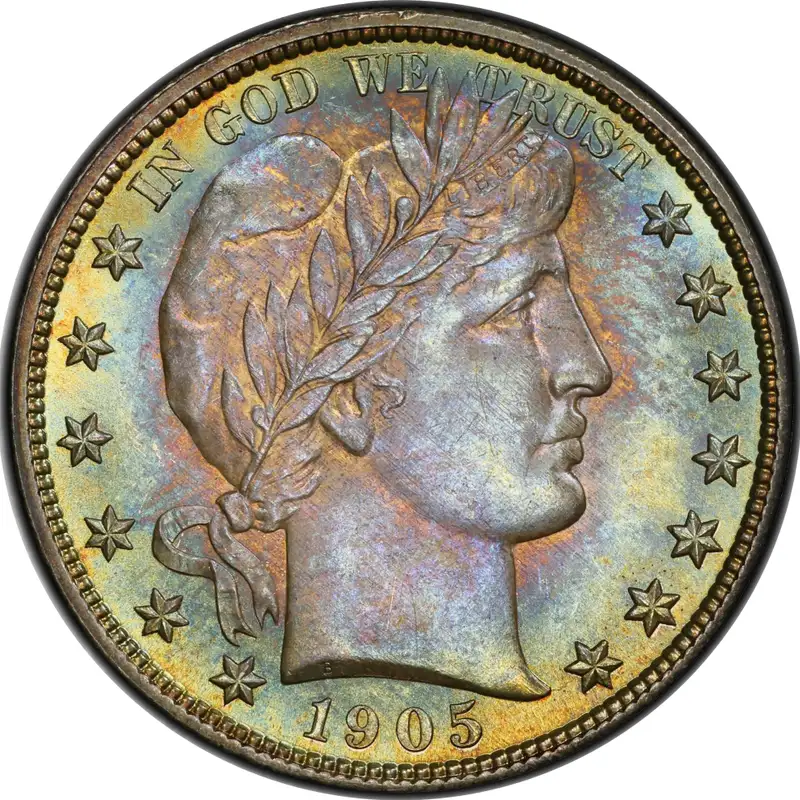
Tony Gryckiewicz:a Yeah. I think this Tony is pretty natural. I mean, the this next one that we're next the two from now, the nineteen o five, we got some questions on that one. But for this particular one, I think the Tony here is pretty natural. In my opinion, does this coin have a CAC sticker or not?
Collin Delia:No. It doesn't. Did you did you try this? I haven't tried it, but I suspect that it has been tried. Okay.
Collin Delia:Just especially since it came from a PCGS OGH. I mean, doesn't hurt to try again, but I think, the previous owner probably would have found it pretty advantageous to
Tony Gryckiewicz:to get it. Yeah. I don't know. What I we would be thinking. I mean, because the the the the coin, all of this original mint frost right here, this is the stuff that I believe they look for.
Tony Gryckiewicz:All this originality, this original mint frost through these fields is incredible. And yes, I mean, okay. I don't know. There's this right here. You could interpret that.
Tony Gryckiewicz:I mean, it looks pretty incidental to me, but you can also interpret that as some metal movement and you know, there's questions about where did this little patch of marks come from. But these are these things too where I feel like you could also well, you said this is an OGH holder, right? So you wouldn't crack this to try and get a new serial It used to be, it used to be
Collin Delia:in an OGH holder. It is now in a newer holder.
Tony Gryckiewicz:Okay. Well, you never know. You just, you just never know. I'm going to be releasing a video very shortly about a a recent, coin that I acquired from another dealer that came from another really large dealer that sat in my display case for at least two shows. Nobody bought it from me.
Tony Gryckiewicz:The previous dealers in some must have not submitted to CAC and I submitted it and I got the sticker on it and it's a big one. It's a big one. It's it's a key date. It's a key date coin and I don't know what people were thinking and why they were sleeping on it, but it goes to show first off, don't make assumptions. But secondly, you need to buy non non nonstickered coins.
Tony Gryckiewicz:You miss out on a lot of opportunities if you don't buy non if you don't buy a nonstickered coins. So anyway. Yeah. Alright. So this 1915.
Tony Gryckiewicz:I like this. I mean, I I think this is completely natural in terms of the color here. This is a 1915. It's gotta be the Denver. Yeah.
Tony Gryckiewicz:1915 Denver. And this is an MS 60 3 again. Interesting. Interesting. So what's the story on this coin?
Tony Gryckiewicz:And this is this a tough coin to to to find?
Collin Delia:I think it's tough to find with color. Usually in my experience, like some of these later dates come pretty white or pretty dull. But to find it with any sort of color is is pretty fun and unique. The the dealer that I bought this from was very transparent, to me and how this coin was essentially came to be at k. Was a it was a white coin and it sat in a Dansko album for I don't know however many years.
Collin Delia:But I think eventually the album imparted a lot of the color that we're seeing today. Wow. And eventually it was removed and put in a holder and so on and so forth.
Tony Gryckiewicz:Did he mention how long?
Collin Delia:I he didn't mention how long. No. It His seemed to be, like, a decent amount of time. And Yeah. This is a a dealer who trying to think about how to say this in a politically correct way.
Collin Delia:He encourages me to experiment with coins to be more savvy in the marketplace and just to see what toning looks like in in different environments just as a way of learning.
Tony Gryckiewicz:It makes a lot of sense. I mean, especially if you're a toner guy, especially if you are a color guy. Every coin you look at, you you know, you're faced with a question of is this artificial or is this natural? How did this toning come about to be? So, I mean, you of course, I mean, the only way to know for, to not know, you can't know for sure unless you were there and you saw the toning process or you were the one who had the coin while it was being toned.
Tony Gryckiewicz:But what you can do is you can, like you said, experiment, or you can go through different, let's say experimentations with other coins that are similar, that are white coins to see how the toning develops. How does the color develop on the coin? And so even though you may not be trying to, I don't know, sell those coins or whatever yourself, at the same time you're able to look at it and say, okay, this is what this looks like. So if I ever see this again, I know that this toning was created in some kind of a, you know, let's say artificial sort of environment or experiment or or or whatever.
Collin Delia:For sure.
Tony Gryckiewicz:I think it's pretty good advice.
Collin Delia:Yeah. Yeah. I thought great advice too. If you're gonna be playing in that marketplace, like it would definitely behoove you to definitely experiment. I think we're in a really interesting age of coin collecting.
Collin Delia:We're still pretty, pretty early on in, like, the encapsulation process and the preservation process. I mean, the I think a lot of these holders are are pretty inert, you know, correct me if I'm wrong, but, you know, a lot of these, like a lot of these coins existed outside of the holders for majority of their life. Yeah.
Tony Gryckiewicz:I think that's, that's fair. There's always possibility of of coins turning within the hole. They're not completely airtight, but they're they're pretty well protected from the environment. That's that is for sure. Is it the coin that I the colors of this one are interesting to me.
Tony Gryckiewicz:What do you know about the kind of the background on on the this coin and where it came from?
Collin Delia:Yeah. So I mean, this actually also kind of exhibits in my mind if you if you look at some of the bigger higher end registry guys, this is like a toning pattern that they would go after. Like, in hand, this coin Okay. Is similar to the ninety four, sixty and sixty six. I found this coin at a local, like, regional show from a collector, big time collector out of, I think it was OKC.
Collin Delia:Okay. And he had a lot of just super high end, really neat pieces. I I think he was, you know, in the early early coin, coppers club or something of that nature. I'm definitely quoting. But he had a lot of like high end half cents and large cents, even proofs a lot in like older style, like envelopes and little flips and whatnot.
Collin Delia:And he had a fair amount of like barber, material as well. And, this was a coin that actually I I traded him a a proof, deep cameo barb recorder I had and a little extra for for this coin. Mhmm. I just in in hand, it's spectacular. It's it's really nice.
Collin Delia:I haven't been able to find any record of its sale across a lot of the major auction houses.
Tony Gryckiewicz:I do like this coin quite a bit. I do like it quite a bit now a little bit more. The color kind of was different. I would just say that the overall I I've never seen a barber half that has this pattern. I've definitely seen them where they look more like this and definitely more of these target toning like these.
Tony Gryckiewicz:This is pretty obvious. It comes from an album that sits in an album and the outsides of the, you know, the packaging kind of, create this toning, the circular toning. That makes sense. When it comes to this and this, you know, I don't know, but this probably go also ahead. Go ahead.
Collin Delia:Just to add, I think it could be from a couple of different methods of storage. I think sometimes like could have been in an old envelope, but then it was transferred to an album and whatnot. A lot of times, like, that is pretty common, you know, just the lifespan of these items.
Tony Gryckiewicz:Yep. So moving on to this bad, Larry. This is this is the coin. This is the coin that Colin and I connected on over Instagram, and I would say these pictures, this comes from, like, the latest age of them taking pictures of PCGS, and it's their true views have changed in my opinion a little bit. In my opinion, it's not for the not for the better.
Tony Gryckiewicz:This coin in hand is absolute killer, especially the reverse in this coin has so much color inner woven here through all the devices in the reverse. It's absolutely spectacular. So this is also the lowest mintage. This is a 124,000 coins were minted, and this is an MS 65. And I know, from personal experience, this is a CAC stickered coin and, like, one of the only, I think, that are in existence at the MS 65 grade.
Tony Gryckiewicz:So, this is a baller baller coin. Sure. What do you, so you recently picked this up. You have not seen this in hand yet. Right?
Collin Delia:No. I haven't got to see it in hand yet. Bumped to see it though.
Tony Gryckiewicz:Nice. Nice. What, what drew you to this one? And, you know, did this replace another coin in your set?
Collin Delia:No. This was this was filling a hole. I just think the the complexity of, you know, what what's going on on this coin, is really intriguing to me. You have some terminal, you know, toning, you know, kind of like on the, edges there. Just some really interesting kind of just oranges and teals and blues and golds.
Collin Delia:Just it really is like the full spectrum, you know? And Mhmm. I I don't know where this coin resided for majority of its life before it was encapsulated, encapsulated, but but I would suspect perhaps like a couple different, couple different places, whether it was an old cabinet or, whether it was an envelope or, you know, an album of sorts, but it has kind of like the gamut. It's got a little bit of everything. You know, I I think pretty good luster, as well.
Collin Delia:Pretty decent strike. But yeah, like, I think you said previously, like, this initially was an NGC Mhmm. CAC stickered coin. And to me, like, I think just from my personal experience, like, finding, like, gem NGC coins that are stickered for like certain series is even harder than finding PCGS coin in in some regards.
Tony Gryckiewicz:Yes. I I will say that I was sorry to to cut you off there. I will say that I'm I was very surprised pleasantly surprised when this stickered. I bought this in an NGC holder in MS 65 grade. Typically a lot of them, a lot of gem graded NGC coins are typically a bit over graded, especially on certain series.
Tony Gryckiewicz:I think barber halfs is one of those series, barber proofs. I tend to be really wary when I see a barber proof half or quarter that is above the 65 grade and proof or or in business striking it is in an NGC slab. And I submitted this to CAC and I got the sticker and I was just through the moon because then I I submitted to crossover at PCGS, and of course, it crossed with that and I got them to put this sticker back on over to end over at CAC. So but this coin had it all. I mean, this coin, the the reverse was was gorgeous, and he was so funny.
Tony Gryckiewicz:Said, man, I offered this coin, I think, to other dealers even in the NGC slab in the '65. I offered it
Collin Delia:to them and they passed on it. I think it speaks to just like sometimes like just commodities, you know, to to some people. If a some dealers, you know, they think if they can't make money on it, like, had a I have a quick anecdote just collecting the proof v nickels. I I found a $18.95 and 66 Cameo NGC coin on eBay and it was I bought it for about a thousand dollars under Graysheet and that coin in a PCGS 66 Cameo stickered. There was multiple that within maybe like less than a year had gone for like around 7 k, which was way over, you know, price guide and whatnot.
Collin Delia:And, you know, I offered that coin, you know, to many different people, many different dealers, you know, at, the central state shows and everyone pretty much turned their nose up at me into NGC coin, you know, da da da da da. No. I can't take it. Like, whatever. I won't even buy buy it a gray sheet.
Collin Delia:And I wound up getting it stickered, you know, a 66 Cameo stickered. And I was just like, I was so excited because I was like, man, like, what a crazy find, you know? And Yeah. I so often, like, it becomes more about the plastic, you know, and I think also you just you gotta enjoy the coin too.
Tony Gryckiewicz:Yeah. Yeah. I agree with you. And oftentimes when folks are being offered coins, I mean, they're looking at them as commodities. They're looking at them as how quickly can I get my money back and how quickly can I flip this over and turn this over?
Tony Gryckiewicz:When some coins you really need to take a close, good, hard look at. And and also there's, I mean, be completely blunt with everybody out there. I mean, if you want to have success in collecting coins and dealing coins, there is a certain level of risk that you have to be comfortable with taking on and trust your gut, trust your intuition, and you may have some wins and you may have some losses and some, and you learn from those and then your gut, your intuition, in my opinion, gets better and it gets better and you're like, you know, I think I think I see some value here. I think there's this is an incredible coin and for whatever reason it's in a particular slab or holder that, know, people, somebody's pooh pooh in right now and I'm going to get this thing and I'm going to, you know, I'm going to cross it over and I'm going to get it regraded or whatever. And I'm not that good at that yet, which is the regrade kind of game.
Tony Gryckiewicz:There are people that are incredible, go to the coin shows, they look through cases, they can spot the undergraded coin in a minute, know, in a couple seconds they can find amongst coins, which one is likely undergraded and some of these folks, they make a lot of money that way, frankly.
Collin Delia:Yeah, absolutely. And I think also, you know, being a coin dealer seems to be a function of, do you have the customer base? Do you have the network to source specific coins and place them with your clients? I think that is a big part of the job of, of being a coin dealer is knowing your end user and being able to access coins that, you know, fit their description, you know, and you're putting yourself out there, you're going to local shows, you're combing auction sites, you're going to these larger shows. You have, you have relationships with even your own private clients that, you know, have specific coins and you are the medium in a certain certain sense, I think.
Tony Gryckiewicz:Yeah. Absolutely. Market maker, you know, somebody who's who's right there in the middle. There's a lot of coins that are offered to me, and a lot of those coins I don't necessarily need at the moment. So but but the person who's contacting me wants an offer and they want money.
Tony Gryckiewicz:They I mean, they want cash. They want liquidity is what is what it comes down to. So, you know, I can come up with an offer for them and and I'm I'm my offer is is in a spot where I can feel safe knowing that, you know, these coins might be a little bit tough for me to sell. So we're at what point, you know, where do I need to be so I can feel comfortable or I can give myself room to, to, to sell and not lose money when I go to resell these coins. And, you know, I mean, you're, you're offered stuff almost, I'm offered stuff almost every day.
Tony Gryckiewicz:I'm offered something and, and that's a good, good position to be in. I'm not complaining. I love that, that, that aspect, but you never know what you are going to be offered. Also thinking about what, what sells and what you have clients for. The other aspect that I'll just throw out is that sometimes I buy stuff on a little bit of a lark with the plan and intention to find clients, to find new clients.
Tony Gryckiewicz:You know, for example, I recently bought a $19.21 50 peso, which is a key date. I knew I couldn't go wrong buying that coin. It was an MS 61. It was really kind of fairly low, lower, lower grade for what it was. Actually, it might have been a 60.
Tony Gryckiewicz:No, I think it was a 61. And, but you know, having that coin, I only only had it for like a week and a half or something like that. I ended up finding a new customer that, you know, is crazy about Mexican gold coins and wants key dates and now, and you know, paid up for the coin and bought the coin from me. And so now this is a new avenue that I can now, you know, place Mexican coinage, you know, through, through this particular, this particular channel. And that opens those doors and, but you can't do that unless you take those chances and you kind of go out into different markets and realms and, and, you know, and take a bit of a bit of a chance and bit of a risk.
Tony Gryckiewicz:So Absolutely.
Collin Delia:And I think on that same point, this goes both ways, but a yes to a a certain high value coin is a no, you know, to a lot of other coins and and vice versa. So you have to, be willing, like you said, to, take risk, you know, in your position. Like, I think that's what a lot of collectors miss. You know, there's always just like this stigma of like, oh, this the dealer's just trying to rip me off, you know? And it's like, no.
Collin Delia:There's actually a lot of resources and time that go into finding coins that you feel are a quality representation of, you know, your, you know, your company and and what you want to put out there.
Tony Gryckiewicz:Mhmm. Yeah. A 100%. A 100%. And the more knowledge you gain, especially about the various niches, the better you do.
Tony Gryckiewicz:Have you ventured into the coin market of of Sweden yet?
Collin Delia:You know, I I have a little bit. I've dabbled. We were in Gothenburg for an away game and we had some time off and I ventured out a little bit and just to see what I could find, I, you know, did the old Google search and and whatnot. The first place I found, I walked into, it said coins and stamps and it was just a stamp dealer. And I just, you know, had to explain, hey, I'm looking for, you know, coins, Swedish coins.
Collin Delia:He's like, no, like, he's like, he was super, super nice. And he directed me to downtown. He said, check these guys out. I mean, it was interesting. Was definitely a different experience from, The United States and what are some social norms there.
Collin Delia:I think you've kind of alluded to it, in your, episode regarding Italy, but it's, there's different, different ways that coins are presented in, in different countries.
Tony Gryckiewicz:You know, they, they almost had no slab coins there. I'd recommend, you know, trying to find out how they describe coin shows. And there's probably some fairs that are occurring on any given weekend in the first parts of Sweden. Attend those. And yes, there's going to be a lot of raw coins most likely, but if you actually ask for slab coins, you might be surprised what they pull out.
Tony Gryckiewicz:Sometimes it's the more, is it the better quality merchandise, better quality stuff that they have that they've kept within the slab because it's a couple thousand dollar coin or whatever. That's been my experience. I've stumbled upon some incredible stuff and it's been because I'm looking for slab coins and I tell them I'm looking for slab coins and it's incredible. I mean, I just, I'll throw this out there and I'm not going to say where I, where I found this, but I was so tempted. I spent about an hour in an office in Italy this past week looking at these four coins that were Czechoslovakia commemorative coins that were restrikes.
Tony Gryckiewicz:Okay. Which restrikes typically is not a great, great coin, but I started researching and finding out that the restrikes of these, it was like a 1934 Kramnika, Kramnika Mines reopening commemorative that they then re struck again in 1971. The originals from 1934 go for crazy money. I mean thousands and thousands of dollars and the re strikes actually go for, or they had gone for a couple of years ago, incredible money. The, this, this, the person running this coin store brings out these four coins and they're all graded MS 69 and MS 68 and their NGC MS sixty eight and sixty sixty nine, they were by far definitely a top pop of these particular coins.
Tony Gryckiewicz:They wanted 25,000 for them euros, which that's something to keep in mind right now is that the exchange rate euros to US dollars, not not awesome. So, you're going to pay about 15% more in terms of dollars. And I spent about an hour doing research and the fact of it is, is that Czechoslovakian market was really strong about two years ago and today from the advice that I've received is it's about half of what it, what it was. So there's no recent comps that I could really do any, you know, I, there's nothing I could use as a basis from negotiating or, or figuring out like approximately, you know, what can I possibly make here? So I ended up having to pass on them unfortunately, but you never know what you're going to find if you ask for those slapped coins and stuff.
Collin Delia:For sure. I think that just kind of also speaks to, you know, being able to understand like different marketplaces and having access, you know, to the, you know, the resources to, you know, research and whatnot, certain coins, maybe like if you had a very specific, you know, client that was looking for that, that would just be, you know, something over the moon. But, yeah, I think also, like, that same note, like, that's also, like, part of my education, like, through this process, like my coin college tuition, so to speak, is kind of like boots on the ground, like understanding the marketplace pretty regularly. Like you can find some, some hidden deals on some major auction sites. It's just a matter of, do you know what you're looking at?
Collin Delia:Do you have the person or dealer to place that coin with? And, do
Tony Gryckiewicz:you have the resources to do that? I also, I do have a coin that I'm going to show you. I'm going to send you an email of after this podcast. I do have a Swedish coin that I picked up in Italy and it is a TopHop gold 5 kronor, $19.00 1 or $0.03. I can't remember off the top of my head.
Tony Gryckiewicz:Want to say it's a $19.00 1, but anyways, TopHop, number one PCGS. It's an MS $67.05 Kroner and it is from Sweden. So I'll send it your way or send you a picture of it. You could tell me if you, you know, can do something with it over there over there.
Collin Delia:Look, I mean, it's actually really interesting here. They don't use cash, like in their day to day, like almost at all. Like there's this app here called Swish that is pretty much like what they use everything for. Cash isn't very widely accepted or or even used.
Tony Gryckiewicz:Interesting. Okay.
Collin Delia:Yeah. Yeah. So I think it's for them, it's a bit safer in their mind, but it's definitely a little odd coming from The US where, you know, I mean, I've transact pretty regularly in cash and it's not uncommon to go to the grocery store and paying cash. We're here. It's like, everything's all digital.
Collin Delia:Yeah. Every so digital.
Tony Gryckiewicz:Yeah. Yeah. Well, things are probably going to move in that direction. You know, certainly so, but, alright, man. Well, I know it's pretty late late over there, so I won't let you go.
Tony Gryckiewicz:And, I will, I will hopefully talk to you again, and we'll, we'll do another one of these sometime, and maybe we'll do some more business in, in the future. So
Collin Delia:Sounds good. Thanks for having me, Tony.