Ep.27 - Chopmarked Coins w/Taylor Leverage - Cabbage Coins Podcast #numismatics #rarecoins #silver
Hello, folks. Welcome back to the CABG Coins podcast. I'm excited to get started again with this. Just got back from the fun show, did a huge long road trip on the way down to the show, stopped at some of my usual stops and saw some old friends. It was kind of four days of craziness.
Tony Gryckiewicz:It was pretty insane. And then ended up driving all the way back, stopped, saw a client of mine in Georgia and then drove all the way back to Pennsylvania. I'm a little exhausted. Thank you so much for those that came out to the table. Turnout was very impressive.
Tony Gryckiewicz:I love seeing a lot of you guys. If I seemed a little bit overwhelmed, little bit frazzled, that was just kind of the nature of that show. There was just a frenzy of people that wanted to see a lot of coins and people that wanted to offer coins, offer their collections. If I didn't get a chance to get to your items, you know, do apologize and hopefully I'm going to streamline this whole process and get some help and so forth for future shows. I do want to ask you guys that if you have a favorite pickup, if there's something that you picked up at the show that you're really excited about, just comment it below.
Tony Gryckiewicz:I think it'd be really kind of cool to get a thread going of whatever it is that you ended up picking up at the show. It'd be kind of cool to just see all the people out there who are at the fun show, who watch this podcast and get some conversation going. So today we have a guest, a special guest, especially because we've recorded this now. This is our second time recording it. As I mentioned in my reel.
Tony Gryckiewicz:This time everything should be all set, but we have William Taylor Leverage. He is the author of a book on Chop Marked Coins called By Weight, Not By Coin. It is published through Amazon, which you can find it. I'm sure we'll, he'll give it, tell us a little bit about how a person can find the book, but this guy is an absolute expert on this topic of chopped marked coins. If those, if you're not aware of what we're talking about, we're going to get into a lot of visuals, lot of examples here today to kind of walk through the base of chop marks, people have probably seen before on trade dollars, but then also all the many coins that can actually, can find trade, chop marks on and the market values of those things and so on and so forth and how to collect them and so on.
Tony Gryckiewicz:So, hey, so William, I'm sorry. So yeah, so you go by William or by Taylor?
Taylor Leverage:I go by Taylor.
Tony Gryckiewicz:Okay. So anyways, introduce yourself, you know, how long you've been doing this? What got you into Chop Marks? It's kind of a niche. Yeah.
Tony Gryckiewicz:Welcome to the podcast.
Taylor Leverage:Yep. Thanks for having me back Tony. You know, second verse, same as the first, but better this time. So Yeah. Yeah.
Taylor Leverage:Yep. I was collecting for for quite some time, you know, did the classic Blue Wittmann folders as a kid, eventually started to gravitate away towards it in high school or so, but it came back with a vengeance, around college. So I was looking around for for a potential niche that I could access on, you know, a student's salary, that didn't involve getting too deep into top pops. Eventually, I found trade dollars, and that was enticing to me, particularly because it's a short set. Historically, it was very interesting.
Taylor Leverage:So I thought to myself, 18 coins, how difficult could it be? Again, same issues as every other series. The the higher you get in terms of the grade pops, the the more money you'd have to shell out. That eventually led me to chop marks, which even ten years ago were not nearly as popular or as expensive as they are today. So I started getting into chop marks to try and put together a date set of trade dollars.
Taylor Leverage:Even that was a herculean task. I never finished the date set, but it got me set on this, whole run of chop marks that I've been diving into for the past decade, into a whole world of, foreign coins, world crowns that, is really fascinating. Still have no hope of finishing any of the sets I start, but it's a fun ride.
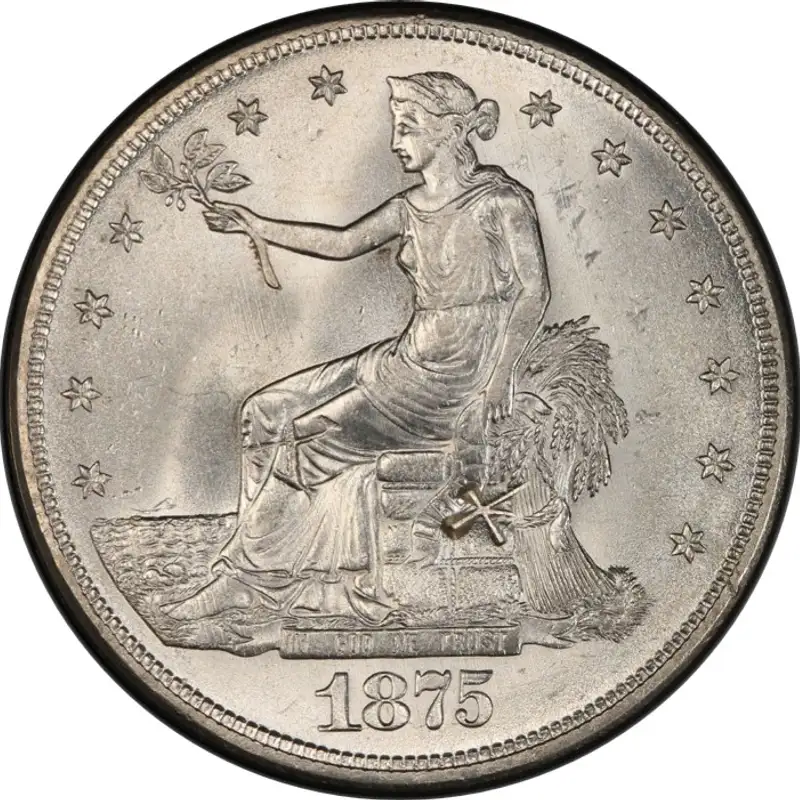
Tony Gryckiewicz:Yeah. Yeah. So this is one of these where I think, I want to give people a bit of a frame of reference to what we're going to talk about. So I'm actually going to bring up the first example, then you can kind of explain what a chop mark is and, just a little bit of an introduction for somebody who's never, never seen this before.
Taylor Leverage:Sure. All right. So what you're looking at in terms of a mark here, there's a couple of marks on this obverse of this coin and a chop mark is really any mark applied by a Chinese silversmith or Schroff or money changer intended to signify that the coin had been validated. It had been checked that it was good silver. So we're showing a US trade dollar here, one of the most common types that you can find, but you can find these on all types of silver coins from about 1600 up through as late as nineteen thirties.
Taylor Leverage:So this is a very long running practice in China, just based off the deterrence of counterfeits and the, the prevalence of foreign silver coins that made their way to China in the course of foreign trade. That's, I guess, coming back with a vogue now that we're seeing physical silver popping off again. But for hundreds of years, you're looking at a practice that was very common with any silver coin that came into China just as the the standard means of international exchange.
Tony Gryckiewicz:Interesting. Did this happen in other places or was it China specifically that wanted to do this kind of assaying or checking of the coins with silver content and putting the mark on them?
Taylor Leverage:You can find similar practices throughout Southeast Asia, especially wherever there was a Chinese diaspora. I mean, The Philippines was a very central part of, the trade with China in the West, so it's thought that there were enclaves of Chinese merchants doing similar practices, but really what you'll find is sort of satellite practices. So in Japan, even during the, Sokoku period when they were closed off to the rest of the world, they had their own series of counter marks that they were applying from private merchants, and in China, you have, trough marks, which are similar, but you find them on princely state rubies and things like that. They're very distinct stylistically, but the premise is very close.
Tony Gryckiewicz:Okay. So, I want to summarize real quick about what folks are looking at. So we have this $18.75 trade dollar. This is an $18.75 S, which is one of the most common trade dollars. This was a coin that was minted by United States specifically in order for export, in order to support our interests in trade over in the Orient.
Tony Gryckiewicz:And it contained, I think four twenty grains of silver, which was more than the standard seeded silver dollar. I believe it was a larger coin, right?
Taylor Leverage:Yes, that's correct.
Tony Gryckiewicz:Yeah. And then, so what we have is actually an example of one, which is, I would say otherwise fairly high grade. I would have to look at, look at exactly at the surface kind of, of this coin, but I think that I feel like this coin is kind of in the MS 64 kind of realm. And then on top of this coin, we have these marks and these were performed and chopped into the into the coin. Now, this considered damaged by the grading surface?
Tony Gryckiewicz:Will they straight grade this or how will this go from a grading perspective?
Taylor Leverage:Yep. So NGC will consider this a details coin without any caveats, but PCGS actually assigns straight grades to ChopMark trade dollars explicitly. No other types. This was the work of a collector several decades ago who just felt that they, the course of the circulation shouldn't affect, the grading process any more than standard wear should, so you can actually find a PCGS census of these that are straight graded as long as there are no other condition issues like cleaning or hole or anything like that. Yeah.
Taylor Leverage:So, you're actually correct on your grading estimate. This is a PCGS MS 64 Chopmark trade dollar, and 64 is as high as these will be graded. They will not go above that specifically because PCGS feels that there cannot be a GEM job mark trade dollar just by virtue of the practice. Gotcha. Yeah.
Taylor Leverage:Grading companies,
Tony Gryckiewicz:they tend to have certain criteria for reaching specifically that gem grade, the MS65 grade, you know, for different series. I know that's the case. So that doesn't surprise me that they're going to limit it here. Cause this is actually, I mean, it is a gorgeous coin. So the character or like, so what am I looking in terms of this?
Tony Gryckiewicz:Is this a character of some sort, a Chinese character or whatever that's Yes. Into the coin? Okay.
Taylor Leverage:This one in particular on the right is a Chinese character though it's rotated, so it's difficult to identify. The one on the left is actually an English letter X and you can find Yeah. Chop marks in many different forms. Most of them are characters, but you can find them in Latin letters or numerals as well. Symbols are frequently encountered.
Taylor Leverage:They also come in form of ink stamps. There's quite a few different forms that would only have local significance. So we can't necessarily trace this back to where it was actually placed because there were no records preserved about who applied which shop mark. Yeah. Interesting.
Tony Gryckiewicz:And I know that this one here, so just moving on further, this is gonna be this is a Liberty Seated Dollar, $18.56 Seated Dollar. This is both a chop mark as well as some kind of a counter stamp or some some kind of a stamp on it.
Taylor Leverage:Yes. Very much so. So the seeded half dollar is actually the most common shop mark the US coin apart from the trade dollar. Now, this wasn't intended for export, but in the eighteen fifties, there was a lot of commerce between the West Coast and China as the the clipper ships were going back and forth. So whenever there was the opportunity and eight reals were not necessarily available, you might see some of these slipped into circulation.
Taylor Leverage:So this is a relatively obtainable piece for a typeset collector, but this one is special, because it shows that counterstamp that you mentioned. This is a Polyhemis counterstamp, which is a famous California Gold Rush era mark. There was a coin with this mark was pulled up from the Central America. These circulated in the the eighteen fifties, and it's a really nice, detailed counter stamp. It mentions Sacramento.
Taylor Leverage:It mentions his profession. It's got a little mortar and pestle on there, but it also demonstrates that this coin circulated in California before it was actually sent to China. So it's a very tangible connection between those two places, and it's probably one of the most historically interesting US coins that I've seen with the Chapmark.
Tony Gryckiewicz:Why would a location here that this, the store, whatever this was in California, why would they put their stamp on coin? Why would they deface the coinage that way?
Taylor Leverage:In this particular case, it was advertising. I mean, it has his address on there. This was purely for visibility's sake. This you can also see these with things like variety shows of the era. They'll quote unquote dividend denomination and list an address in New York or Baltimore or Boston, and it was purely intended to bring people in the door.
Taylor Leverage:These coins would have stayed in circulation, and they effectively became miniature billboards. So with the Bohemis counterstamp, you can find them on all types of different coins, not just US hosts, but also Latin American hosts or European coins that managed to make their way over to The United States.
Tony Gryckiewicz:Interesting. Man, you got to have some gall to go and put your stamp of your store's name on coinage that passes through. I need to get a CABG coins like ink stamp and stamp all the every $100 bill I collected at the fun show with the Kabbage Coins logo, I mean, or whatever. I'm telling you, it'll be good advertising, I guess. But I don't know.
Tony Gryckiewicz:That's kind of illegal today, isn't it?
Taylor Leverage:Or not? Defacing coins will not go over well with the, the US government these days, but not a lot of people policing the coinage in circulation and effectively the Wild West in the 1850s. So whatever was hard money was going to pass.
Tony Gryckiewicz:Yeah. Can I ask you, what what were we getting from Asia, from China? Why was the trade was so important? You know, I hear a lot about going to trade in China, trade in China, and we built it. We created a trade dollar for that purpose.
Tony Gryckiewicz:What were we getting over there?
Taylor Leverage:So that answer's a bit twofold. So a lot of the justification for the creation of the trade dollar, then later on with the Morgan dollar was because we had a lot of silver to begin with. You're talking about the Comstock Lode era. So there's a lot of research that's been done into the political maneuvering that went into those western senators that were incentivizing the US government to buy up the silver for some purpose, and the trade dollar made for a convenient outlet. And then, like, today, I mean, having a effectively a reserve currency for use with international trade was always going to give the nation some kind of power.
Taylor Leverage:So, while it wasn't necessarily the only currency that was out there, by being able to supply a coin like this in large numbers, you had some degree of leverage over that trade. So, it was both an outlet for domestic silver, which we had a lot of, and an ability to project geopolitical infinite influence abroad.
Tony Gryckiewicz:Yeah. Yeah. Because previous to these coins or previous really to the seed of the dollar, I mean, it was the 8 reals, right? It was the Mexican 8 reals that was like the preferred coin, I guess. Right?
Tony Gryckiewicz:And in China, in The Orient?
Taylor Leverage:Yes, very much so. And that's for a couple 100 basically with the introduction of the pillar eight reals actually back in the seventeen thirties, That almost immediately became the standard for international trade, especially in China, and that continued into the Portrait era and eventually into the Cap and Rays as well. The Portrait coins in particular were very highly respected in China, well after they stopped producing producing them. They were quoted in commercial magazines in China, well into the twentieth century at high premiums because they had such a place in commercial culture.
Tony Gryckiewicz:Yeah. I think it's one of the reasons we actually stamped four twenty grains of 900 fine silver on this was because we were kind of competing with those arealis that, you know, like the Chinese merchants would recognize the arealis as a very well known coin. Then the ceded dollar really was not as well known. So it was not as desirable and they would trade, I think at a bit of a discount. So you would actually lose a little bit of money if you were to try to pay in ceded dollars.
Tony Gryckiewicz:And then he came up with this trade dollar, which was slightly heavier, but it was stamped on there that this was four twenty grains of 900 fine silver. So, you know, maybe just giving them a little bit more confidence in the coins. It was all about, you know, trying to gain a bit of an upper hand, a bit of leverage, if you will. Right. If sorry.
Taylor Leverage:Yep. And that's absolutely true. I mean, came about at a pretty fortuitous time for the, the U S government because right when the trade dollars being introduced, the Mexican government had decided to shift from the 8 reals to the Bolanza peso, which was a totally different design and technically a different denomination. It was also slightly different dimensions. They made them slightly less wide, but thicker.
Taylor Leverage:It was the same amount of silver, but that set off, you know, the Chinese merchants who were totally unfamiliar with it. And there's one thing that's good with the currency, it's consistency. So all of a sudden, there was pushback from Chinese merchants from accepting these coins, and all of a sudden, the US government comes in here with a new coin, yes, that they hadn't seen before, but also a consistent one that was available to the tune of hundreds of thousands and eventually millions of pieces. So received acceptance pretty quickly, even though at the time it was considered a failure and some limitation. A lot of that was just because they only struck these for six years in The United States.
Tony Gryckiewicz:Yeah. All right. Well, that's super fascinating. Dude, you are a wealth of information. It's, you know, these questions are all off the cuff by the way.
Tony Gryckiewicz:Taylor's just kind of running with these explanations. So moving on to back our presentation though, $18.59, this one is a dollar, $18.59 S, which is a very famous denomination. I believe I do still have one on Kabbage Coins website. These were all basically created for export. This one's got a hole in it.
Tony Gryckiewicz:So take it away. Tell me what I'm looking at.
Taylor Leverage:Yep. I think this is one of the most underrated US coins of any denomination or date, the $18.59 s dollar. So this was basically created at the request of West Coast merchants in San Francisco who were buying 8 reals from Mexico and transporting them up the coast by land and paying a premium to get them on top of that. And they said, well, we've got domestic silver. We exist in San Francisco.
Taylor Leverage:We've got all this, westward hoe momentum. Why don't we just petition the government to strike our own coins? So they did. That was the result, was this $18.59 s dollar. There's a mintage of 20,000, which is basically experimental, most of which went straight into bags and headed to the port and sailed off to China.
Taylor Leverage:You can actually track some of the feedback from these coins as The US consuls were reporting on how they were doing in domestic commerce on the coastal port cities, and the results were not great. A lot of that was just because of the unfamiliarity of the design, but also because there just weren't enough of them. If you drop 20,000 coins, it's not going to become the standard overnight. So there was really not any appetite to continue producing this because it did not give immediate results. But as a result, because so many were sent over, this is a real rarity today, and I think it's one of the most historically interesting coins in The US series, and this is basically a proto trade dollar.
Taylor Leverage:I consider this to be the first trade dollar or trade coin struck by The US, even though it's technically a domestic issue. Today, I know of six examples of these with chop marks, including this coin. Yeah, just a really neat piece. You know, history you can hold in your hand.
Tony Gryckiewicz:Yeah. And as you're talking there, I remembered I actually sold my 59 S at the fun show. I sold my 72 S as well. That's the other great estimate dollar. I sold both the 59S and the 72S.
Tony Gryckiewicz:There was a lot of demand over these Liberty City dollars. As I've mentioned it before, I've said it a few times. It's one of my favorite denominations or my favorite series to collect. I think it offers collectors a serious challenge to find nice circulated examples. Mid state examples are really difficult to find, but the circulated ones, these were, these were workhorse, workhorse coins.
Tony Gryckiewicz:They were in commerce. Finding nice examples is not easy to do. I think it is a bit of an advanced area to collect. But anyways, back to this. Yeah.
Tony Gryckiewicz:So yeah, I don't think I've ever seen one with chop marks at all. So I think I even given the fact that it has the hole in it and people put holes in coins or to wear them or I think around their neck. You know, this is a really odd location to put it in. I guess they didn't want to put it through the head of Liberty there, but, what would be the value of something like, like this coin right here?
Taylor Leverage:Yeah. It's really subjective depending on who's in the room because top end of the ShopMark collecting space is still relatively thin, but I when I bought this coin, I think I paid something on the order of $450 for it. This came out of a an old Texas collection of ceded dollars. Today, it would be quite a bit more. We just saw an example without a hole sell for just under $1,000 at auction, but I think that was a lack of visibility really.
Taylor Leverage:Think this is really a 1,500 to $2,500 coin and a well publicized sale that understands the history associated with it.
Tony Gryckiewicz:Which is the, which is the challenge when you have these unique items, these kinds of niche items, pace, if you're going to, if you're going to go to the auction, right, it pays to have other items similar to it in the auction, and then do a lot of publication to get all of the necessary collectors. People are interested all together to, to go and bid on it. And we have even a bit of graffiti really on, on the, on the reverse here, right?
Taylor Leverage:Yep. For sure. Not sure where that came Yeah. But you know, actually you mentioned the 72S. Do you know what the second most common ceded dollar date with a chop marks is?
Taylor Leverage:It's a seventy two s. The second most common seeded dollar dates. Is it seventy two s? It's a seventy two s. So fifty nine s, I know of June.
Taylor Leverage:I know of three. Those also were exported heavily. So consider that basically a proto trade dollar as well because it was the last year before the trade dollar started being produced.
Tony Gryckiewicz:Okay. Alright. So moving on to, this lady here. So this is a drape bust dollar. I'd never see these with chop marks.
Tony Gryckiewicz:This is a 1799, which is actually a fairly common date for the drape bust dollar, but we got a number of chop marks here. So this has gotta be a pretty rare piece.
Taylor Leverage:Yeah, for sure. I consider this to basically be the top end of The US type I mean, these I have never seen one of these with really authentic chops, totally convincing ones sell at auction. If it did, it would probably break every record you can imagine for for a Chop Mark coin apart from the Chinese rarities. Mhmm. This particular example is quite well known.
Taylor Leverage:This was part of the Rose Collection. He was the author of the first book on the subject of chop marks. It's got a history dating back to the sixties and seventies, but as a coin, it does make historical sense that these exist with chop marks, even though there's probably only a small handful of them out there. The reason they stopped producing these early dollars was because they were just being exported. They were not circulating domestically.
Taylor Leverage:There was just more appetite for them abroad, and there were not protections put into place in order to make sure these weren't funneling out into the East Indies, into the Caribbean, into China. So, I believe there was actually a Australian shipwreck of an American merchant vessel from about 1800 that was found with 16 draped bustlers on board, but some tens of thousands of eight reals. So they were definitely exported to China, but never in any large quantity. So survivors today are very rare.
Tony Gryckiewicz:So you mentioned about authentic chop marks or, you know, how do you authenticate these? How do you figure out whether or not these are genuine chop marks from that era or they possibly are modern counterfeits if I wanted to really increase the value of my $17.99 dollar and I wanted to try to put some marks in the coin today?
Taylor Leverage:It's tricky. I mean, it's as much art as it is science. I mean, I've seen fake, scholars with fake chop marks more than I have seen genuine examples. So, I mean, when you come into this, it's as much, evaluation from your own experience as it is understanding the coin and whether or not they're the correct die indicators or anything like that. You have to evaluate what the marks look like, whether they match other coins of the period that we're circulating.
Taylor Leverage:There's also the matter of provenance. I always endorse shop market like others to take good photos of their coins, to post them online, somewhere that they can actually be relied on because as time goes on, these become easier and easier to fake. They're not like counter stamps, which have their own documented dies basically. I mean, anyone can develop a chop, and even if it's never been seen before, there's a chance it could be real. So, since they're considered damaged, since there's no, generic reference guide that you can come back to to understand which one is genuine, It's as much developing your eyes as anything else.
Tony Gryckiewicz:Gotcha. Just something kind of feels off about this. It not being similar to others that you've seen. Yeah.
Taylor Leverage:This one's particularly good. So when you go to authenticate a coin, the best thing you can refer back to is earlier auction catalogs. So coins that existed in the sixties, seventies, eighties before ChopMarx ever had any acceptance in the larger collecting community. This is one that you can based on your estimations of authenticity off of. So you can use this as a stylistic reference guide if you were to go back and compare a new coin out there, a coin with similar chop marks and age to this one.
Tony Gryckiewicz:Yeah. So one thing you mentioned was about this kind of community that you bring the coins up to a community. Is there, are there forums? Is there a place that the main chop mark enthusiasts all get together that if you found an example and you wanted to figure out whether it was authentic or not, you could post it to this forum. How would, you know, what is it and how does somebody get involved?
Taylor Leverage:Yep. So there's a few ways you can immediately access the Chopmark community. The first one I would suggest is subscription to the Chopmark News, which is a periodical that's put out once or twice a year, that has usually 50 pages an issue. It's got great content. That's really the go to source for information.
Taylor Leverage:If you're looking for immediate engagement, there's a couple places online. There is a subreddit, rchopmarkedcoins, where people are very actively posting. There's also a few Instagram accounts I'd recommend, one of which is at chopmarkedcoins, and another is at isthesapancake, is my own account. Shameless plug there, But it's the best way to immediately see a large number of, hopefully authentic examples that you can refer back to and get access to people that have been doing this for a lot longer than you have.
Tony Gryckiewicz:What's the background on isthisapancake? What's the background of that name?
Taylor Leverage:Gosh, I think I was 14 when I made that. Who knows what I was thinking of? Okay.
Tony Gryckiewicz:All right. No, I needed to ask you. I was wondering if it had some tie in with chop marks. Honestly, I thought there
Taylor Leverage:was absolutely 0 grand design to that name. That was woke roll out of bed kind of thought. Here we are and I'm past the age of 30 and now I have an Instagram handle that's, is this a pancake?
Tony Gryckiewicz:Yeah. I mean, I've, for as long as this business is going to continue, I'm going to have to explain to people where Cabbage Coins comes from and that, you know, it's Instagram, Tony Gray Cabbage was this old profile I had because my last name is Gruke Cabbage and it sounds a lot like Gray Cabbage was a nickname. And then I started selling coins and I called them Cabbage Coins and then it just has stuck. And, it's a very catchy name and people remember it. Like, you know, I don't know if I'm ever going be able to get away from it.
Tony Gryckiewicz:Not that I want to get, I like the name honestly. It's, it's, it's, just, yeah, I could just see having like a call center of agents and this is CABG coins, How know, can I help you kind of thing?
Taylor Leverage:Name's open lights. I'm seeing stacks heritage CABG coins. Yeah, That's a name I can trust.
Tony Gryckiewicz:I'm coming for all you. I'm coming for the big time, coming for the big time out there. Anyways. All right. So enough goofing around.
Tony Gryckiewicz:All right. So this Libertad here we have, this is Nate Realis Libertad from Mexico. This is really interesting on this mount here. So what am I looking at with this guy?
Taylor Leverage:Yep. So this is a Mexican cap and raise reals, and they made these for a long time. This is 1824 to, the late eighteen nineties when they switched to the peso denomination. And if you're dipping your toes into chop mark coins, this is probably the first coin that you'll buy. There are millions of these probably still exist today, at least hundreds of thousands.
Taylor Leverage:You can get these for really not much more than melt, honestly, and I think they're a great deal at that. But this one is particularly interesting because of that mount that you mentioned. So, that is a, a relic mount from the, the Emden. This is, this was done by a jeweler in Sydney, by the name of Kerr, who applied these to a thousand 8 reals that were recovered from the wreck of the German light cruiser, the Emden, in 1914. Was ran aground by the HMAS Sydney, in World War I naval combat.
Taylor Leverage:So this was a big moment for Australian naval history, their first ship to ship combat, first naval victory, and these were taken effectively as pseudo medals and given out to, those that participated in the battle as well as sold to the public as a fundraising effort. So a thousand originally made, they're a sort of military decoration, but not quite, but at the very least, they're a neat shipwreck artifact.
Tony Gryckiewicz:Yeah. I mean, super cool. For sure. Obviously, we got a tie in with a couple of different nations here. We have, of course, Mexico, where it was, this was created.
Tony Gryckiewicz:We have China from the chop mark, and then we have Australia.
Taylor Leverage:Yeah. I mean, just goes to show you about the, the international history of these. I mean, these were everywhere. This was effectively the global currency in the nineteenth century. And so when you get to see some of the physical evidence of that, I think it digs down into exactly what people like about ShopMark coins.
Taylor Leverage:It's the ability to trace the history of where coins traveled internationally in your hand.
Tony Gryckiewicz:Yeah. I mean, I mean, you think about that. I mean, often think and talk about how, you know, we're sort of just kind of caretakers of coins and I hold onto coins for three, four, five months as part of my inventory and I keep them moving. And, you know, that coin has been in the possession of a lot of people through the course of the last hundred years. Who knows what collection it sat in, sat in a drawer for thirty or forty years or sat in an album.
Tony Gryckiewicz:And it was owned by some famous collector, for example. I mean, have a
Taylor Leverage:lot of, Diel Hansen coins. You know, something like a high end proof coin from the nineteenth century. I think that's historically interesting, but I also see that it stayed in the drawer for almost its entire life. Yeah. And that just doesn't have the same level of appeal to me as something like this that was, you know, thrown in a sea chest, dropped on the coast of China and that was passing hands back and forth.
Taylor Leverage:This seems a lot more tangible to me. That's something that's very attractive about the space of John Marks.
Tony Gryckiewicz:It's a good point. So, all right. So moving on to, moving on to this one. So this is who we got T Knight as a counter stamp. We got some chop marks.
Tony Gryckiewicz:This is basically an eight reals, a portrait eight reals, right?
Taylor Leverage:Yep. So earlier than the cap and raise and about equivalent rarity, honestly. I mean, they struck these to the tune of tens of millions of pieces. They became a very, very common sight in China. In fact, the preferred medium of exchange given their consistency.
Taylor Leverage:Again, you can get these for a relatively small amount of money, considering they're, you know, 200 plus years old, and they've got this whole history of international travel. This example's interesting because of that T. Knight counter stamp, so nobody's quite sure who Knight was, but the counter stamp actually appears on seven or eight of the known examples of the New South Wales Holy Dollar, which has a big hole through it and was the first coin produced for Australia. It was struck by a counterfeiter who was brought over as part of the prisoner ships. It's a very prominent piece of Australian numismatic history, and this actually ties into that early trade.
Taylor Leverage:This was either in that same, area of circulation or passed through similar hands as those New South Wales coins. So we're not quite sure who he was. Could have been a jeweler, maybe a silver trader, either in England or in Australia itself, but either way, it's definitely got a tangential connection.
Tony Gryckiewicz:Yeah, absolutely. And I think I remember I asked you this in the previous recording and you just did an excellent job. What was the driver for the demand for silver in China? So there was, they obviously, they wanted to be paid in silver, but there was kind of a very interesting history with silver and Britain and India and opium. Can you like lay it out for folks that don't know?
Tony Gryckiewicz:Because I think this is super interesting, kind of dark history frankly, but super interesting, about the demand for silver and why silver is so important to China.
Taylor Leverage:Yep. And this could be practically a whole college semester course. We could sit here talking about this and all the complexities that go into it. But the CliffsNotes version is, essentially that when the West started coming into contact with China, silver was all they wanted. I mean, there were really not many goods that they were interested in from Europe, from the New World, apart from silver.
Taylor Leverage:It was very readily exchangeable, and then once there was the ability to take that silver from Potosi, Bolivia, on up through Mexico and across the Pacific, all of a sudden, this is where the global trade routes began to really take shape. So China actually needed more silver than they could produce because their domestic system was built on taxation that used silver. A lot of, the coins that actually changed hand were those copper cash coins, but silver had to be used for tax payments, so they produced those SIC silver ingots that you see that are saddle But again, with a country of hundreds of millions of people, China's low silver reserves could not actually produce enough to, substantiate or, run that system. So, in exchange, it actually became a major part of the domestic economy, was the ability to import enough silver that they could keep the government running, and then as time went on, it became sort of this poison pill with the the Chinese system of government in that they weren't able to operate without this constant influx of new silver from abroad, from foreign merchants. What happened when the system began to break down is with the Napoleonic Wars, is all of a sudden in Europe, it was difficult to procure silver or any hard money.
Taylor Leverage:So what England did with all these, colonies in India was they began to be producing more and more opium and importing it into China where it found ready markets, and eventually they were able to introduce drafts on the Bank of England and lines of credit rather than importing silver directly. So all of a sudden, China is facing fewer and fewer shipments of silver coming into the country and more and more opium addicts, which is sort of a recipe for disaster. This creates a whole series of, events that cascade into the Opium Wars, where it becomes outright conflict that starts China's century of humiliation, which is considered the start of modern Chinese history. So it all ties back to the ability to procure silver and the willingness to exchange based on that medium.
Tony Gryckiewicz:Fascinating, You did an excellent job. Yeah. I'm sure we could get further into into that for sure. And so obviously, silver was absolutely critical to the Chinese economy. Britain realized that and Britain had a, a means to kind of take advantage of both, India as well as China.
Tony Gryckiewicz:And it's interesting.
Taylor Leverage:Yeah. We could, we could be here for days talking about this, and this is endlessly debated back and forth till the day about what silver did and didn't do when it came to domestic policy and who's responsible for what, but there was definitely a transition from the trade in silver to increased opium consumption, which led to all the domestic fallout that resulted in China being, part of into spheres of influence. So, and even after that, you can go into the eventual fall of silver in China. A lot of it was anti western pushback in the early twentieth century that pulled a lot of these coins out of circulation and got them melted. So
Tony Gryckiewicz:Yeah. So let me ask you this. You seem to have a pretty good beat on economics, understanding economic history. With the run up in silver right now, what do think are the main drivers behind that?
Taylor Leverage:Gosh. History is a lot easier because it's already
Tony Gryckiewicz:Okay.
Taylor Leverage:Yeah. I I I say is probably going to be speculation, but it's very interesting to see the parallels that we've seen, lately with, the Chinese refusing to export certain quantities of silver based off of orders and withholding a strategic stockpile. It seems like almost a return to form historically for the ability to, control where physical silver is actually distributed. So, I mean, it seems like quite a bit of, different factors that are actually playing into this, both the the industrial need for silver, but also the the weakening of the dollar and the need for reserves of intrinsic value. A lot of it's coming together, and it's a different set of circumstances with a similar end effect.
Taylor Leverage:So history doesn't always repeat, but it sometimes rhymes.
Tony Gryckiewicz:Sometimes rhymes. Yeah. It's good. It's good. So this is a this is interesting piece.
Tony Gryckiewicz:This is our first like Cobb that is a this is a chopped marked coin. Yeah. Tell take it away. Tell me about, this guy and the market values and, the history behind this.
Taylor Leverage:Yeah, sure. So when you get into the earliest stage of chop marks, they're all on cops. This was the de facto form of silver in the sixteenth, seventeenth century, and they're much cruder obviously than milled coins, but this was all that was available coming out of the colonies unless you bought in in ingots or large deposits. So for these first hundred years, starting in about 1600 when Chop Marks really became into vogue, this is what you'd find with, as a major host for chop marks, and once the, seventeen thirties rolled around and milled coinage, began to take its place, these almost completely evaporated. In fact, the reason that we've started to see more in these today is because they really didn't survive down to the modern day except in hoards that were buried.
Taylor Leverage:So with the rise of metal detecting in China, you're starting to see more of these turning up in pots, in buried clay pots, or any sort of chests that have disintegrated over the years. In the eighties, cows were apparently very tough to find with chop marks because they would have had to survive in one way or another, to enter the collecting market, but in the past twenty or thirty years, they've become much more available. So you see a lot more of these. This particular example is interesting. It's a Bolivian cob, but it also comes from the, the 1644 date means it was struck during the great Potosi mint fraud, which is, this major scandal in the history of Spanish colonial commerce where it turns out that the, the mint master was conspiring with domestic merchants to actually debase the coinage that was coming out of the mint, and one of the first places that actually recognized this was in China.
Taylor Leverage:They they were testing the coins for purity and began to distrust coins coming out of Bolivia. So what eventually happened is word gets back to the Spanish court. They send an inquisitor out to make sure things are going swimmingly, and when it turned out they weren't, they executed the mint master and about half a dozen others. Initially, they started to counter stamp these at a devalued rate, but eventually, they just resumed production under full weight instead, but for about a decade, these were considered debased coinage. This one actually survived because it was part of a shipwreck in Indonesia until, you know, about 10 ago.
Taylor Leverage:So very few of these that received chop marks with this debased weight that are still around today.
Tony Gryckiewicz:These are all chop marks through from this is chop mark and as well as these, right?
Taylor Leverage:Yes. And some of them get sort of lost in design of the cob because these are relatively crude designs. So
Tony Gryckiewicz:Yeah. Yeah.
Taylor Leverage:I see people bringing some coins up to me, especially cobs, and trying to point out shop marks, I go, I don't know if this is just, you know, a random hit or damage or if it's part of the design, if it was double struck, things like that. So shop marks have to be pretty well defined for me to consider them authentic.
Tony Gryckiewicz:Yeah. Yeah. That reminds me all the phone calls I get about pennies from 1976 or something that say, In God, trust instead of In God, You know, I get a lot of phone calls about the rare error penny that they read about somewhere on Google. Alright. So what's special about this?
Tony Gryckiewicz:This is, this is Peru, right? South Peru and this is, yeah, South American coin with the chop mark.
Taylor Leverage:Yeah. Very cool. I mean, is one of my favorite areas of chop mark coins is these early Latin American republics. They didn't produce many of them for exports. In fact, really none at all were intended to go outside of the country because this is a period of revolution.
Taylor Leverage:I mean, intrinsically valuable metals really aren't supposed to leave the country in an era where people don't trust paper money or the, there's no faith in the government, things like that. So a lot of these early issues from the eighteen twenties and eighteen thirties are quite rare. This one in particular, this is South Peru, so there was a brief period where Peru was part of a confederation that was split into North Peru, South Peru, and I believe Bolivia as the third country, before it was invaded and broken up again, and Peru was reunited, but South Peru during that time did produce its own coinage according to this original design with the sun face and this neat volcano reverse and things like that. Yeah. But, again, it's an unusual type, to a Chinese merchant, so less inclined to shop market.
Taylor Leverage:Odds are, whichever ones made it over there, we're more likely to go straight into the milk bucket. So I've only seen a small handful of these, maybe three or four. This example turned up on eBay actually this past year in 2025, but fortunately we actually knew this coin because it appeared in a nineteen eighties auction catalog. So a rare coin like this turning up out of nowhere might draw suspicion, but if it has an old reference and a piece of provenance, then all of a sudden it becomes much more desirable.
Tony Gryckiewicz:Okay, cool. I want to ask you about this coin, but you said something there about the Chinese merchant receiving the coin. If they didn't recognize it, they may not be inclined to chop market, but instead throw it into the melt bucket. So that gets me to the question I've had about these chop market coins for a while, which is these marks are a mark of recognition by the merchant that they recognize what the coin is and those coins are considered to be good coins. But they're not actually testing these coins for the silver content or how does that work where, you know, they're putting the stop, the stamp on it, but they're not testing the coins per se.
Tony Gryckiewicz:Right? They're just recognizing them as being good?
Taylor Leverage:Not necessarily because part of the reason that chop marks exist is because there were so many counterfeits, many of which were imitating genuine types. So they could be testing it by touch to test the fineness. Many of the chop marks were applied deeply or with drill marks to actually test for a substrate value or metal in the coin if there was a base core, something like But just recognizing the type wasn't really enough. So what the chop really signifies is that the coin is good silver, not necessarily that the coin is real. Those are different things because there was this whole cottage industry of imitations in China, especially in the eighteenth century, of not quite fakes, but imitations of foreign coins that were struck in perfectly good silver, just by virtue of the intent to have a more ready supply or, have coins that were more easily procured, something like that.
Taylor Leverage:So you can find, quote unquote, counterfeits that would have been accepted, ShopMark, no problem. They would have traded probably at a discount to compare to the real thing because they aren't necessarily as consistent, but they would have been accepted, something like that. So you can get a coin that's a one off. There are many unique ShopMark coins out there that are probably representative of very small shipments that were sent abroad, that were tested in very quick circumstances. Many of them, like this coin, only have one ShopMark because eventually someone got suspicious or wasn't willing to take it and it was thrown in a drawer or tossed in a hoard or something like that.
Taylor Leverage:So many of the rarer types like this actually have only one or two chops.
Tony Gryckiewicz:Okay. So it still doesn't kind of completely answer the answer the question for me in the sense of this particular coin was somebody testing this coin in some kind of a test to ensure that it was good silver. Is there other marks that the other test marks on this coin that they then later put the chop mark into it to say, yes, it's good. Or did they see or maybe perhaps there was like a pile of them and they tested one of them and then they said, okay, the rest of these are good. Do you see my question?
Taylor Leverage:Yeah. And actually this is goes back into the whole industry of troughs, which are the people that would actually mark these coins. These were trained professionals that would go to school effectively to evaluate features of authentic versus inauthentic examples, so many of them were being judged dialistically against the genuine article, and some of them, like the more unusual types, would probably be judged by touch, So that's the actual silver content being rubbed on a touchstone, something to that effect. So testing individual coins was not out of the question, but for the most part, they were expected to check each coin because if fakes were found in a group that was last validated by a certain trough, they might be expected to compensate the owner because it was their guarantee effectively as a form of insurance against fraud. So any counterfeits that went through would eat into whatever profit they received from actually validating the coins.
Tony Gryckiewicz:Gotcha. Okay. So touchstone. So they are actually testing each of these coins with a touchstone to ensure that it's a good silver. And then they're putting the chop mark on it.
Taylor Leverage:Not necessarily a touchstone. That's one method. A lot of it was stylistic. Sometimes they, some people have theorized that it's specific gravity tests. I can't and again, it could be just as crude as using a chop to punch into the coin and see if there was silver inside the punch.
Tony Gryckiewicz:So Oh, okay.
Taylor Leverage:Many different methods that were out there. Some were more Yeah.
Tony Gryckiewicz:That's a
Taylor Leverage:good point. Elaborate than others.
Tony Gryckiewicz:Yeah. You would you could put the chop into the coin and then you would see if there was something beneath it, you know, if it was chocolate or or something something inside the coin. That makes sense. So this guy, I recognize this, this is a Hawaiian dollar and this is a pretty rare coin in and of itself. So they have a chop mark on it.
Tony Gryckiewicz:It's got to make it even more rare, more valuable, I guess. Right?
Taylor Leverage:Yeah. A 100%. And there's a lot of arguments about whether a chop makes a coin more valuable or not. On a common host like at Mexican cap and raise 8 real, probably lowers the value because there's so many of them. If you get a particularly unusual host like a Hawaiian dollar, all of a sudden, all the Chopmark guys are competing with one another for this unique addition to their typeset, and that's the case here.
Taylor Leverage:So this is a very desirable coin. I consider this the top end really of the Chopmark market. It's an inherently interesting type. This is a pseudo US type now, even though it was not struck under The US. It's in the red book.
Taylor Leverage:Hawaii is now a state. Mhmm. So you got the, the appeal from The US type collectors as well. And to my knowledge, this is the only example out there with the chop mark. It's also Oh, okay.
Taylor Leverage:Got a nice provenance behind it. This is a very well known coin. It's been known for decades. So this is the kind of coin that would inspire a frenzy if it was dropped in an auction.
Tony Gryckiewicz:Do you recall off the top of your head last time I traded traded hands or auction or wherever what this went for?
Taylor Leverage:This has never traded hands publicly, actually. This was originally in the Kris collection in the sixties and seventies. That whole collection was sold in block to Rose, FM Rose in the eighties. And then from there, it went from his collection to Michael Chow, who runs Champion Auctions. He bought the entirety of the Rose collection.
Taylor Leverage:And from here, it's in a private collection in the East Coast. I'm not sure what he paid for, and if I did know, I wouldn't say, but if it did come up for sale, I mean, we're talking probably more than $10,000, which compared to the host coin is quite a premium.
Tony Gryckiewicz:So let me get this one. This is our final piece here, and this is a ruble. This is a silver ruble. This is, I believe a Katharina. This is Catherine, Catherine the Great.
Tony Gryckiewicz:So anyways, yeah, so this is a really interesting I don't think I've ever seen a Russian ruble with, chop marks on it. I
Taylor Leverage:got to say, Tony, you've fallen into my trap because these aren't actually chop marks. I threw this one in as a little a little gimmick. Sorry about that, but it is very much historically related to chop marks, and the history behind this is very interesting. So this was in a chop mark collection. It was bought as a chop mark coin because these marks appear to be Chinese characters, but they're actually not.
Taylor Leverage:These are actually Japanese characters. Okay. What this mark is, this is a, an 1858 counter stamp of Hakodate, which is a northern port city in Japan. So just after Admiral Perry came through Japan and forcibly opened the country to Western trade, there was this gold rush metaphorically of all these foreign traders piling in, and one of the things people realized very quickly was that they very much overvalued silver compared to gold. So, all those big gold koban, those oval shaped coins were being taken, melted down.
Taylor Leverage:This is why they got so much smaller in the eighteen fifties and sixties, was because everyone was bringing in silver coins to trade for gold and then exporting the gold for its gold value. So, you can find marks like this on ceded half dollars from 1858, on Russian coins, on a few French Indochina pilasters, because people were just bringing whatever silver they could to immediately take advantage of what was basically an arbitrage opportunity. So, what Hakodate did or attempted to do was they tried to value all those individual coins according to the Japanese coin system, the mom's standard, and it was a complete failure, and they only tried for a couple months to keep up with this. They were individually weighing these coins and then applying these counter stamps, but they just weren't circulating correctly and they were not commonly used, so eventually they abandoned it. So, are a very interesting and rare part of Japanese numismatic history today.
Taylor Leverage:This is the only example I know of on a, Russian ruble host, Catherine the Great. This is actually in a stack sale right now at NYNC. It'll be sold in a few days actually, and the cataloger described it as the earliest Japanese dollar sized coin, which it technically is. So it's a testament to early trans continental trade and it's really a unique combination.
Tony Gryckiewicz:That's really fascinating to me. This for so for a period of time, they undervalued gold. They actually valued silver more than gold. And because of that, that other people could come by and purchase the gold for cheap basically, and take it back. And then they could sell it for more where they, they came from.
Tony Gryckiewicz:Do know how long that lasted, that kind of arbitrage opportunity and, you know, until things kind of balanced out?
Taylor Leverage:It did not take very long. So, never valued silver more than gold, but it was still undervalued. So, I mean, we're talking people could easily go in, and I think the the common standard is that you triple your money, basically, just given that they had been in that period of isolation for two hundred years and, were not able to exchange with the wider world. I think that I need to check my sources, but I that opportunity did not last long, just by evidence of the coins that were coming in. Almost all the coins you see with this Hakodate counter stand, for instance, are 1858.
Taylor Leverage:So, that was when the treaty port was opened. It probably didn't last more than a year, when people were able to come in and do this, which is probably no more than one actual journey across The Pacific or across Russia. Once they did their, their first exchange, it was probably toast.
Tony Gryckiewicz:And you mentioned something, well, you call these counter stamps. So what is the technical definition or difference between a top mark and a counter stamp?
Taylor Leverage:Yep. So the way I treat the term, which might not be the universally accepted definition, but a chop mark is, very specific to China. It's a Chinese merchant mark. But there's also the distinction between a counter stamp and a counter mark. So a counter mark can be applied by anybody, but a counter stamp has the credit and backing of some kind of authority, usually a government.
Taylor Leverage:So this would be a counter stamp because it was applied by the Hakodate government to represent a certain amount of money within their currency standard. It was not done by a private merchant. Meanwhile, that pohemis mark that we saw earlier, that would be a counter mark rather than a counter stamp. So chop marks would be a type
Tony Gryckiewicz:of counter mark. Interesting. How did you research your book? So you wrote this book by way, not by coin. It's available on Amazon.
Tony Gryckiewicz:My copy's on the way, the way, folks. Did grab a copy here from Taylor. How did you research the How long did it take you and what were your sources? Tell us a little bit about putting together this book.
Taylor Leverage:Yeah. So it was, I'd say about three years worth of research that went into it before I finally started to sit down and write it. And it took about that long to generate enough sources that were relevant to the history of silver first and foremost. That's where most of my information came from, was being able to understand why silver was brought into the Chinese economy, where it was coming from, how it influenced all those domestic economies, and because it played such a large role in Chinese domestic policy, there's actually quite a few sources on that. Outside of that, a lot of it was cobbling together auction records to understand what was rare, when coins had appeared before, so people had a list of provenances to refer back to.
Taylor Leverage:So it was a mix of published materials, original manuscript documentation, and a lot of it is just references to auction appearances.
Tony Gryckiewicz:And so for folks out there that want to get a copy, what's the best way for them to do so?
Taylor Leverage:Sure. The book's available on Amazon. It's print on demand, so never going to run out of copies. So just go into Amazon type in by Wait Not By Coin. It's c 0 y n e, and it should pop up immediately.
Taylor Leverage:Nice. Very cool. And if folks, are you
Tony Gryckiewicz:going be at the Whitman Expo and are you going to have a table? People wanted to come up and say, hey, I saw you on the Cabbage Pointer podcast.
Taylor Leverage:Yeah. I'm not sure I'm going to handle this new level of fame, but I will probably be. I have been on a couple podcasts before and people have recognized me. They have stopped me and said, I saw you wrote this book. Was like, I didn't even know anybody knew who I was.
Tony Gryckiewicz:Get ready. That is kind of a cool experience, but go ahead. Sorry.
Taylor Leverage:Yeah. So you're going be at the Baltimore? I will be at the Baltimore Show. I'm at most of the Baltimore Whitman shows. We'll have a table, but I'll be I'll be wandering around.
Taylor Leverage:You probably stop in at the, see the Liberty Collectors Club because there's so many chop marks on those. I'm a member of that organization as well.
Tony Gryckiewicz:Very cool. Well, Hey man, I just want to say thank you so much. This has been super fascinating. I think people are going to find this episode extremely educational. You might have inspired some new collectors and chop marks.
Tony Gryckiewicz:And, know, I just, I think it's really inspiring that you put together a book like this. It's just, I don't know. I really respect people that do a lot of research and become experts in their particular area, in their field, they can speak so well on, so many various aspects of it. So I just, I commend you. I think it's awesome that you did this and, I'm really excited about my copy of the book that's coming in the mail.
Taylor Leverage:So I appreciate it. Hope you enjoy it. If one guy like takes an interest in it based off this podcast or exchange, I consider it a success.
Tony Gryckiewicz:Yeah. Or girl or girl. Absolutely. Absolutely. The next big top mark collector could, certainly be, who knows?
Tony Gryckiewicz:Yeah. Anybody. But all right, man. Well, a good night and I will hopefully I will definitely see you at that expo. I don't have my table number yet, but I'm going to be at Baltimore Wimmer Expo.
Tony Gryckiewicz:I have a table in the premium section and so folks can come by and definitely say hi and bring coins to sell and collections. I'd love to take a look at what you guys have as well as take a look at the latest inventory moves pretty quick on the CABG coins website. Can always take a look now and reach out to me before the show, but you know, I'll have of course everything there too. So, all right. Have a good night and we'll see you soon.
Taylor Leverage:Thank you. All right. Thank you, Tony.