Ep.28 - Making BIG Money in Paper Silver w/AJ Arango #bullion #options #money #trading #gold #money
Hey, folks. Welcome back to the CABG Coins podcast. This is your host, Tony Grokevich. I am the owner and operator of CABG Coins. I am a coin dealer.
Tony Gryckiewicz:I specialize in, well, at this point, kind of US coins, a little bit of this, a little bit of that. You guys see my website. I've got a lot of, Morgan dollars, but a lot of different US types. I kind of like to focus on really high quality coins for your collection. One of my missions with this podcast is to educate people and to elevate the quality of your collection and to inspire new collectors as well out there.
Tony Gryckiewicz:That all being said, today's episode is kind of a little bit different than coins. It's very, very closely related. We're going to be talking about silver markets and we're going be talking about a kind of an element that the typical coin guy or the typical, stacker gal maybe maybe isn't aware of and doesn't really dabble in very much. And that is options contracts on SLV and, you know, the stock market side, the ETF side of trading silver. So it's gonna be a really interesting episode.
Tony Gryckiewicz:I'm expecting this to be kind of full of a lot of laughs, a lot of great educational opportunities. It should be pretty pretty awesome. I've got one of my best friends here. His name is AJ Arango and AJ and I have known each other for about almost twelve years. It's going on about twelve years.
Tony Gryckiewicz:We met each other working at the at a mortgage company in Denver, Colorado when I lived there. Believe it or not, this guy right here is the man responsible for CABG coins today because in Christmas of of twenty fourteen, AJ gifted me a silver silver eagle. And it says here, happy oh, sorry. Yeah. Happy holidays.
Tony Gryckiewicz:And I got this little thing and I said, wow, this is a this is a silver coin, I thought that was pretty cool. And I decided that I was going to buy some more silver. So I went on to one of the websites online to buy some silver. And then from there I wanted to get a slightly better deals than silver. So I decided to go to coin shows and while going through coin shows, I stumbled upon like old US coins and cat bust halves was one of the first types that kind of drew me in and I bought some of those And then it's kind of snowballed and snowballed.
Tony Gryckiewicz:And then I started in 2021 actually selling coins on Instagram. And today it's my full time business. And basically this guy right here is the man responsible for setting me on this, this path here. But before we fully introduce or before we turn things over to my esteemed guest, I do want to tell a little bit about his background because AJ is probably one of the most fascinating people I've ever met in my life. He, prior to us working together, he was in the United States Army, served for many years in special forces.
Tony Gryckiewicz:He's a former Green Beret. And I think you're a qualified sniper. I think you've done a lot of like field, you're a field trauma surgeon. You've kind of done it all. You've been all over the world many times over and, AJ and I used to go out to a lunch almost, yeah, almost every day and just have conversation after conversation.
Tony Gryckiewicz:And he really grew, became one of my best friends I've ever made in my entire life. So, I'm super excited to have AJ here. And, today you actually do options trading as alongside, I think your, your full time gig, but you have a web site called options trader, as well as a YouTube channel called optioneer on YouTube. And you trade options pretty much kind of almost pretty much every day. So I guess give it to just get started.
Tony Gryckiewicz:You have a background with buying bullion and then you've all then got into this kind of options trading thing. What was kind of the story on that and what kind of makes up the the the bulk of what you do today with with silver?
AJ Arango:Bullion's a funny thing. There's a special feel that you get just having it in your hand, in the car. It's funny because if you give somebody bullion coin or American Eagle or whatever, the first thing they try to do is take it out of the plastic protector and be like, No, no, no. But the reason is because they just want to touch it. They want to hold it.
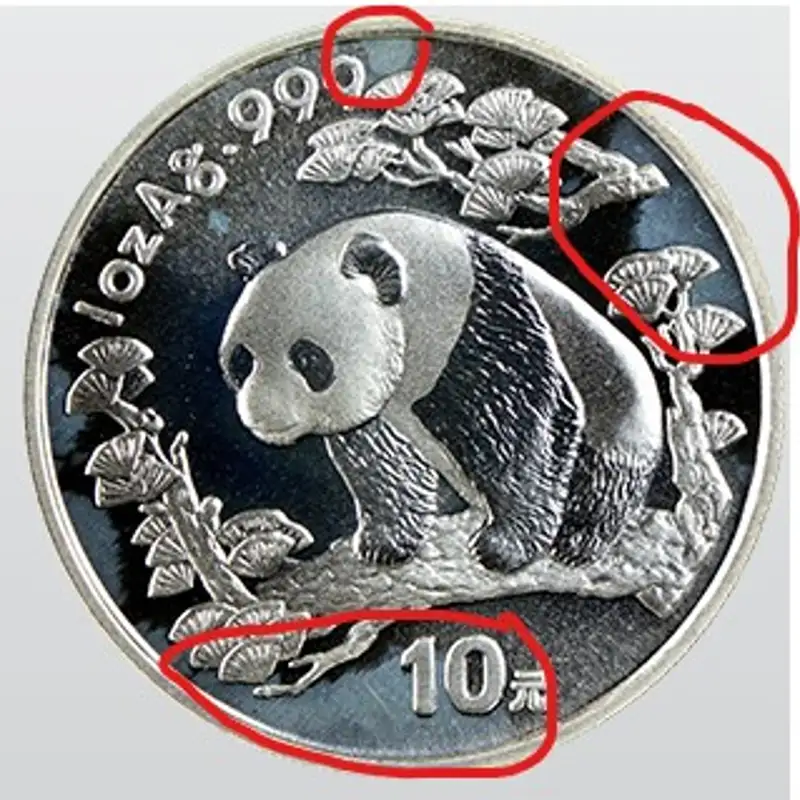
AJ Arango:They want to feel the weight of it. So when you and I started on this, that's what I did. I was a physical silver bullion collector. You know, I love the the Chinese pandas, milk spots and all. You know, we always used to talk about the milk spots on the the pandas.
AJ Arango:And so you and I both also have a lot of I bet your folks on here, they don't know, like, you have that the same background I do. We used to be broker dealers at Smith Barney back twenty something years ago. Right? So so we we both spent a lot of time doing that stuff. After September 11, was like, Well, I'm gonna go join the army and see what that's all about.
AJ Arango:I can be a trader or a stockbroker anytime, but you can only be in the army when you're kind of young. So I got out of being a stockbroker and then back in the army and then back in finance where you I met. Just there was just something about buying. I used to buy, like, one silver eagle or one panda every payday. I wasn't making a ton of money, but I just really enjoyed hoarding it.
AJ Arango:So that was kind of how it went for me for years and years. One of the things I would get frustrated with was you go to buy it, spot back then, spot for silver was like $13 an ounce, right? You go to buy like $13 an ounce silver or $14 an ounce silver, and you go to the coin shop to pick it up. And they're like, Oh, well, there's a $3 premium on it, dollars 4 premium on it. And you'd always feel a little bit like when I sell it back to them, they give me spot price.
AJ Arango:But when I buy it from them, they're like, Well, that's the cost of physical silver. And so, just kind of ate it for a while and I was like, Well, in the long run, solar is a good investment. And during COVID is actually when I switched. I didn't switch. I still think you need to own the physical stuff.
AJ Arango:Like I said, there's something about it. I love owning physical. I had my whole collection out the other day, and it's just really something to behold. But during COVID, the price of silver, there was a let's call it a liquidity crunch that going on. The spot price of silver was down to 11 or 12, which it had been, I believe at the time, if I remember correctly, it was hovering around 16 or 17 a week prior.
AJ Arango:And then just because folks were selling their silver positions to cover their stock positions, so they got squeezed in, the spot price of silver dropped to the floor because everybody was selling their positions. And I went to go buy some. I believe it was one of these big, massive online trading bullion companies that we all probably use. And the premiums were like $6 and $7 an ounce. I was like, Well, I can't spend 50% of the price in premium.
AJ Arango:So I went and I fired up the brokerage account and I go, Well, I'm just going to buy paper silver for now because at the time, I didn't want anything to do with paper silver. They trade somewhere between 200 to 400 times as much paper silver exists than actual silver that trades. So for somebody like me who's kind of biased towards the physical bullion, I I was like, well, just just for a little while. You know? I'll get into it and get out.
AJ Arango:I won't get addicted. You know? And so I got in at $13 $14 no fuss, you know? No friction. No friction in the trade.
AJ Arango:Right? Nobody kinda looking at you like, Well, is this real? And yeah. So there's absolutely no friction in the trade. I get into the thing, and then maybe two weeks later, it's popping back up to 16, up to 17.
AJ Arango:I was like, Well, this is fantastic. Really, was just about the premiums, the premiums that some folks would charge at their coin shops. Look, they've to make a profit. They know what their cost basis was getting into that coin, And by God, they're not getting out below that cost basis, and good for them. I mean, that would do the exact same thing.
AJ Arango:But that really drove me into kind of the paper side of of collecting, you know, hoarding, I would say, bullion silver.
Tony Gryckiewicz:Well, so you remind me, but there's, there's a little story there, kind of a little segue about those pandas. That was actually, I think kind of a part of the driver for me with numismatics is I always love this idea that some we learned that some pandas in those older years were worth more than spot. They were worth more considerably more than even like the most recent years. And we were, we were getting into this 2014, 2015. And I remember like a 2003 panda was worth considerably more on, you know, the online kind of kind of exchange for the silver.
Tony Gryckiewicz:And there's these different years that had these different premiums because there was a bit of a collector base for them. And I'd love the idea. I mean, I think I spent a whole couple, a couple of weekends driving all over to Denver Metroplex, as well as down the Colorado Springs to go to all of the coin shops and to try to find any pandas I could get from back dates because they would sell them to me close to a spot or, you know, a couple dollars, a bit, a little bit of a premium over, but I knew that there was like a collector value to though there was like a numismatic value to them. And then I discovered the milk spots and people out there that collect bullion. You guys are going to know what the milk spots are.
Tony Gryckiewicz:It's like, I'll find an image to throw up on the, throw up on the screen here, but basically it's like this really, it's like this milky white little spot that's on the surface of the coin. It has something to do with when they mint it, a bit of the residue on the planchette that remains and it can tone, it can kind of change in the holder and the capsule and you get this milk spotting and that'll really affect numismatic, the collector kind of value of it. And I used to, I mean, AJ and I shared an office together at this mortgage company and I used to come into the office and I was just like complaining about, yeah, I waited all week for these coins arrive. You know, I got them and they've got milk spots all over them. So I'm sending them back and AJ used to laugh at me quite a bit about the whole, about the whole milk spot, milk spot thing.
Tony Gryckiewicz:But, so, you know, I think so a lot of people out there do trade physical silver. They, they don't dabble at all in this market of the, the contracts and the futures or, or just even, you know, the options like you do. In simple terms, could you explain who sets the silver price that we watch all day? The spot price. First off, you know, what is the spot price?
Tony Gryckiewicz:Who where does that spot price determine and and and who determines that price?
AJ Arango:Yeah. I I I would say the the most widely traded futures is a COMEX futures for silver. Really, that spot price means is what is the cost to have the delivery of that silver at that specific time? So you can take physical delivery, especially like SLV does that, right? So you can take physical delivery.
AJ Arango:But the physical delivery that you would ask for, it's not really something that retail folks would do because if you say, Hey, I want to take physical delivery of SLV, it actually relates to about 50,000 shares of SLV, which let's call that about somewhere between six hundred and eight hundred pounds of silver. When you divide that up into ounces, that cost is essentially what they calculate as the spot price of silver. It's like that's the price for delivery. But like I said, and you're in the biz, as a coin shop, the spot price that happens in this nebulous futures market is really a guideline. People come in and they have this expectation, they're going to buy your silver at spot, which tells you right there that they haven't been in the game really that long.
AJ Arango:Right? Or that they're going to sell it to you and you're going to take it exactly at spot, whatever junk that they bring in. So, I use it more as a guideline, but at the end of the day, if you're an institutional investor and you want to take delivery of 700 pounds of silver, which is going to be equivalent to about 10 COMEX silver contracts, You can take that delivery. You do pay for shipping, but it comes to you in these, I want to say, 200 ounce, if I
Tony Gryckiewicz:remember this Oh, thousand ounce bars.
AJ Arango:Thousand ounce bars. That sounds great.
Tony Gryckiewicz:Comax. Thousand ounce. Deliver thousand ounce bars. Correct.
AJ Arango:And so, you know, I have a car that could carry those around. So, you know, for me, that's probably out of the question. But that's really from there is what we derive our spot price from. You know, the futures market trades from about 6PM Eastern Standard Time on Sunday all the way till I believe, seven or eight on Friday. So it's like a twenty four hour market and it's running over that period of time.
AJ Arango:It's the most traded and the most active market. So the rest of us, like let's call it SLV and then individual traders and then stores, we're essentially playing catch up against it. We usually look at the spot price once a day and say, This is where we're at. Unless it's a super active day, we don't really change what we're trading on the spot price inter day.
Tony Gryckiewicz:Yeah.
AJ Arango:That makes sense. Yeah.
Tony Gryckiewicz:Sure. Sure. Absolutely. I mean, I do have this conversation pretty regularly. Think I received a phone call from a lady a couple of days ago that they wanted to sell some gold, but she was asking me, well, why would I not, you know, why wouldn't I get the full milk price, you know, for the gold?
Tony Gryckiewicz:Actually, I mean, think I offered her something like 98% or something that was pretty close to the gold value. You know, it really comes down to, well, how much can the dealer who's trying to make a market in this, how much can they sell it for? And a lot of coin shops, they're considering about their outlets. One of the major outlets is going to be a refiner. So whatever the refiner is paying for that silver and the refiner is working on refining down 90% silver coins, or they were working, they were refining down a 10 ounce silver bars or not refining those, but they're melting those down and they're creating thousand ounce ingots to deliver to the comments exchange for some kind of futures contract or for some delivery that they're helping to kind of with the fulfillment of that delivery.
Tony Gryckiewicz:And what the refiner is paying for it, you know, might very well be 99% of melt or 5% for the case of silver for a period of time, 5% back melt is what they, what the refiners paying. Or they have so much 90% backed up that they have to go through a considerably expensive process to refine down that they may not even want it. So if they don't want it, the coin dealer who is being asked to take this in and to purchase that, you know, it's well, where, what is he going to do with it? He's not buying it in order to put it back in his safe and to create some stockpile for himself or herself. He's thinking again about outlets.
Tony Gryckiewicz:And if the customer base is not walking through the door to buy those silver coins, those 90% silver and the refiners aren't taking it, why does the coin dealer want it? And therefore, but some people, you know, they still want to sell it. They're like, well, it's slivers at $90 an ounce. I have all of these dimes I've saved since 1975. Yeah.
Tony Gryckiewicz:I want to sell these things. And so the offer starts to get, you know, goes lower and lower as this dealer just doesn't need it and cannot sell it and cannot deliver it to someone else. And that's something that we faced in this market. I know for a fact about a month ago or so, and I think it's gotten a little bit better as the rise in price of silver has started to climb. There are now, there's all the, this, this flux of these customers, you know, that the public they're showing up to buy silver.
Tony Gryckiewicz:People are, I'm seeing posts on our Facebook group. I want to sell my gold. I want to buy silver. I see about lines outside of, you know, Valcambi stores or wherever that sells silver bars, trying to buy silver because, you know, because silver, know I'm kind of digressing here a little bit, a little bit of a tangent, but I swear I'll kind of bring it back, but silver for a while sat. I remember when you and I were in, were at work together, it was around $14 an ounce, $10.11 an ounce.
Tony Gryckiewicz:Then it sat around 20 for a while. And then, you know, it's had runups to this $40 range. And if you went up to $40 and you kind of got caught up in the hype of that period, you might have silver, you have a $40 an ounce cost basis in that. If it goes back up, you know, you want to sell. Let me, let me get my money back.
Tony Gryckiewicz:Finally, let me get my money back on it. You have other people that, you know, they missed out. They were hoping it was going to go higher and it went up to 40. It came back down to 20. So now here's my second chance to go and sell.
Tony Gryckiewicz:See, we had a lot of sellers when the silver was in this 40 to 60 kind of dollar realm. Then silver started making the news and it's hitting 70 and it's now hitting 80 and now we're in the mid eighties and we're going So now, now, you know, like everything else like Bitcoin or whatever the suit du jour is, people are running towards silver and they want it. And so now the demand for the physical has started back up again. And so the coin shops actually, you know, they need silver. Frankly, I would love to start stocking it because I really don't.
Tony Gryckiewicz:I do numismatics and do rare coins. I would love to start stocking Eagles because of how many phone calls I get about, I would like to buy some silver, you know, do you have any silver? And I got to unfortunately say, gotta, I have to order a free mute for you because I don't stock it. And therefore, you know, I'm going to order it at whatever I can get it from a wholesaler for. And then I gotta, you know, make something on this.
Tony Gryckiewicz:I'm gonna, you know, you know, so, so it was like, you know, the price I can get delivered to them is, is a lot more than what they can get it from a coin shop at.
AJ Arango:Yeah, that's kind of the situation. Nobody wanted the silver at $22 an ounce, but man, they want that silver at $78 an ounce. Yeah. And I think one of the reasons that you gravitate to the numismatics is because there's a fun cat and mouse game of the asymmetry of understanding, right? And there's a little bit of conjecture in there.
AJ Arango:You look at something, you go, It may be slabbed or whatever, and you're like, Ah, bet you I could get that thing graded a little bit higher. Whatever. There's all the magic of the numismatics that exists. Now, when you're talking about sending the money over to these folks that run the futures contracts and actually do the physical delivery and then melting the thing down and then putting it in thousand ounce bars, right? So all those things that exist in that stream of supply are friction, right?
AJ Arango:So when you're dealing with the physical bullion, coins and any physical silver, it's inherent that you're going to have that friction involved, The physical carrying of it, the finding of buyers, really an informed buyer, right? Because an informed buyer needs to understand why they're paying over melt price for some incredible numismatic value, right? So that's one of the reasons I gravitated over to the bullion side. Now, the asymmetry of information is a lot smaller, but for those of us that look at it every single day, you can get kind of a feel for it. It's funny because the brain kind of makes a lot of those it comes up with, Oh, well, this price is a little bit high for right now.
AJ Arango:We're getting a little overheated. We're a little bit overbought. Right? And then you go and you look to see some of the technical analysis and see what the velocity of selling is to kind of reinforce something that your mind has already come up with. When you have a little bit of that asymmetry of understanding of like, well, this is the band that silver is trading in now, when you do it on the paper side, you don't have that same friction.
AJ Arango:So now you're able to profit from that little bit of asymmetry. There's the folks that live in this, they do it every day. So I'm out in California. The market's open at 07:30 for me because I spend most of my time on the ETF option side for like SLV and GLD, but, you know, we're not talking about GLD today. But, you know, so I stay on that option side.
AJ Arango:So when the market opens up for me for 07:30, well, don't start work till nine. From 07:30 to 09:00, like, I'm able to look at the market. I'm able to look at the velocity. I'm able to make some of those early morning trades. Right?
AJ Arango:So what you see the market do in the first fifteen or thirty minutes of the day is, like, about 80 ish percent of the time, the direction that you're going to go. It's it's rare well, let's say uncommon that the market starts out in one direction for the first thirty minutes of the day, and then it ends up going in the other direction later on in that day. So if you make those trades earlier in the day, you know, you can put yourself in a position to, you know, profit or shed some of those positions just with a little bit of that asymmetry without any of that friction of collecting it, delivering it, shipping it, melting.
Tony Gryckiewicz:Transaction costs. Yeah.
AJ Arango:Well, it's like if I gave you a let's call it a war nickel from 1943, right? 35% silver. Are you gonna give me the spot price for the silver? It's like, Well, it's only 35% silver. I believe it's magnesium in there, right?
AJ Arango:There's a bunch of other copper.
Tony Gryckiewicz:Yeah. I'm gonna pay you now to call me again. That's what I'm gonna do.
AJ Arango:Well, I mean, you would unless unless I had a pallet of war nickels in my
Tony Gryckiewicz:my garage. Cowal war nickels. Yeah. Oh my gosh.
AJ Arango:But there's a huge amount of friction just shipping that around. Right? Those end up being fun little trinket gifts, but at the end of the day, this thing is the most cumbersome. When you look at what does $100,000 worth of silver look like, It's there's there's are shipping constraints to getting a $100,000 of the silver around. You know?
AJ Arango:So yeah. That that's really the the bias that I have towards the paper side for the day to day trading. I'm not trading my physical bullion or swapping PANDAS with folks from one day to the next, but because I trade on the paper side, I'm able to, you know, with a little bit of my understanding of like, Hey, this is where this thing lives. And then I'm able to cash flow, which I think is the biggest part for me is I'm able to take the silver that I own, you know, quote unquote, because it's paper silver, right? Have no illusions about what if it hits the fan, what happens to that paper stuff.
AJ Arango:I'm able to trade that paper stuff and I'm able to generate a little bit of cash flow from it too in a very low friction way. So that's, that's one of the big benefits for me.
Tony Gryckiewicz:Yeah. No, that makes a lot of sense. The something that comes to mind with it comes to transaction costs and the transportation of the silver to where you can get closest or the best offer for it. There's been a couple couple of occasions that I've gotten phone calls from folks that are different parts of the country, and they have a lot of gold that they wanna sell and they like my offer for that gold. And I simply am not there to help receive that gold from them.
Tony Gryckiewicz:I mean, gold is, there's been a couple of occasions where there was a large quantity gold that this person wanted to sell. But specifically silver, I mean, all, you know, we've got 10,000 dimes, we've got 20,000 this, that, the other. There's an offer, but then you also got to factor in of course shipping and shipping and insurance and how are you going to physically get this silver over to me so that I can pay you out for, you know, whatever. So those transaction costs do become kind of become an element with it. I did want to ask you though.
Tony Gryckiewicz:So in terms of how, when you trade silver, when you trade SLV, so those who don't know, SLV is an ETF. An ETF is an exchange traded fund. Basically this is a fund that's set up to track some kind of an index of some sort. In this case, tracking the silver, I guess, price, the comics spot price for silver, and it trades on a stock exchange just like a stock. So it doesn't trade like a mutual fund trades like a stock.
Tony Gryckiewicz:You can buy and sell it during the course of the market open and close. But, so I am going to definitely ask you about your strategy. I'm going to, hopefully we can look at, you know, a little bit of your models of what you look at and how you do what you do. But when you are placing bets, you're doing this approach, your approach with SLV, are you betting on the direction, the price direction of where it's going to go? Are you making a play on, you know, fear of it within the market people that like, you know, consumer kind of a sentiment or kind of a general, you know, news that's out there about the economy.
Tony Gryckiewicz:Are you trying to make a bet on timing the market in some way? How would you explain sort of like your philosophy of how you make money using, you know, betting on options contracts with SLV?
AJ Arango:So there's like different classes of like options traders, Right? So your typical option, let's call it retail trader, the way that they trade options is they buy they buy a call, meaning they're buying the the right, but not the obligation, to purchase at a certain price by a certain time. I'm just kind of filling a number out here, but it's the overwhelming majority of retail investors that's what they're doing because that kind of option play makes sense to them. They're like, Hey, think that silver's going go up to $110 an ounce, so I'm going to buy a call at $105 an ounce. Options are in hundreds of shares.
AJ Arango:So with an ETF, it'll be 100 shares is what you would have to purchase or you would want to purchase. And it's a leveraged instrument. So with silver at, let's call it $85 an ounce, or SLV, I think the equivalent of SLV is like maybe $80.81, something like that. It's not exactly SLV doesn't trade exactly at spot price.
Tony Gryckiewicz:Okay. I know that.
AJ Arango:It's lined up to the comics. So 50,000 shares equals 10 contracts. And so there's like these little variations between the spot price, but but it's it's a close analog. But if you're just looking at it every single day, you you kind of do that translation mentally really easy. That's how most folks are buying shares.
AJ Arango:They say, Okay, well, it's 85 now. I think it's going to $1.10. I can pennies on the dollar, I can buy the opportunity to buy silver at $100 And then if silver goes up to $110 or $120 they make that difference between that price that they said that they would buy it at, which is called the strike price, and the price that it's selling at. So that's what the overwhelming majority of folks on the retail side do. What the institutional folks do is they play all over it, right?
AJ Arango:Because that's what they do for a living. A lot of institutional folks, what they do is they buy a put. And so they have, let's say, they're responsible for a pension fund or they're responsible for a mutual fund or something like that, and they are hedging against a big drop in the price. So if they end up with a certain amount of, let's call it $5,000,000 worth of silver in their mutual fund, and they start getting a little nervous about what the volatility seemed too high or they think the bottom's going to fall out of it. What they do is they buy a put, which gives them the ability or the opportunity, but not the obligation to sell at a certain price.
AJ Arango:So if I'm holding at $80 a share, I can buy a put for $70 a share, meaning if the price drops below 70, I can force somebody else to buy it from me for 70. So, if it goes down to 40, they end up eating the difference between 70 and 40. So, that's kind of that other class, which is like the mutual fund folks. Then there's the folks that are actually selling these contracts. This is like hedge funds.
AJ Arango:Hedge funds are typically the sellers of options contracts. They have some new funds nowadays. People are getting a little more savvy and they're starting to get on the sales side of the options contracts. That's where I come in. I sell options contracts.
AJ Arango:So if I own a 100 shares and I can sell at $1.10 so I own a 100 shares at, let's say, 80, and I can sell somebody the opportunity to buy it from me at a 100. So if the price goes up to $1.10, I make I make the 100. But if the price doesn't make it to $1.10, I keep the cost of the contract that I made with them. Yeah. On the other side, I sell that put contract.
AJ Arango:So if it goes below 70, I will buy a 100 shares. Remember back, let's call it like $20.14, 2015, you know, I a buyer. I used to say, we used to talk about it, I used to say, I'll buy at $13 day. Right? So I would you know, you go to a shop and you're like, Hey, if you're selling anything for $13 an ounce, just consider me a buyer.
AJ Arango:So I'll come in and I'll pick any silver up that you're selling for $13 an ounce, I'll buy it. In the options world, you're able to put out a contract and say, Hey, if this thing drops below $50 let's say $50 which seems crazy because just a few months ago, nobody was buying for $30 right? So I can sell a contract today at $50 and if the price goes below $50 I'll get assigned and I just have to cough up the $5,000 and now I own those 100 shares at $50 a share. And so that's the side of kind of the optioning that I do, which is, you know, I sell the covered calls and the stuff that I already own, which helps me cash flow my hoard, so to speak. And I set in a floor where I'm a buyer.
AJ Arango:So, at 20, at 30, at 50, I'll pick up another 100 shares if it goes down to 50. I'll pick up another 100 shares if it goes down to 30. And my counterparty is paying me to participate in that, essentially selling them leverage on the upside, right? So, I'm selling them the ability to buy my shares if it goes up a certain amount, right? And they're giving me premium to do that.
AJ Arango:And I'm selling the insurance to these organizations that are trying to buy the insurance saying, Hey, I'm a buyer if it gets below that price. I'll tell you this. When you first hear it, it twists your brain in knots. But some point, when you do it for a little while, you start figuring out, you get kind of the curse of knowledge, and you wonder how it didn't make sense. At the end of the day, there's only two types of contracts, calls and puts.
AJ Arango:And there's only two things you can do, you can buy them or you can sell them. That's four things. That's it. Once you get that, you got made in the shade and you're ahead of 99 percent of retail traders out
Tony Gryckiewicz:there. Yeah. So call options, if you purchase one, it gives you the opportunity to purchase whatever the option is on, you know, at a certain price, whether it's a stock or it's SLV or whatever, have this opportunity to buy it at this price. So it becomes really valuable when the price of whatever it is has gone way up. You know, a silver is trading at $85 an ounce or whatever it is, and you still have this ability to purchase it at 40.
Tony Gryckiewicz:So immediately the option contract is worth a whole lot of money because it's in the money so to speak. If the price of silver is way below the option of the contract, you know, you can buy it on the market for 25, but your options contract says it's for 40, it's worthless. Nobody really, I think, you know, cares, nobody wants it. It's out of the money. No one's going to exercise that contract.
Tony Gryckiewicz:And then puts, you have the opportunity to sell at a certain price. So if the prices go down, you can sell still high. And if the price is way higher than your contract is basically is worthless. So with all of the market movement we've seen with all this volatility, how has that affected your strategy? Cause I imagine then that you've sold some contracts that you didn't expect to be exercised or that, you know, were out of the money, but then all of sudden became in the money because silver moved tens of dollars within, you know, a matter of a couple of days or a couple or a week?
AJ Arango:Yeah. You know, so so so some folks so most of the savvy folks, so most of the folks that kinda trade in the space that I trade in, they actually trade volatility. Right? So volatility is a funny metric because they say it's mean reverting, meaning volatility gets above its average and it will revert back to its average, And volatility gets below its average and it'll revert up to its average. So most of the folks that sit kind of in my seat and they take that approach, they wait for the volatility to go up because when the volatility is high, the premium is very good.
AJ Arango:And so then they sell that premium, and when the volatility comes back in, they call it like a squeeze or collapse of volatility, the price of those contracts that they sold contracts, and they buy them back for pennies on the dollar. So, what I do, because I enjoy owning the shares, most of those traders don't actually even own the underlying that they're trading against. They're just playing against that volatility. For somebody like me, I already own the shares, so it's easy for me to sell a call. And yeah, I forego a little bit of the profit because if I'm at 40 and I sell a call at 45, I make a little premium.
AJ Arango:It's never anything outrageous. I make a little premium. And if it goes up to 50, then I end up selling at 45. So, I forego that $500 difference. Now, what I'm doing on the way up is I'm hedging that movement.
AJ Arango:When I start seeing these explosive moves up, what I do is I'll sell puts on the downside. So you can look at a relative strength indicator, RSI is the term that a lot of folks use, and you see that thing just like shoots up at a 45 degree angle on your little trading screens. You know, you're typically in a good position to sell the put on the bottom end because then as the price goes up, that put loses value. And with that money, I'm actually covering those pieces. Let me start out.
AJ Arango:I probably should have started with This isn't financial advice. Right? I'm not giving anybody financial advice. No. I provide a little bit of coaching and a little bit of training.
AJ Arango:For my customers, what I do is I get on with them and I look at their accounts and I kind of walk through. Typically what happens is I get a panicked call and they're like, Oh my God, how do I get out of this situation? And I explain to them what is the play to get out of that position. You sell a call. Price of the underlying goes through your strike price and just goes into the stratosphere.
AJ Arango:So what I would do in those positions, in a measured way, is I sell a put on the bottom end, and so I'm bringing in a little bit of cash flow, and I can use that cash flow to adjust that strike at the high end. One of the things that really separates options from the underlying is there is an expiration date, and because of that, there is a time factor to the value of these options. So when you sell that option, you are selling the price, and you are selling against a direction, and you know, there's going to be certain volatility that's involved with that, and you're making money against all of that. The reality is there's a time factor, and you're literally selling against that time. So if I have a strike let's say I sold a call to you.
AJ Arango:I was at the price is at 40. I sold it to you. I sold a call at 45. Price goes up to 47. I can roll I can I can buy that thing back?
AJ Arango:I take a loss on it for sure. If it goes through my strike price, I'm going to take a loss. But after taking that loss, I can sell one one month further out in expiration date. And As I'm going out in expiration date, it's worth more money, so I can make a little bit of money on that turn. Now, what I'm not trying to present is that it's a no lose scenario.
AJ Arango:You definitely need to understand what your downside risk is on something like that. You can paint yourself in a corner. However, when done in an appropriate way, I'm essentially selling time to folks. Right? So I buy the thing back, I spend a little bit more buying it back, and then I sell one that's a little further out.
AJ Arango:Now, with something like silver, you can get yourself in a lot of trouble because it goes to 45. And then I gave him another thirty days, and now it's at 65. And it's like, oh man. You know, because it just kept running and running and running. So, just keeping pushing it up and up and up and up, I can sell you a 45, and I can buy a 50.
AJ Arango:So now I've bracketed in the most I can lose between 45 and 50. And when I sold that 45, it was worth way more than the 50, if that makes sense, just because it's closer to the current price. It's a little bit like selling ice cream, right? So when you sell an option, as soon as the customer gets it in their hand, it starts melting a little bit. So, you know, it's like an ice cube or like I, it melts over time because of the expiration date.
Tony Gryckiewicz:Yeah. Expired. There's a date. Yep. That does make sense.
Tony Gryckiewicz:And you mentioned about a lot of options trading is, works on the principle of the reversion to the mean, but when you have silver breaking records and continuing to break the records, there isn't a whole lot of reversion back to the mean. Right. So,
AJ Arango:Well, also, Is it good
Tony Gryckiewicz:for traders in this situation or bad?
AJ Arango:I mean, it's good for somebody. Some counterpart, right? It's a zero sum game. Right? So someone was on the right side of it and someone was on the bummer side of it, right?
AJ Arango:So if I sell a call and I'm getting killed on that call, but I sell a put, well, I'm winning on the put. I can't lose on both, right? So I make it up on that side. Then if I own the underlying anyways, what I'm missing out on is potential profit. I'm not actually going out of pocket on any of that money if I own it.
AJ Arango:We call that a covered call strategy. I'm selling a call, but I'm covered by owning the underlying, which is the majority of what I'm doing in that space. But again, I can always roll out for more time. I can always sell a put and make a little bit of money there. And I can buy a call higher.
AJ Arango:So as I'm getting in trouble on the strike that I sold, I'm actually getting into the money on the one that I bought, which is a little bit higher up. So, you know, you kind of look at it and you say, Well, what is the most that I'm willing to lose on this? And if I got $500 spread between we would call that a call spread between selling one and then buying one at a higher. So in that spread, I've got a theoretical maximum that I could lose, which is that 500 let's call it $500 or $5 And on if I'm selling enough puts to make up for that $500 well, then it's all it's all cherries for me if it if it keeps going up because of the downside. Now, the real risk that you have in that situation is to the downside.
AJ Arango:Because now if I just keep stacking up all these puts and then it whipsaws back down from 80 down to 60 and I sold several puts at 70, right? So, if I am 3 at 70 and it goes down to 60, I'm at $3,000 right there. Now, I make money on the calls on the high end, but not only do I lose money on the put, I actually lose money on the shares that I own. Like I said, it gets really complicated pretty quick, I don't want to get like too down in the weeds on the thing. But if you understand that there's a time value to an option, you understand that you're able to bracket in your profits and bracket in your losses with a thoughtful approach, I was saying, you're way ahead.
AJ Arango:One of the incredible things, and I think for somebody that physically owns silver, is being able to look and refer to what's happening in the paper market. If you look at what's happening in the paper market, it's going to give you tremendous insight into what's happened, what is going to happen or what is happening or will happen on the physical side of the house. So, you know, options trading was like poly market before poly market because you can see where other traders are investing. One of the great things about trading silver is there's no earnings, there's no dividends, so there's none of these binary events that are going to sink the whole thing. There's no Enron that might be too old for most of your folks, but there's no Enron associated accounting shenanigans that, you know, we're going to wake up tomorrow morning and silver has gone bankrupt.
AJ Arango:Right? Silver doesn't go bankrupt. So it it takes a lot of those variables out, and then now it just depends more on kinda your liquid position and then your overall hypothesis of what you think the market's going to do. And I bet it works the other way. I bet you go to a coin show, you see like a maybe not a frenzy because, you know, people are pretty controlled, but you start seeing a lot of interest in certain types of trades.
AJ Arango:And I bet you that because now you're talking about the most savvy people in the market, especially on the numismatic side, but also on the bullion side. And those folks will start giving you some hints as to what they think is happening down the road. You know, one of one of the things about silver is 60% of it is consumed in, you know, in for industrial uses.
Tony Gryckiewicz:Industrial. Okay.
AJ Arango:So only 40% of the silver that gets pulled out of the ground ends up going and remaining, you know, versus gold, right? 99% of all gold that's ever been mined from Alexander the Great till today is still in circulation, right? And that's an incredible thing. Silver doesn't exist in that same world. 60% of the silver that gets pulled out of the mine gets consumed into electronics.
AJ Arango:Everybody always says solar panels, but solar panels aren't electronic. You know, any number of other uses that aren't coins and jewelry.
Tony Gryckiewicz:So a couple of things I wanted to touch on, that you mentioned out there. So one of the things was about how the folks in the physical market look to sometimes the paper market about what's going on. And so again, when we're saying paper market, we're talking about the market at which contracts are traded, futures contracts are traded for silver. This determines what the spot prices of silver. But I know one of the things that people are looking at within our circles and coin dealers is a spot price of silver on our US commodities exchange versus other parts of the world, specifically China.
Tony Gryckiewicz:And in US dollars, the price of silver there is considerably higher. They're looking at not considerably. I mean, it's whatever it was last time I saw it.
AJ Arango:As you say
Tony Gryckiewicz:silver is like close to 90 in The United States. Think it's close to a $100 an ounce in China. You know, so you might say, all right, well that maybe gives you an idea of where things are going to go, but it's not an immediate change in shift. And part of the reason for that is if silver is more expensive over in China, you would think that means people could bring the silver from The United States and take it over to China and sell it for more, which would then balance out eventually the two prices because there's going be an increase in supply of silver over in China. And there's going be an increase in demand for silver over in United States, bringing the price in The United up and the prices in China down, these two things come to an equilibrium.
Tony Gryckiewicz:But like you mentioned, there are transaction costs and there's a lot of friction associated with that taking advantage of that arbitrage. Right?
AJ Arango:Yeah.
Tony Gryckiewicz:So, you're right. I mean, I think that people in the physical side, a 100%, that's, that's what they're looking at every day. I was going to ask you though, because for what you do, do you spend any time in not, you know, do you spend any time looking into the, the news and the reasons, the fundamentals behind silver? What's driving, what's going on macroeconomically? You know, do you spend time trying to figure out like, what is the real driver here of the metal prices or does it matter?
Tony Gryckiewicz:I mean, in terms of your strategy with the calls and the puts and what you see from a technical analysis perspective, does it matter those things?
AJ Arango:Well, I think it matters for sure. I definitely spend a lot of time looking at, you know, so I think it was maybe three weeks ago. We had this stunning upward movement, bullish movement on the silver side of the house. And so then, what is it, CME decides to increase the margin requirements for the speculators that are trading it. And so you see like a sudden, just somebody just pouring water on that upward movement, right?
AJ Arango:So then we saw like a little bit of consolidation for a week. It's a funny thing that happens on the silver side of the house is it's very difficult to have a conversation with somebody about spot price of silver, the cost of silver, the value of silver, and not devolve into market manipulation and then know, quote unquote, This giant bank is doing this to keep And you know, at the end of the day, not that I don't think that that happens, but it would be a losing proposition for somebody to be on the other side. Now, clearly the Hunt brothers were able to manipulate the value back in the 1980s pretty well and they got stung by it. Think they would probably say that if they had to do over again, probably wouldn't have done it the way that they did. I mean, it was, you know, pure manipulation, but at the same time, like, it wasn't it it Sure.
AJ Arango:It wasn't morally incorrect in my in my mind. Right?
Tony Gryckiewicz:Think they were So let me just ask you. Right? I mean, do you think the silver market for silver is manipulated in any way today or has been for the last few years?
AJ Arango:So so this is one of the things about about silver. I mean, look. They're all manipulated. They're manipulated in that there are folks that have so much money that when they make a move, it ends up being the reality that the rest of us live in. In that way, everything has movers and shakers that are able to create outcomes.
AJ Arango:Now, whether that is malicious and nefarious and whatever, I don't know. But I do know, certainly. Certainly, if some giant bank decides to drop a billion dollars and increase their position, it is going to materially change the value or the spot price in a market. Now, is that manipulation or is that just how the markets work? I don't know exactly what the line is between those things, but we would definitely need to pay attention to that.
AJ Arango:When China says, Oh, we're putting a tax on how the silver is going here, and then we're stopping on the export of silver because we want to keep it internally, yeah, it changes the price. That price is a manipulation, right? It has a material effect. So we would want to stay on top of it, but for me, I think what I spend more time looking at is the behavior of the other traders in the market. I look at where they're putting their hedges.
AJ Arango:Know, there's something called the Black Scholes model, Again, we're getting into the deep, dark regions of the financials on the thing. On the Black Scholes model, it is how we are building the pricing for what these options are going to be. Options are a really neat market in that built into the price is the probability. So you buy that 105 call and you are given instant feedback, Hey, you've got 10% chance of profit. Right?
AJ Arango:That 10% chance is based on what the other market players the way they're betting because the way they're betting is going to change that price. When I'm able to look at those actors, which I think are the most informed actors in the space, they're not always right, but they're certainly well informed. When I look at those players and what they're doing, that gives me the best insight as to my hypothesis. So, I come to a different conclusion than they come to, then I really rethink, Okay, you know, these folks are saying I've got a 5% chance of profit. And when I look at my position, I look at their position, I think to myself, do I really want to be in a position where I have a 5% chance of profiting?
AJ Arango:Or do I want to take the other side of the bet? Right? Yeah. And make a little bit less, but but at least have probability on my side.
Tony Gryckiewicz:Yeah. I mean, you're you're just reminding me or making me think of some things that just the just the fact that, I mean, if you did have a pretty sizable silver position, a physical silver position, or you were trying to decide whether to be bullish on silver, I mean, understanding where the smart money is betting would be really smart. Pure and simple. I mean, like you said, they're very well informed. They're placing billion dollar bets.
Tony Gryckiewicz:And that's going give you a pretty good idea of, you know, generally probably where almost all of them think it's likely to go on. At the same time, it doesn't re the fundamentals of what's going on with macroeconomics worldwide don't really matter as much as people's perception and where they're betting within the marketplace for the ETF. Like the thing that you're trade, you're trading at all. It doesn't really matter a whole ton that there's this supposed, you know, global battle over physical silver for the purpose of driving AI, as long as the market is all making bets that it's going to continue to rise for the next three, four months or whatever. And if that's the case, then you're better off being on the side of the market.
Tony Gryckiewicz:That's, you know, the side of those that are expecting it to rise and being on, you know, placing the same bet that they are, because they believe that that's what the rest of the market's going to do. And so you're going to make money by kind of, you know, the rising tide kind of raising all ships. But I guess my main point there is just that the, what's actually driving or what the real fundamental is kind of sometimes doesn't really matter as much as what is the general, either perception of the market or what is general perception of the market on the direction of the asset? And if people are all bullish on it, then it kind of pays to be bullish on it. But that being said, there's often the biggest gains by kind of taking the position that's out of money, out of the money, so to speak, the whole black swan kind of hypothesis with trading, which is the extremely unlikely event is the one that pays off enormous.
Tony Gryckiewicz:And it actually costs quite a bit, quite very, very little to take that position. Hypothetically, you don't lose maybe let's say a whole ton on some contracts that are way, way, way, way out of the money. But one of those things, those unlikely things were to happen, you end up having a massive windfall. I think that's also, you know, another potential strategy.
AJ Arango:So I would, I would deviate a little bit by just saying because silver is industrial metal, it's not a tulip, right? There's an industrial use for it. Silver is the most conducting metal that we have and there is a point at which, even with all the incredible industrial uses of silver, there's a point where it is too expensive to continue to use it for that, right? There are replacements. So as silver starts driving, going up to, let's say, crazy levels, and maybe somebody that is making some of these electronic microcontrollers or boards or solar panels or whatever starts saying to themselves, Well, look, I'm going to get a 10% or 15% decrease in the conductance across this bridge if I use copper.
AJ Arango:However, with silver at, let's say, some crazy number, $2.10 an ounce, copper looks like a really good deal, right? This is kind of what happened to platinum and palladium in catalytic converters. Silver can get to a point where even the speculators are not going to be able to create demand if the price is so high that the actual bottom falls out of the industrial use case for it. That for sure needs to be part of our calculus.
Tony Gryckiewicz:That's fair.
AJ Arango:At what point is it no longer profitable to continue to use silver in a solar panel, for example, where it's still an economically viable product to produce? Because once it goes past that point, well then forget it. Does 30% of the global demand fall apart? If that happens, manipulator or not, you're not going to be able you know, when you have that kind of demand destruction, you're going to see prices bottom out. One of the things that is really interesting just in the trading side of the market is typically smart money is right over longer periods of time.
AJ Arango:They are also typically incorrect in shorter periods of time. There's something that we call the expected move. When you look at the trading behavior, there are these left and right limits that we call the expected move of any security. Over forty five days, typically the actual move is greater than the expected move, which is neat. However, less than forty five days, the actual move is typically less than the expected move, right?
AJ Arango:So what does that mean? What that means is the way folks trade professionals is at forty five days, they input too much volatility into the price, and as the volatility reverts back to the mean, the actual movement, I say more often than not. I mean, we're talking about 95% to 5% of the time types of misses here. When the expected move so the actual move is greater than the expected move over a long period of time, but the actual move is less than the expected move over that shorter period of time, that forty five days to expiration period of time, which is kind of a magic number that folks in the options world, they look at. You'll talk to guys, there's an organization called Tasty Trade and they've done all the back testing and they stick to this forty five day to twenty one day trading window because of this anomaly of the smart money overestimating the move versus what actually ends up happening.
AJ Arango:And so I think we see that in silver too, right? So when silver pops up, I would think that the expectation that we had for silver, like in November, November was ripping, right? And, you know, it kind of bogged down a little bit and then it started kind of ripping again more recently. So people get this feverish pace, right? So volatility goes up, the premiums get really expensive, Everybody's expecting a $120 an ounce spot price.
AJ Arango:So folks are selling the calls up at the $1.20 spot price, you know, creating those futures contracts. And then when it doesn't hit that, the price, you know, really, really collapse. Right? So the volatility collapses. We kind of go sideways for a little while.
AJ Arango:And, you know, what we try to do on the paper bullion side of the house is profit from that ex that difference between the actual and the expected. Right?
Tony Gryckiewicz:Interesting. So I think people out there would love to get your take on just a question of at this level we're at right now, are you still bullish? Are you bullish on silver at this level?
AJ Arango:There are so many tailwinds for, not just silver, but like all silver and gold and like all these commodities, right? I'm bullish in the long term on all commodities.
Tony Gryckiewicz:Me too.
AJ Arango:Right? So that is my bias. I don't think that in twenty years, gold, silver, pork bellies, orange juice are going to be cheaper than they are today. So that makes it very easy for me. So we end up saying, Okay, so over the long term, is $100 silver exist somewhere in the future?
AJ Arango:So this will be my portion of actual, The one portion of actual financial advice I will make in this podcast is in one hundred years, silver will cost more in US dollars than it does today. You can take that to the bank. Long term, I'm of course bullish, but as the price gets pushed up, I do see the potential for demand destruction. Does that mean to me as a trader? Well, I own the silver.
AJ Arango:I'm willing to get in, but I just need to really bracket out where those places are. I kind of spread myself out a little bit more and I say, Well, if silver was at 60 in July, would I be surprised? Probably not. I probably wouldn't be super surprised if the spot price of silver was 60 in July. That said, I don't think I'd be super surprised if it was at 120 in July.
AJ Arango:As we're talking, it's January, so in six months, it's a pretty broad grouping there. What I do know is that for me personally, I want to own. I'm bullish on owning silver because I can sell those calls. Can create some cash flow from it. If the price goes down or bottoms out, I can pick up more shares in the long run.
AJ Arango:I would say I'm pretty bullish. But are mean, it's hard to say. If you had told somebody last I actually made a video about buying silver, I think two years ago now, it was like trading at $28 an ounce or something. If you had told that guy, Hey, it's going to be $90 or whatever, I would have put my house up, mortgage to my house to buy more silver. Obviously there's no crystal ball, right?
Tony Gryckiewicz:Sure, of course.
AJ Arango:You just want to make sure that you're managing your risk, right? Manage that risk. For me, that just means spreading out my expectations. So long as my expectations are much broader than the actual movement, then I keep trucking along, bending down in front of steamrollers to pick up quarters,
Tony Gryckiewicz:you know. Please don't get into the habit of that. Well, sure if you're gonna do that, make sure that they're pre 1965.
AJ Arango:So Yeah. Oh, for sure. You guys Yeah. The only one's worth it.
Tony Gryckiewicz:Yeah. Yeah. I'd be otherwise just endanger your life or '92, you know, bird wash.
AJ Arango:But let me ask you this. What for from where you you look, you're going to all the shows. Right?
Tony Gryckiewicz:Mhmm.
AJ Arango:You get all the all the folks. Like, what what is your expectation? I should be asking you, honestly, do a little bit of research here. Like, teach me something. Like
Tony Gryckiewicz:I think that it's it's perfectly so I've got this theory about markets that, basically, money all the smart money, all the big money, all the hedge fund money, the private equity money, the sovereign wealth fund money, whatever it is that's around institutional money around the world. I have this theory basically that these things kind of pile into different asset classes wherever the action is taking place. There was a period of time that all the action was in crypto and these things are going off and, you know, Bitcoin was at a 100, whatever they reached up to well over a $120 or whatever, whatever the can't remember what the high watermark was for it. There was a period of time where everything was all about the AI run up and the stock. And so there was a lot of money that was all in that asset class.
Tony Gryckiewicz:And for whatever reason, think it got kicked off. I mean, frankly on the news about reducing interest rates and whenever there was a news about, you know, a desire by the federal reserve to start to reduce interest rates, that means there's going to be more money, U. S. Dollars being printed. And it typically means that there's going be a rise in commodities in anticipation of the increase in the money supplies and in anticipation of just more money being out there.
Tony Gryckiewicz:There's, you know, the money starts flowing into gold and then silver started to make the news or I'd say, you know, there was interest on that. And then like I said, I think that the money sort of kind of flows into the asset class and you have all these huge players all dabbling in this market trying to take advantage of the continued price movement and the volatility that's happening within this market. And I think it's going to continue to go to a point until it becomes very disconnected from the fundamentals, very similar to the Nvidia or some of these tech stocks where people were just kind of saying like, this is just so completely disconnected from their earnings or projected earnings that this is bonkers. It's going to come a point where things are completely off the rails and disconnected from the fundamentals. And there just isn't going be larger bets placed in that market any longer.
Tony Gryckiewicz:And you're going start to see participants leave and exit over to another asset class. And when that happens, you're going to have the price come back down to some level where anything lower than that level would feel too cheap to any market participant because of the recent history, because of the recent history that just took place. So maybe that level is 60. Maybe there's going to be a lot of buy orders that are kind of, out there to trigger right at $60 That'll kind of keep that support level and that'll become the new norm as most of the money, a lot of the smart money or whatever it is, the big money, the money that really does move the markets moves on to the next asset class. That's completely my theory.
Tony Gryckiewicz:I don't, this is not what we're all chatting about around the water cool, the proverbial water cooler of the coin shows. That's just from studying markets for a couple decades and, you know, studying this stuff in school and being, you know, kind of a student of the markets for so long. That's my theory about it. So I've always been a little bit of a bear. I've always been a little bit of a very questioning of any kind of speculation.
Tony Gryckiewicz:And I'm telling you when people that are not normally in a market, so let me just say it. When people are not normally in the market start to talk about how they're buying this XYZ, they're asking you, should they buy it? That's usually a good sign that, you know, that the party's almost over and the music is about to stop. Because I remember reading anecdote about the nineteen twenty nine stock market crash and about how at that period there were so much pandemonium and hype around stocks that you could get stock tips from like the guy that shoe shiner that was like shining your shoes or, you know, just, just, you know, everybody had money in the market and they were giving us stock tips. And so there was all of this, this, you know, excitement and that's kind of what we've been, what it's been like with silver.
Tony Gryckiewicz:And, I don't want to rain anybody's parade or burst any bubbles out there, you know, that are watching this podcast, but I'm just giving my honest opinion about Yeah.
AJ Arango:Well, let's think about what the value of silver is. Right? So the value of silver as an industrial metal, and I know you and I have had this gone back and forth about its value as a financial metal as well, keeping that on the shelf because at best it's like a junior financial, right? Nation states aren't typically buying up silver to stabilize their currency, even though I think that they probably should, but nobody takes my That being said, so what's the value of silver? The value of silver is going to be in what can I actually make out of this thing?
AJ Arango:What can I sell as a consumer product? And translates into a certain amount of cash flow for organizations to continue creating that. Now, as silver is having this meteoric rise, there actually becomes this emergent property of silver, which is silver as a wealth accelerator. The price continues to go up, now a lot of folks are buying into silver, not because they can make solar panels out of make big chipsets out of it, make old time photographs, had silver in them, right?
Tony Gryckiewicz:Part of their portfolio. And
AJ Arango:jewelry. Right? They're doing it because they're trying to accelerate their
Tony Gryckiewicz:wealth.
AJ Arango:So to your point, which I think is well made, is as soon as that acceleration stops, that value proposition that's associated with silver, it disappears, right? When silver goes sideways for two quarters, people start saying to themselves, Oh, there's somewhere else I can that jump has a wealth generating property to it, right? And so that value proposition of silver goes away. So, of course, now as those folks that just showed up for the wealth accelerating property leave, now you start getting a little bit of a breakdown in the price, right? And then as the price starts going down, now you get folks that are like, Oh, I think we've seen the top, you know, and I'm gonna move over here.
AJ Arango:I'm gonna slide out of it for a little while and then get So back in that's probably where somebody, an investor like you or me, would live is when the price, we look at it, it goes sideways for a while and say, Hey, maybe we've hit some kind of a top. Let's decrease our exposure to that position, and then we go and we sell our puts, right? And we say, Hey, if this thing is down to 50, I'm back in. Right? I love the idea of selling at 90 and getting back in at 50.
AJ Arango:So, eventually, right, and this is the reason the market cycles the way that it cycles, right? It gets down to an amount and, you know, a lot of these commodities, they respect round numbers, right? Maybe that number is 50. It's probably higher than 40. 40 is felt low.
AJ Arango:Silver feels like it's lagged for decades at this point, but old enough to say it feels like it's lagged for decades. And there's other tailwinds that the spot price of silver only means something in the context of the currency that you are purchasing it in. Right? Because if silver is making a new high in the US dollar, but it is lagging in the Euro, it's not telling you anything about silver. It's telling you something about the underlying currency, right?
AJ Arango:So that needs to be brought into the context as well. One of the nice things about owning silver is silver is a really good hedge against some certain amount of currency exposure that you wouldn't have otherwise. Gold is maybe better hedge, but it's neither here nor there for the purpose of this conversation. But it's within the context of its currencies that we are trading it. You to find a place where, to your point, folks say, Hey, it is too cheap at $39 an ounce.
AJ Arango:I will buy it all day at $39 an ounce because of this underlying you know, understanding of of of what's happening on the industrial side and the industrial uses. One of the things you brought up was was Bitcoin, and I and I don't often have an opinion. You know, I keep being told that I'm too dumb to understand it, so maybe I'm just going to accept that that is what is happening, as I don't understand it because of, you know, I've been hit in the head and blown up a few too many times overseas. But I often ask people, if Bitcoin had a dividend of 1p a quarter, just suddenly, hey, this was built into the algorithm. Everybody that owns a Bitcoin, you now get 1p every quarter.
AJ Arango:Would that make the price of Bitcoin go up or the price of Bitcoin go down?
Tony Gryckiewicz:I would I would imagine it would make it go down actually because now there's some kind of an actual return or revenue that you get from it. It becomes a, you know, like a basically as a dividend paying asset, as opposed to this, this, this, this new pseudo currency that one day is going to supposedly supplant, you know, US dollars and we're all driving money into it in hope that, you know, it's going to become the next dollar or the next, the next big world currency. Right. It kind of changes its function or its appeal or or what it does. Right?
Tony Gryckiewicz:I would imagine that would make it go down, but what what do think?
AJ Arango:The paradox for me is it is clearly more valuable if it is creating cash flow. Than if it's not creating cash flow. Yeah. So you can call that AJ's Bitcoin paradox. But if Bitcoin started creating 1p every quarter, I think that the price would absolutely implode like a dying star because then you would say, oh, this is the value of it.
AJ Arango:Now in the absence of that penny, who's to say? I mean, I'm not smart enough to know, but apparently, you know, nobody's been smart enough to explain to somebody as dumb as me. I don't know. You know?
Tony Gryckiewicz:Well, I mean, yeah, it's just no, like I said, it's a number, another asset class. And I think that's actually, you know, this is not about crypto and there's a lot of people out there that are into coins that are also into crypto and they talk about, you know, they kind of value it right alongside their gold, you know, position or silver position, you know, is what they are at, what they have in Bitcoin. But I've been of the oak of the attitude on crypto for a long time that the reason it has value is simply because it has value or how do I, it's how exactly do I put it? Once crypto became an asset that would have large price movements because for whatever reason, because there was a bit of a hype or bit some news and some speculation about what the future of crypto or Bitcoin specifically could be. Once it was obvious you could make money in it, then all of a sudden the players who are in the business of making money, as I'm thinking again, your hedge fund, institutions, your large banks, people that basically make money on price movements.
Tony Gryckiewicz:All of a sudden now they're piling into this market in order to make money. Just the sheer volume of US dollars thrown at this is going to make the price rise considerably versus what it was back when it was first introduced. And later on then, people start seeing the meteoric rise and they kind of like, it's like a post hoc kind of fallacy where they later explain what the reason is that the reason that's $80,000 is because X, Y, Z, blah, blah, blah, blah. When the real reason that it's $80,000 is simply because, you know, there was, it was obvious you could make money on it back when it was, it was at 20,000 and it went up 28 in one day. And they're like, well, shoot, you know, that's a considerable return.
Tony Gryckiewicz:So if I'm on the right side of this trade, if I'm watching the technical, you know, trading lines, I can make money here. And I think that's where hedge funds and banks and so forth realized that, saw that, and they started directing assets toward trading money towards that. And as more of those bets paid off and versus the ones that they lost on, you know, then it became kind of that, that the habit on Wall Street, to speak to, to bed bed in it. And then that kind of the rest is sort of history in terms of, of, of it being, you know, the price level that it's at. That's my theory.
Tony Gryckiewicz:That's just, again, the Tony, you know
AJ Arango:I would say before I get assassinated. Yeah. The blockchain is incredible technology. Right?
Tony Gryckiewicz:So like Oh, yeah.
AJ Arango:The to sell and and have multiple folks be able to check against and you know what I mean?
Tony Gryckiewicz:Truly public ledger, all that brilliant stuff.
AJ Arango:Public ledger is a phenomenal the blockchain is the future. Yep. Right? So let's not you know, I don't wanna I don't wanna
Tony Gryckiewicz:No one's coming to assassinate.
AJ Arango:Yeah. No. I totally see a future where property and homes and all these things are traded on the blockchain. It just 100% makes sense. It eliminates a ton of fraud.
AJ Arango:It makes everything safer and seamless and frictionless,
Tony Gryckiewicz:right?
AJ Arango:We talked about Sure. Was just using Bitcoin as an example just because there is, just like I was saying, silver has a value right now, this wealth building quality. And then as that wealth building, the shine starts tarnishing on the wealth building quality of silver, then because that value proposition for silver goes away, then of course the price of silver has to come down. Now who's to say where that happens? Your guess is probably better than mine.
AJ Arango:But with Bitcoin, it's the same thing, right? There is an intrinsic value, let's say, you know, there's intrinsic value, this frictionless transaction and a publicly traded ledger and all these things, and all those are values of Bitcoin. But another part of the value of it, or at least perceived value for people over the last, let's call it ten years, five years, ten years, is its wealth developing property. As that wealth developing property doesn't seem as bright as it did previously and things like that, you are taking away one of the value propositions of that asset But make no mistake, I think silver and gold and all these other commodities, they will be traded on a blockchain. It's just a matter of time.
AJ Arango:Right? I mean, that seems to be where we are going.
Tony Gryckiewicz:It's interesting that we've shifted away from that and more towards AI. I I always mean, like to watch where in the course of history where all the smart people go to work, and you start seeing these incredible developments. And what I mean by that is like, you know, you had the cold war through the fifties and sixties and seventies and all of our smart people were like worked in the defense industry and they worked in these, these, you know, contractors for the defense industry, creating these incredible basically weapons to help us in preparation for the cold war. Following that, they all piled into Wall Street, you know, in the 1980s, because it was like when Nixon released, he got rid of the gold, you know, gold standard and all of a sudden you could just kind of create wealth by printing more money, you know, to an extent. There was a ton of money to make on Wall Street.
Tony Gryckiewicz:So you just had from the eighties through the nineties, I mean, in the early two thousands as well, a lot of people there, and then they all shifted towards, well, the internet, you know, really kind of like, you know, personal computing and personal use the internet, the Facebooks and the startups, the tech stuff all took place over in Silicon Valley and all of these smart people that moved over to that and Bitcoin and the blockchain, I feel like it sort of never just, it was like this juggernaut that just never really got off the ground. And now they're all over there making AI hardware and trying to, you know, figure out how to create the next robot that's gonna do everything. Yeah, it's just fascinating to me. And I guess because I'm with you on the blockchain thing and I do think that blockchain was an amazing technology, for whatever reason it has not yet really become what you just described, which is why aren't we? I mean, blockchain has been around since 2010, 2012, or whatever it is that when Bitcoin first started, why, you know, here we are fifteen years later, fourteen years later, why we why are we not trading all of this stuff on a blockchain yet?
Tony Gryckiewicz:You know, isn't that an interesting question?
AJ Arango:Well, think that's probably the same reason why we're still paying 6% when we sell a house, right? Like there are legacy institutions that exist, right? And those legacy institutions exert a certain amount of pressure or a certain amount of control over the market as things are today. I think people got little bit frightened when, you know, in the blockchain industry it was certainly fraught with a certain amount of bad actors. I think those bad actors really put the technology behind where it would have been otherwise.
AJ Arango:Then at the same time, we figure out, Oh, these GPUs are able to run these processes in such a way that we're able to build these neural networks. These neural networks are able to create this incredible AI insight. If you looked at where AI was two and a half years ago versus what it's doing today, You wouldn't even believe it. I remember back in the day when we were working in the banks, we'd spend all this time on Excel and pivot tables, right? Now AI does the stuff that we had to read books to learn how to do, and it's like, boop, done.
AJ Arango:And you're like, Oh, okay.
Tony Gryckiewicz:I'll tell you. I mean, I haven't, I guess at least in a little while, I haven't really asked it to do something in Excel for me, but I have in the past, and the work product that I get from it, if I hired even the most entry level analyst on my team and I gave them that task and they produced the worksheet that ChatGPT produced for me, I would just be like, I'd be calling up HR, look, reading through like, what exactly is the statute of limitations on? I hired this person who's a genius, can do, writes all of these great songs for me in any, in the style of whomever I want to, and he makes any picture I wanted to make, but the most simple Excel file is something that's less than, you know, you know, I don't know, high school level, whatever. So I haven't seen it, but at the same time, I haven't really dabbled in it. I mean, it is incredible at asking it to create a formula.
Tony Gryckiewicz:Just, just, I mean, when I give it all the parameters in the cells I'm looking to, and I wanted to create a, create a really kind of ingenious kind of elegant formula. It is very, very, very, very good at that. But I don't know, man. I think I just, we're going to see, we're going see what AI ends up actually producing and the return there is in all the investment, which is the same thing with the blockchain. There was a lot of, there was a lot of money went into this space and what people got out of it was a lot of scams.
Tony Gryckiewicz:People got, people got burned a lot on a lot of scams and there's all these ways that people got lost money on it. And with AI it's like, okay, well we have all these large language models and what are they being used for? We got these incredible fake videos that I watch on Instagram that, you know, fool me every day that I think is something you really have.
AJ Arango:Cats fighting gorillas in Yeah. Just to capture
Tony Gryckiewicz:my attention. So until, you know, it better start doing something extremely valuable for society pretty quickly that is tied to a revenue line that, that, you know, can add to our GDP. Or I think at some point, you know, people are going to look for the next thing and then the next thing or whatever. I don't know. Too much of a pessimist, man.
Tony Gryckiewicz:I'm so much of a Debbie Downer and all of
AJ Arango:this. No. Well, I was going to let it go, but you were beaten up on Nvidia, and those are my people over there. Think Nvidia, especially when you look at something like this, Nvidia is a pretty strong picks and shovels kind of an investment. Sure, all these folks have tons of money.
AJ Arango:Google's got money and Microsoft, whatever, the Mag7s, they have all that money and, you know, they choose to build the infrastructure for AI. Now, whether that infrastructure ends up being profitable or not, it's really not NVIDIA's business in the short term. But the fact that NVIDIA is powering that infrastructure makes it a powerful investment. So you get all these folks, 1849ers, they go out to California for the gold rush and it's the people that were selling the picks and the shovels and the Levi jeans, they end up making all the money. And that's where Nvidia has positioned itself.
AJ Arango:It's like, you're trading at a 35 to 40 price to earnings ratio right now, which isn't outrageous, it's not like when Tesla was selling at 1,200 price to earnings. It's down to earth, less than 100 for sure. And so I think if you start really looking into the Nvidia side, where I would be more concerned is there's a certain amount of circular accounting. I'm not saying I'm not casting aspersions at anybody, but if Nvidia is lending money to its buyers and then the buyers are buying Nvidia products, right? Unlike you, don't have a degree in economics, so I don't understand what that means exactly, but it doesn't feel it makes my spidey sense tingle a little bit, you know, like the circular accounting side of it.
AJ Arango:When you look at it as pure earnings play or pure revenue or how they're positioning themselves strategically, essentially building the rails on which all this stuff is going to operate in the future, whether they end up being profitable, whether AI powered litter boxes end up being profitable or not, I don't know. But if it's NVIDIA that that provides the GPUs and the framework to sell them, like Yeah. You know, they're probably in a pretty good position.
Tony Gryckiewicz:Yeah.
AJ Arango:This isn't an endorsement of NVIDIA. It's just just my, you know, take on it, I guess.
Tony Gryckiewicz:Sure. Well, I'm taking it back to coin collecting and the coin industry. Mean, I know we Well, have just to, you know, kind of bring things home. But, you know, we got these folks that are trying to, they're trying to pioneer, coin, grading, you know, grading and authentication certification using using AI. And, it's not I guess you just have to ask yourself why.
Tony Gryckiewicz:I feel like we all have to ask ourselves why for a lot of these applications for, for AI, whether it's really that much better. Is it going to save a whole lot of time? Is it going to like, and what's the point? You do I, do we get rid of this, this part of this, this hobby that people enjoy that creates this asymmetry of knowledge at times? It gives you us all the opportunity to buy a coin that is undergraded and potentially to regrade it or, you know, to buy a nice quality version of some kind of a, you know, seeded dollar versus one that's lower, lower grade, you know, or if we completely eliminate all of that because everything has the AI score and it's on a thousand point scale and the AI is able to rank every single coin within a series, by its levels of imperfections.
Tony Gryckiewicz:I mean, you're going to take a whole lot of fun out of this hobby that drives people to the market.
AJ Arango:I think you are looking at it differently than I would look at it. I think that at the end of the day, there is this small cadre of folks that are, I don't know, divinely inspired or divinely powered to be able to grade these coins. They've done it for years and years, and I don't think we are in danger of replacing those folks. But you get a dumb monkey like me, and I happen to get a coin, right, or I'm at a shop, and I have this little agentic, like an agent, an AI agent on my phone that I home brewed, right? And I take a picture of that coin at the coin shop and it tells me based on thousands of other examples, it tells me, Hey, man, that's a 68, not a 67.
AJ Arango:Now I'm able to buy it at a 67 price and then send it off to one of these savants for them to give it a 68. That's the play I would try to make, right? It's a small AI tool that I can use in my little business that hacks the system as it exists instead of changing the system.
Tony Gryckiewicz:Well, I will, I see what you're, I see where you're going there. And I think that's a ingenious idea if it get to the level of being able to actually grade coins. I will say that I've already tried, tested this out. I was going do an episode with ChatGPT because I've done one in the past where we had a conversation, it was great. But I was going to do one where I was going to see if I could train it on grading coins.
Tony Gryckiewicz:And it was so bad. It was so, so, so bad. I mean, it was just taking so many coins that were really low level minced or even into about uncirculated AU coins. And it was just giving it really high minced grades. So based on its current level, if you want to use that with my inventory, feel free buddy.
Tony Gryckiewicz:You can buy them all and you can make so much money if you want to do that as AI The told trick
AJ Arango:would be not having to buy any of them, right? You go to a coin show, you look at a thousand coins and you buy two. And then those two, you 10x your return, right? Know, look, it's only going to get better, right? I'm not sure how much went into the training that you used to do.
AJ Arango:I know from my part, I used to work in an AI house doing computer vision for satellites. And they start out really dumb. Takes a lot to build the inference and then categorization, right? So those are the two sides that you're going to have to build out. You probably just didn't put in enough examples, right?
AJ Arango:And you might not have made a specific I'm going to say war nickel again because why not just say war nickel three times? But if I take a picture of a war nickel and the stairs are apparent on the back, That is a different coin than a coin that is totally washed out the stairs on the back of the war nickel, right? And so, you just get enough now you're putting in not just a picture and what class it is, but you're giving it specific points and you say, This and this and this and this and this, and you take one of these grading books. Don't know, Like I said, I've kind of found my niche doing this, but I've got to assume that as the cameras get better, you know, some of that stuff will end up like
Tony Gryckiewicz:Well, mean, what I really should do, I mean, if there's somebody out there that is in the process of building an AI coin grading company and you wanna talk about, come on the podcast and and kind of walk us through the concept, the philosophy of it, the idea without giving away too much proprietary, you know, stuff. I would love to have you on and have a conversation about, at least in theory, how it, you know, how it should work. I I don't know. I mean, I I'm always a bit of a skeptic, and I like being a skeptic. So
AJ Arango:So I I knew I had a friend of mine. He he probably has four or five tons of pennies in his house. Just boxes and boxes and boxes of them. He's wealthy, but it relaxes him to go through the pennies and take out the 1981s and before, right? 1980s and before, right, when they're
Tony Gryckiewicz:doing copper ones, yeah.
AJ Arango:And he separates them one from the other. That may perhaps be kind of the task that you would want to give an AI, right? Now it's a simple motorized arm, and it would just do that all day long, right? And so you would start at something that was fairly simple and then you'd move yourself up to-
Tony Gryckiewicz:But he likes that though. There's the cathartic element that kind of doesn't he enjoy sitting down with his favorite and sorting out the pennies? I mean, does
AJ Arango:he For enjoy him, he enjoys he's enjoying the process. He doesn't need the money. So he's just enjoying the process. A part of his house is drooped down because he has too many coins in this one section of his house. But if I was to inherit those, that's what I would that's how I
Tony Gryckiewicz:would wouldn't want process sit it that
AJ Arango:quickly. So I would want those things processed. Right? And the idea that they were processing while he was sleeping may also provide him with some catharsis. Right?
Tony Gryckiewicz:Sure. Sure. Yeah. I mean, we've talked to Owen Seymour is my kind of my resident coin grading guru that comes on this podcast. He's been on twice.
Tony Gryckiewicz:He's talked about the fact that coin authentication is one awesome use case for AI, which is being able to know that this coin is one of the few actually authentic landslide 1893, ask Morgan dollars that, that, you know, exists. It comes from one of those authentic dies. Being able to know that within a second by scanning the phone, you know, you don't need Owen's level of knowledge of seeing so many coins to be able to do that authentication. You can just use your phone or you can use whatever. That's an excellent, absolutely incredibly excellent use case for AI with regard to Numismatics in my opinion, or sorting.
Tony Gryckiewicz:If somebody did dump a five gallon bucket of pennies and is able to sort and take out the 14 Ds and the 22 no Ds and the, oh nine S VDBs and just kind of, you know, sort those things out, be able to read and figure out which ones are the more, are the valuable ones. I mean, you're saving, you're saving money on an employee that, that, you know, nobody wants to sort through those, that bucket, but they got to pull out those pennies that are worth a thousand bucks. You just, you just got to, right. You got to go get through that, that bucket of pennies and sort those out. So you had a program and an AI that sorts that stuff very, very quickly, through a shoot, you know, like you do with, with, with junk silver.
Tony Gryckiewicz:That's fantastic. Yeah. A 100%. Buy one of the machines. 100%.
AJ Arango:Me ask you this, just getting back to so, you know, for me, like I said, I, I'm on the bullion side. I do the paper trading. And then you're on the numismatic side. At what price of silver do we get to where all of these pre-nineteen sixty five junk quarters cease to exist? At what point is just melting them down?
AJ Arango:Now, they going to get traded as, Hey, there's 0.6 whatever ounces of silver in one of these quarters, and just get traded that way? Or does silver go to $220 an ounce, and now you can't find a pre-nineteen sixty five that's not graded because all of them get melted down? What does that look like from
Tony Gryckiewicz:your- Yeah. Mean, think we're in the process of that right now. We had a podcast with Michael Mayer and he made this point of calling this kind of second great melting, that this, this current run up that we're in the middle of because of how much demand there was at refineries for all of this stuff that we went through. We were going through, we were going through a major, major melting. We've seen incredibly on the other side of the page, you have these rare ingots and stuff that I deal in and that I work with collectors on.
Tony Gryckiewicz:And so many interesting rare stuff has come into the marketplace in the last couple of months. I've been able to purchase some Uber rare stuff, incredible stuff recently. And you got to think that if for everyone that you're seeing, many are winding up in a milk bucket, possibly because people don't recognize what it is, the rare ones I'm referring to. And the melting of all of that makes the ones that exist even much more valuable and much more rare, which helps the collector market. But probably a lot of the 90% is getting, is getting melted and we are not going to see it anymore.
Tony Gryckiewicz:Look, they made billions of all of those coins and for many, many decades and they made those coins. So there's a lot of it, but I think that a lot of it did get melted. It'd be great. Should honestly, I should ask a coin shop owner who's really on the front lines of this stuff, buying 90% every single day, ask them what they're sending to the melter as opposed to reselling to the public.
AJ Arango:So let me ask you this now. Let me ask you. So now does it make sense for an industrious person, probably a lot younger than me, to go and look through those junk quarters, those junk half dollars, and then find the stuff that in a few years, in twenty years, end up being gradable, right? Stuff that would just be on the edge, or is that a fool's errand in your perspective? So let's say we do have this melting and in the next couple years, silver goes to 150, right?
AJ Arango:And then that essentially, there's probably some mathematical formula we could figure out. That essentially means 50% of the population of pre-nineteen sixty five coins ceased to exist, the ungraded ones, right? Yeah. So what happens is now the population of what's left is now the graders are looking at these things and like, This coin that was ubiquitous two decades previous is now worth getting graded? It now has some grading value because the population of those is smaller?
AJ Arango:Would that be something that an enterprising young person could do?
Tony Gryckiewicz:I think so. I mean, I think it's a great reason, a call for people out there to get into coin collecting because the folks that are putting aside those quarters into albums and they're looking, they, you know, they're looking for just nice examples. They don't necessarily have to be mint state or collector grade or examples that are worth $50 a piece. Those folks are putting away albums and they're putting together those things and they're going to put them away. Those are the coins are not going to get melted in the course of this whole thing that we're in the middle of right now.
Tony Gryckiewicz:You know, just based on supply and demand, as long as there's still collectors and people that want to collect coins, those coins should be more scarce and be more hypothetically more valuable down the road. I mean, it's not just for the silver content, the intrinsic, you know, just for the intrinsic value of the metal itself also because there's fewer and fewer of those to be able to complete a set. So I think what you're saying makes total sense. A lot of the great rarities that we have in numismatics today are a result of all the coins of that particular issue being melted through, you know, the, I'm thinking of the 1859S or the 1872S seeded dollar, they only made about 20,000 of those each. One of them was 20, I forgot what the other mintage was, but anyways, it's really low compared to other years, but they were, they all went, they were designed to go to Asia for the trade and they all went to China and they, most of them were melted.
Tony Gryckiewicz:So when you find them today, that's why, you know, I sold the VF 20 or VF 25, which is a fairly, really low grade coin I sold for $3,000, you know? So it's like, that is why those coins are as valuable as they are in such low grade because they normally exist and you need them to any kind of a collection, a complete collection, you need them. So there's, yeah, what you're saying is a 100% hypothetical.
AJ Arango:So let me-
Tony Gryckiewicz:It's just, yeah, you gotta be, you'd have to know a little bit about, I mean, you'd have to know a little bit about mintages of some of those years. I mean, cause you're talking about millions and millions and millions that were made. So how many do exist after this whole thing? It's hard to make a guess.
AJ Arango:So let me, let me say two things. One, our government and its infinite wisdom stopped putting anything of value in our coin. So we won't have to worry about that in future generations. Nobody's gonna wanna melt down a, 2023 quarter. So, you know, for that, we should be, forever grateful to our government for taking out all the value from from those coins.
AJ Arango:And so, you know, if the FBI is listening, like, hey, good job, guys. First off. The second thing I would say, and I'll wrap up here, is I wanted to show you just kind of one example of a kind of trade that I would be thinking of.
Tony Gryckiewicz:Okay.
AJ Arango:If it's okay, share my screen here. Please. My mouse operator.
Tony Gryckiewicz:You are breaking the record for our longest episode, but
AJ Arango:Oh, woah. Good.
Tony Gryckiewicz:Don't let that deter you. I think there's gonna be some a lot of people out there find this whole dialogue between us interesting.
AJ Arango:So, so this is a tool. This is a tool that I use. I, I gave you the link, Tony, you can put it in the, you can put it in the description or whatever. Anybody wants to come and use this tool, if you use my link, you get seven days free to kind of come in here.
Tony Gryckiewicz:Goof off And
AJ Arango:then if you end up staying in here, they'll give me like three peanuts or something. Who knows? So I have I have SLV up here. What I'm doing is I'm just kind of like looking at or analyzing what one of these trades would look like. So let's say I own a 100 shares of SLV, so currently let's call it $80.98 and so if I go to February 30, that's thirty three days from today, right?
AJ Arango:So that's one of those short periods of time. So what we talked about was, you know, in the shorter periods of time, the expected move is going to be larger than the actual move most of the time. Or enough of the time that we get a little arbitrage opportunity. We're here at $98 and if I sell a call at $90 the expectation to the buyer is that they are going to be able to purchase 100 shares of SLV at $90 a share, so that's going to be $9,000 cost to them, by February 20, which is only thirty three days away, and then it would be profitable for them because otherwise why they spend the So money on if you look at it, the cost of this is $4.8 per share in the contract. Options contracts trade in 100 groups.
AJ Arango:So if I own 100 shares, I can sell somebody the opportunity to buy that call from me, and they'll pay me $480 today. $480, it goes in my pocket. I keep that no matter what. Right? And so we look at these.
AJ Arango:These are called the Greeks, the delta, the gamma, rho, Theta. You don't need to know what all that stuff means, but Delta is interesting because Delta also is kind of an analog. It's close to your probability. At 90, the trading world, the option traders, the other option traders out there, they're saying that a 90 call in February has a 38% chance of being in the money, or or thereabouts 38% chance.
Tony Gryckiewicz:Interesting.
AJ Arango:That that's actually pretty it's pretty good. Right?
Tony Gryckiewicz:That's great to tell.
AJ Arango:That that is so for me, like, even if you look I'm gonna get this thing out of the way here. So you see this this this normal distribution curve here. That that that kind of like curve in the background is giving you kind of the expectation from the current price. Right? So the line is at the current price today, and then those are the probabilities of those shares ending up or that ETF ending up at that price at these various points in so this is 90 right here.
AJ Arango:You can see a little 90 here at the bottom. So at 90 it's telling me I've got about a 33% chance of going above 90 and then a 67% obviously going below. It creates these little lines this tool creates these little lines right here at the 6 it's about the 16 to 17%, so they consider that one standard deviation move. The one standard deviation move is considered the expected move. The other options traders out there right now that I'm trading with or against or buy with and through, their expected move is actually at 100.
AJ Arango:So you can see the price up there at 133. So let's see, if I move this from 90 and I say, no, I want to sell a 100 call, right? So that's giving me a lot more room in my spread. Now the price has to go past 100. They're saying that that's about the expected move over the next thirty three days that I have up here, thirty three days to expiration.
AJ Arango:Like I said, options are like a melting ice cream cone, right? So over time. So if I sell this thing, I go back to my Delta and it's saying I've about 25% chance of it going above that number and I've got a 75% chance of it staying below. So that's a really good trade that's right down the middle of the fairway, the kind of trade that I would make, and I've only got thirty three days. So if it stays below 100, well, because it's at 100 and not 90, instead of getting $480 I would receive $282 and that would go in my account today.
AJ Arango:I own a 100 shares at, let's call it, at $80, right? So that's $8,000 that I have in my account that's dedicated to this asset class or this specific asset, and I'm selling somebody the opportunity to buy it from me if it goes past a 100. Right? And so what this tool is doing is it's telling me how much profit I would make. So if it hits a 100, I'll make $2,184 So that's my premium plus the move in price from here to there.
AJ Arango:And then you'll see that it kind of tops out because I'm foregoing anything above 100, right? Because they would buy it from me at 100 and I would forego any profit beyond that. So this would be a good position to be in, and then I end up making $280 just for giving them the opportunity to speculate with my shares. So what I can do is I can add a little bit of salsa on top of this thing, and I say, Well, not only am I going to sell a put, then I'll sell it if it goes above this price, I'll actually buy it if it goes below a certain price. So I'm going to find a price down here and I'll say, well, I think it'll stay above 50 or I'll buy more shares if it goes above 50, right?
AJ Arango:So this is telling me I've got a 98% chance that it's going to stay above 50 over the next thirty three days, but they pay me $20. So my probability of profit is way, way bigger at 98%. However, I make a lot less on that thing. That's kind of how that whole thing works. It's all based on probability.
AJ Arango:If I have the cash to buy another 100 shares at 50, so that would be $5,000 that I would spend for another 100 shares of SLV, then I could make that bet there and I could cover it with cash that I own. And I'm selling on the top end to say, Hey, above 100. But maybe a 100 is a little bit less risky than I want it to be, right? Maybe I have a feeling 85 is the number and I think, Hey, this thing isn't going to go above 85 and blah, blah, blah. And if I sold it in 85, which again, now I've got like a 47% chance, right?
AJ Arango:So it's a lot. I've put myself in a much worse position of winning probability wise. Now I own the shares, there's no money loss if it goes above, but I do forego the upside. But now my credit is $640 When I originally started in the paper trading, what I would do is I own these shares, I would sell that call, I'd make that $640 I'd walk down to the coin shop and buy $640 of bullion right there. Interesting.
AJ Arango:And so now I'm actually turning yeah, I'm turning that paper silver into physical silver
Tony Gryckiewicz:because You like still are. You said Okay.
AJ Arango:Yeah, a little bit. You know, I don't do it every single trade. I wait till I have kind of a bigger chunk of cash to reduce the trips over to the coin shop, and I know you'll be happy to hear that there's like a line at the local coin shop here where I live in Colorado. These days, you show up and you're like, I'm literally in line because nobody
Tony Gryckiewicz:just gonna say nobody wants
AJ Arango:to buy. Nobody wants to buy $22
Tony Gryckiewicz:Call me to sell it to me. That's why I'll be happy.
AJ Arango:Exactly. Exactly.
Tony Gryckiewicz:Yeah. Don't care about the coin shop where Colorado Springs is the lineup. Know? I'm out there.
AJ Arango:That's great. I love it. I love it. It just it just proves to me that nobody wants to buy silver at $22 an ounce. But, they love buying silver at $85 an
Tony Gryckiewicz:ounce. Yeah.
AJ Arango:Whoo. They can't get enough. You know? So that's pretty much the long and the short of it, man. It almost feels a little bit like a life, like a hack, you know?
AJ Arango:I still have a job, I still do my thing. Retired from the Army a few years ago, so this is a fun thing that I get to do on the side. Then it gives me the ability to cash flow the bullion, which I want to hoard, you know, hoard it, that has a negative connotation, but you know, it's just life man. It's just the way some folks are. So it, I, being able to generate a little bit of cash flow and then buy physical based off of this asset that I live.
AJ Arango:Yeah. It's been incredible.
Tony Gryckiewicz:It's kind of a way of making this, you know, silver pay off for you in the meantime, while it stood, you know, and kind of fluctuating tight little band of price. You made made it work for you, sold some contracts and you didn't took that and you bought more silver. It's like you're making your stack grow by kind of like this alternative strategy. It's really kind of cool. So
AJ Arango:I make my stack grow, but it's my stack that pays for the growth of my stack. You know? I I'm cash flowing bullion. Yeah. And then using that to, you know, buy the physicals.
AJ Arango:I have so many milk spots now. It's great.
Tony Gryckiewicz:Nice. So if anybody out there is interested in learning more about your trading strategies, just remind us one more time where people can find you again.
AJ Arango:Yeah. So Optionewer on YouTube, I kind of took a I didn't do a ton of videos last year. I got super busy with life, but this year I'm gonna really lean into it. Obviously, if you if you send me send me a question, I love answering. I answer all of it.
AJ Arango:If you ever want to get on a call, I work with a lot of folks just to kind of get them baby steps out the door to kind of walk them through that initial part. I've got some I've had a few courses in the back. I'm actually revamping everything for 2026. So if you reach out to me, I'm going to have a bunch of that stuff over on my YouTube channel. Then optionvendor.com or optionsvendor.com.
AJ Arango:I own both. They kind of both point to the same place. I courses and then blogs, just basic blogs on trading options and getting into it. Like I said, if you reach out to me on YouTube, subscribe, I'll I'll I'll hook it up. I I can answer any questions you have.
Tony Gryckiewicz:Love it. Love it. Well, hey, man. Thanks a lot for doing this. This has been a blast.
Tony Gryckiewicz:And, hopefully, I think I'm making a plan to come out there for the summer seminar again this summer this summer. So
AJ Arango:you Yeah. If you come out here, I'll I'll put the dirty sheets back on the back on the guest bedroom and, you know, Yeah. Please. That's Love to have you.
Tony Gryckiewicz:That is what I want. I wanna get into some of that sweat laden sheets. That'd be fantastic. Awesome.
AJ Arango:Yeah. Sweet. Fantastic.
Tony Gryckiewicz:Alright, man. Well, thanks a lot for being a guest here on the Capgecoins Podcast, and, talk to you soon. Thank you.
AJ Arango:Alright, Tony. Have a good one, man.