Ep.38 - Pioneer Gold Coin Types Part 1 - David McCarthy of Kagin's #numismatics #coincollecting
Hey, folks. Welcome back to the Cabbage Coins Podcast. I am Tony Greerkevich. I am the owner operator of Cabbage Coins, and the mission here is to educate viewers to, inspire new collectors and to elevate the quality of collections in in the viewer base there in YouTube world. Today, I got a really special episode.
Tony Gryckiewicz:I've known David McCarthy for a number of years. He was my instructor at the ANA summer seminar in the intermediate grading course I took, this was way back in, I want to say like 2018 or something.
David McCarthy:Dark ages before COVID. Yeah.
Tony Gryckiewicz:Yeah. It was before COVID. David is the senior numismatist at Kagin's and he's also the co author of this incredible book here called America's Golden Age, Private and Pioneer Gold Coins of The United States. And today the topic is going to be these pioneer gold coins. This is, I would consider an advanced niche or segment of numismatics.
Tony Gryckiewicz:It is some pretty wild stuff, stuff that you really rarely see unless you go to some of the major, major shows and almost all of the time these coins are at David's table. So David, welcome to the Cabbage Coins Podcast.
David McCarthy:Thanks Tony.
Tony Gryckiewicz:So we have for you guys something like we got a lot of coins. We got 27 different coins to go through. David is going to give us kind of an introduction to this series or to these types of coins and kind of go through all of the major types. I mean, first off, I just want to ask you, what is the background of this these gold coins? I mean, they're considered pioneer gold coins.
Tony Gryckiewicz:I've also heard the term territorial gold. Maybe you can help.
David McCarthy:Technically not correct.
Tony Gryckiewicz:Yeah. I was gonna ask. Yeah. So maybe you can
David McCarthy:Basically, the way I about
Tony Gryckiewicz:the background. Yeah. The the the way that
David McCarthy:I see this series is it's private and semi official gold coins that were struck so that people in areas that didn't have an official mint had the ability to have a circulating medium that was reliable. And so that story goes all the way back to 1786 and even frankly a little bit earlier than that in the Northeast. But then you really start to see a need for private coins in places that have had gold rushes. So, know, there's a gold rush that really begins in the early eighteen hundreds in the Appalachians that takes off for real around 1830. And, you know, you sort of see Templeton Reed and the the Bechler family striking private coins there prior to the establishment of mints there.
David McCarthy:But the Bechlers were so popular with with people in the area that they were in some cases doing more business than the Mint was 20 and then, of course, you have the the Gold Rush in California where you have coins being struck in California, but you also have them being struck in Utah and have them being struck in in Oregon by by private individuals. And in the case of the Mormon coins, the Mormon church. And then you have, you know, the final big gold rush where there are coins involved at least. And that happens in Colorado starting in 1858 and running pretty much until 1862 or so. And in 1862, the United States government finally steps in and says, okay, we're not gonna have private coins anymore.
David McCarthy:They they pass a law making it illegal to strike, private coins.
Tony Gryckiewicz:Very interesting. Can you help, help explain why this stuff had been known for so long as territorial, even though that's an incorrect term, but so even on like official websites, they call this the sender Territorial.
David McCarthy:It's so originally they were called private or pioneer gold coins. And if you, you know, look back into the nineteenth century, you'll see different terms, but territorial is not one that comes up a lot. That starts sometime in the twentieth century. And I don't know exactly why it became popular because in reality, none of these coins were really being struck in actual territories with a couple of exceptions. For instance, you know, all of the stuff being struck by Templeton Reed and the Bechlers in the Appalachians were literally being struck in states.
David McCarthy:California was technically not a territory when things were being struck. It was actually a military protectorship and then it became a state and a lot of pioneer gold that was struck in California was actually struck after California became a state. Know, again, can make an argument that at some point stuff that was being struck in Colorado was struck in the territory, but it very quickly became a state, the stuff that was being struck in Oregon. It was a territory when they planned to start striking things and it ended up becoming a holding of The United States and then became a state. So, know, when you when you throw around the word territorial, it actually is a misrepresentation of the vast majority of these coins that were struck.
David McCarthy:These aren't US territories. California after, you know, 1850, 1851 is is is a state. And so, you know, you kinda, I think it's September 1850. I could be incorrect about that. I'm terrible with dates, which is ironic for someone who's a coin dealer.
David McCarthy:But, know, basically it became a common commonly used description sometime in the mid twentieth century. But, you know, here we only really use the term pioneer gold and private gold because when you say that you're never wrong when you call it private or pioneer. Whereas, you know, there are plenty of situations where if you describe it as being territorial gold, you're actually misrepresenting it.
Tony Gryckiewicz:Glad we got to clear that up for sure. That helps me a ton. Yeah. I think for a lot of folks out there who talk about this, they're gonna start using pioneer. So I'm going to get started with the screen share and the presentation because we've got so many coins to get through.
Tony Gryckiewicz:And I understand these are basic types, but we're going to kind of go through the history of these Pioneer coins being minted. So I recognize this one. This is I think called a Brasher doubloon. Is that right?
David McCarthy:Brasher doubloon.
Tony Gryckiewicz:Okay. Brasher.
David McCarthy:And in essence, the short version of the story with this, this is really the earliest private gold coin struck in North America, and there's actually a different type that's even earlier than this. But, you know, during the eighteenth century, there weren't any coins specifically being made to be used in what's now The United States. And so people had to use whatever they had on hand. And that usually was in the form of foreign gold and silver coins. And generally speaking, those coins tended not to be the correct weight anymore.
David McCarthy:They'd been clipped. So practice started in and around the Northeast Of The United States where goldsmiths would actually take, you know, circulating foreign gold coins. And if they were underweight, they'd insert a a gold plug into it, and they'd put their, you know, their their countermark on on it to, you know, basically communicate that it was correct weight and value. Sometimes they actually had to clip the coins to bring them to whatever statutory weight was for the for the local area they were being used in. And if you look at how those foreign coins were being valued in New York City in the seventeen eighties, and you look at the the weight and fineness of Bracher de balloons, what what you can kind of deduce is that Efraim Bracher, who was a goldsmith in New York City in the seventeen eighties, basically determined that he could make more money melting down those foreign coins and making his own coins.
David McCarthy:And, you know, making a coin that actually had, to the best of his ability, dollars 15 worth of gold in it rather than clipping and plugging and doing all this kind of fiddly, highly involved work. So if you look at what we call regulated gold now, which are these foreign coins that have been weight altered by people, the vast majority of pieces that are out there, not the vast majority, the plurality of pieces that are out there are regulated by Ephraim Brazier.
Tony Gryckiewicz:Yeah.
David McCarthy:It's much easier. It's much more expensive, but also much easier to find a Brasure counter stamped piece than it is to, you know, get a piece by William Hollingshead or, you know, Thomas Ponds. And so he was doing a lot of this, but, know, I think in the process of doing this, what he basically realized is he could buy these coins in, melt them down and produce a consistent product.
Tony Gryckiewicz:Mhmm. Is there any records of how many of these he produced?
David McCarthy:No records whatsoever. The the only contemporary mention of a brasserie de balloon is in the papers of Alexander Hamilton. I discovered this. It was completely unknown prior to, I think, 02/2008. Abraccio de balloon turned up in Philadelphia at the Bank of North America, which is the bank that was founded by Robert Morris.
David McCarthy:They didn't know what it was, so they brought it to Alexander Hamilton, who was there. I think at the time he was a representative in Congress and said, you know, what is this thing? It was obviously from New York. They understood that much. And so he sent that back to the Bank of New York, which he was a founder of.
David McCarthy:And secretary or sorry, the the cashier of the Bank of New York wrote him back in closing a letter from Efraim Brazier explaining exactly what the Brazier doubloons were. And the letter explaining what they are has been lost. Okay. But in essence, you know, you can kind of piece the the story together just based upon the the letters that are in the papers of Alexander Hamilton.
Tony Gryckiewicz:Gotcha.
David McCarthy:And they they more or less lay out that, you know, this thing is, you know, he's he's not ripping anybody off. He's being an honest businessman.
Tony Gryckiewicz:Yeah. Yeah.
David McCarthy:Coins. And then they don't really turn up again until probably the eighteen thirties or so. An example was sold to an early Baltimore collector by the name of Gilmore, who probably had the greatest US coin collection prior to 1850. Stickney bought another example from, I think, BB and Company or BB Ludlow and Company, I can't remember. They were a bullion broker and they sold him his bratier doubloon for $16 which was basically its melt value at the time.
David McCarthy:So like prior to 1834, this amount of gold was worth $15 and then when they kind of reconfigured U. S. Gold coins, this amount of coin would have been or this amount of gold would have been worth about $16 So those are the first two. And then in 1838, one's found in a deposit at the the mint. And then over the course of the next hundred years or so, all of the other examples that we know today were discovered.
David McCarthy:Think the last thing that was discovered there was you know, the the Lima style, which are the earlier style that's really just based directly on Spanish gold coins. Those were both discovered relatively late, and then there's a half doubloon that was discovered around 1920 or so.
Tony Gryckiewicz:Gotcha. All right. Well, for the sake of time, I'm going to hold off on there's so many questions I could ask. I keep asking to keep digging into them, but yeah. This is some Georgia gold.
Tony Gryckiewicz:Georgia is pretty famous for the Dahlonega Mint as well as is that right though? So Becklers, did that come out of Georgia as well?
David McCarthy:So Becklers were actually in in North Carolina, not too far from Charlotte. Okay. So they're in Rutherford or Rutherfordton, Rutherford County. And they did issue coins that say Georgia on them, but that was part of how they graded the quality of the gold. But we'll get into that when we're looking at the Wicklert.
David McCarthy:Okay. You know, what we have here is a 2 and a half dollar gold piece that was made by a German immigrant by the name of Templeton Reed. And he was a sometime gunsmith. He he was a mechanic who made cotton gins, things like that. And when the gold rush started in Georgia, he set up a little mint and started striking 2 and a half, 5 and $10 gold pieces.
David McCarthy:And today, you know, there's I think three examples of the tens in private hands, four or five examples of the fives and probably about 24 examples of these two and a halfs. This is probably in my opinion, this is probably the the finest of the 2 and a halfs. It's in a PCGS 61 holder and it's really, really original. I mean, it has kind of heavy bag mark right there and it has a little bit of a rim bump on it, but the surfaces on this coin are spectacular. The picture doesn't really do it justice.
David McCarthy:And, you know, that's a
Tony Gryckiewicz:That's gorgeous.
David McCarthy:Probably nearly a million dollar coin today. I sold it the last time it sold and, you know, it was it was approaching a million dollars then. And, you know, they're incredibly difficult to get. I you know, the rattiest example that might come up is still gonna cost you about a quarter of $1,000,000 these days.
Tony Gryckiewicz:So like the worst example that you could ever see. Yeah. It's, you know, in a
David McCarthy:graded holder. Yeah. And then, you know, there's, like I said, four or five of the fives and a gradable example of the fives would be, you know, 3 quarters of $1,000,000.
Tony Gryckiewicz:Okay.
David McCarthy:And then, you know, you get to the tens and there's there's a 10 in a VG holder that's probably closer to a fine 15 or a VF 20 the way we grade coins today. And, you know, again, that that's going to be high, high six figures.
Tony Gryckiewicz:Nice.
David McCarthy:Approaching seven figures. Yeah. So these are not for the faint of the heart. Know, basically this is a series that coin by coin is the most expensive series to collect in all of numismatics, whether US or not. You have more million dollar coins and coins that are worth more than a million dollars in a set of these than, you know, you're going to encounter anywhere else.
Tony Gryckiewicz:So I guess it's safe to say that the number of collectors of these out there, the number of big money collectors has got to be pretty substantial because you know, a population of 24 coins is not unheard of when it comes to some rare date, $5 libs or some, you know, some some of those dates. But but those series don't have the collector base that it seems like these have. So there's all it seems like there's a lot of money
David McCarthy:that's interesting. So like what I would say is in a lot of cases, pieces of pioneer gold are valued at less than what they would be valued if they were US coins. For instance, there's numb a number of, you know, rare pieces of pioneer gold where there's three in private hands. And, you know, if that was, you know, like an eighteen twenty two five, you know, you're talking about millions and millions of dollars. And Pioneer Gold in general right now, you know, a rare piece of Pioneer Gold for whatever reason, when you look at auction records, they they kind of keep on selling for about 1 and a quarter, $1,300,000.
David McCarthy:They're sort of like that's when people start getting uncomfortable at auctions. And, you know, when you look at the really, really, really rare stuff and and the funny thing is, you know, you'll see things like, you know, Horseman in '63 plus sold for roughly $1,300,000. And at around the same time, one of the two Pacific company fives in private hands sold for about the same amount of money. And, you know, like knowing what I know, I'd I'd pay a lot more for the Pacific Company piece. You know, the Horseman, there's about two dozen of them known.
David McCarthy:It's a great design. But, you know, there's in terms of pricing, things are not as straightforward, I guess, as what you usually would see with US coins. Because again, you don't have the depth and breadth of collecting going on with Pioneer Gold that you do with, you know, regular US federal coins. So in some ways you can get much better deals and in other ways, you know, if there's if if it's got a great design and it's desirable and there's 24 of them, it's gonna be an expensive coin anyway. Sure.
David McCarthy:Sure. You know, I mean, I look at there are certain U. S. Coins like the 54 S. 2 and a half where, you know, I think that those are kind of undervalued coins.
David McCarthy:You know, they you know, I don't know what the current record is for one, but I can't imagine it's much more than a half $1,000,000. It might be under a half $1,000,000. Yeah. And, you know, I want one sold relatively recently that was, you know, somewhere in that neighborhood. You know, there's only 13 of them, you know, and the vast majority of them are really horrendous coins.
David McCarthy:Like if you want one that has luster on it, there's three I can think of that, you know.
Tony Gryckiewicz:Gotcha.
David McCarthy:Are lustrous and only one of those is like substantially lustrous.
Tony Gryckiewicz:Alright. So moving on to this North Carolina gold, we have a $5 20 carats and then one fifty what what is one fifty?
David McCarthy:That's the number of grains.
Tony Gryckiewicz:So,
David McCarthy:basically, what you have here is a Bechtler $5 gold piece from the the second series of Bechtler. So the Bechtler family located relocated to Rutherford County. Rutherford Ton is the town they were in in North Carolina in 1831. They were German again, like Templeton Reed. They were mechanics and jewelers manufacturers.
David McCarthy:And so they started making coins in 1831 and between 1831 and 1834, they were making coins that were based upon the weight, fineness and value associated with US coins. And they determined that having the information about how much gold was in one of these coins on the face of it was something that made their customers happy. You know, people like to be able to understand, oh yeah, there's enough gold in those. And so through 1834, all of the coins they were making were 20 carats. And in essence, they were 30 grains per dollar.
David McCarthy:So, you know, you see 30 grain dollars, you see 75 grain, two and a halfs, and you see 150 grain fives. Yep. Yep. And then in 1834, in August 1834, they changed the fineness and weight of U. S.
David McCarthy:Gold coins. And you see the most commonly encountered Bechler usually is the 140 grain, 20 carat, five gold piece Kagin 17, which we don't have a picture of here. So, you know, in essence, they basically cut 10 grains out of the weight of the coins because that's what the United States government did. And so, you know, the Bechlers operated longer than any other private mint. They were working from 1831 into the eighteen fifties, and they frequently made changes to the the design and the information that was put on these coins.
David McCarthy:In essence, based on what I've been able to find, you know, they were making these changes because they were being requested by their clientele. And so there's, you know, over 30 different varieties of Bechtler. Yeah. You know, they're all kind of interesting because rather than having a pretty design on the coin, they literally have a bunch of typographical information on them.
Tony Gryckiewicz:Yeah. Yeah.
David McCarthy:And so for many years, a lot of people weren't really aggressively collecting Bechlers. And in the last couple of years since the book came out, they've become incredibly popular. I used to have, you know, I'd at any given time, I'd have a duck dozen Bechlers in my case. I think I have two right now. Okay.
David McCarthy:And they've come up in value quite a bit. This is, know, an incredibly original, really fantastic early five and probably is one of the greatest Becklers out there.
Tony Gryckiewicz:It's gorgeous.
David McCarthy:Yeah. It's never, you know, it's never been messed with by anyone. And I can trace the providence of this particular coin all the way back to the Bushnell sale in eighteen eighteen seventy two. And I suspect that it actually ended up in Bushnell's collection out of the Mendez Cohen sale, which is I think in the eighteen sixties. So this is a coin that like literally, you know, it was 30 years old, 40 years old when it went into a collection.
David McCarthy:Maybe it was even younger than that. This could be a Gilmore coin. You know, Gilmore was collecting in Baltimore starting at the turn of the nineteenth century. So this is a coin that, you know, it's probably been in a collection from the time it was struck and it's never been messed with by anyone. It's kind of a cool play.
Tony Gryckiewicz:I will say that for the folks out there, you know, I think the Becklers, especially the Beckler dollars, they are obtainable pieces. Are Yep. I've owned two of them myself. Mhmm. I was just thinking just earlier today about which coins would I like to have back over the course of coin dealing over the last five years.
Tony Gryckiewicz:The Becklers that I've owned, the two of them were both CAC examples and I kind of wish that I still had those coins. Anyways, as I always say, I have a business here to run.
David McCarthy:But yeah, Beckler dollars and common Beckler fives are actually relatively affordable pieces of Pioneer gold. You can get a decent Bechtler dollar for somewhere around $5 and you can get a decent Bechtler 5 for, know, $15,000 or so, which in the universe of Pioneer Gold is relatively low.
Tony Gryckiewicz:Yeah. So I recognize this thing. This is pretty cool. These are from well, is Utah gold. Right?
Tony Gryckiewicz:Is that right?
David McCarthy:Well, it's actually California gold and interestingly enough so this is is a Mormon $10 gold piece. This is actually the very first coin that was struck from California Gold Rush gold. There were coins. There was gold that was found in Southern California and shipped back to the US Mint 1843, I think. And we don't know what happened with that gold.
David McCarthy:It might've been made into coins. It might've been made into bars. We have no idea. But the first coins that were struck by the US Mint out of California Gold Rush gold are the 1848 dated Cal Quarter Eagles, which I just wrote about this, were not struck until at the earliest 01/05/1849. Interestingly enough, this coin here, this is a relatively early die state example.
David McCarthy:You know, it's, there's only five of these or six of these in private hands. And so it's it's a little bit difficult to line up on die states, but I suspect that this is relatively early die state. These were only struck for two days in 1848. They were struck in December 1848, and I think they were struck on the twelfth and the 12/19/1848. And while they were striking them the second day that they they struck coins, the crucible, the thing they were using to melt down the gold shattered, and they didn't strike coins again until the following September.
David McCarthy:So there was a total of 46 coins struck between those two days. We actually have a list of all of the people that got coins from those. And something interesting I found while I was working on the book, I was doing the research on this, I'm looking at the list and the first written account of California gold being found from 1848 was written by a 19 or 20 year old Mormon kid who was at Sutter's Mill. And he writes, he wrote like a diary and he wrote some some letters to his mother. Maybe he wrote a diary as if he was writing to his mother again, you know?
David McCarthy:Okay. All this stuff is rattling around in my head all the time. So I try I try to be as specific as I can be, and sometimes I have to punch a little bit. Do you
Tony Gryckiewicz:have any idea what what these images are here?
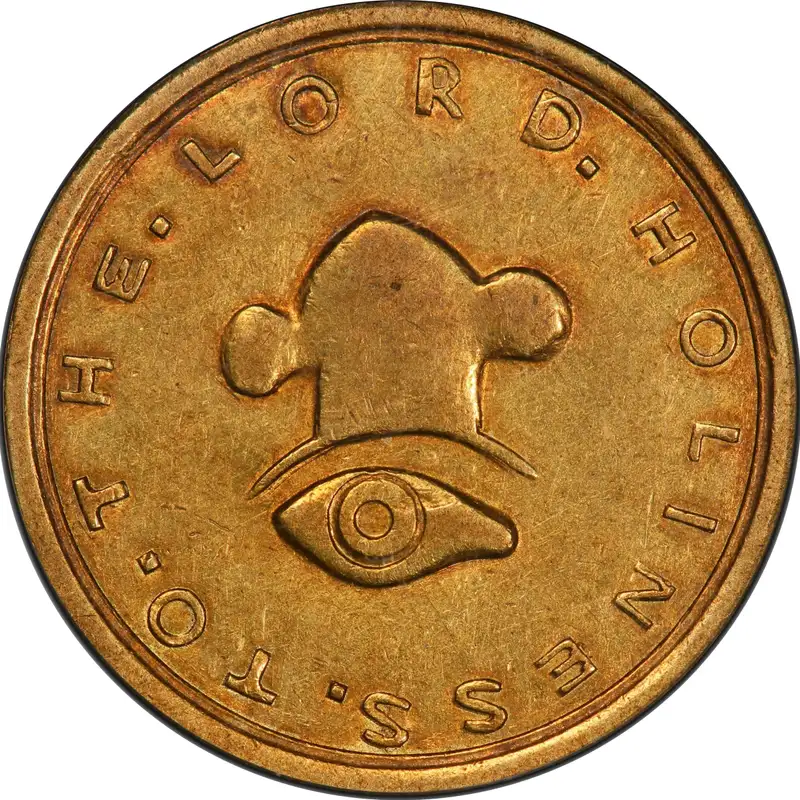
David McCarthy:Yeah. Absolutely. But but this kid who wrote the first information about any California gold being struck also got one of the last coins that was struck from the California gold in Salt Lake City in 1848, which I think is really super interesting. So what you're looking at here, this is the all seeing eye of God, very much like the eye that you find on Nova Constellatio pieces. And above it, you actually have a bishop's cap.
David McCarthy:So this is sort of a symbol of the priesthood of the Church of Jesus Christ in Latter day Saints. And then on the other side, have two hands clasped in friendship.
Tony Gryckiewicz:I see.
David McCarthy:Which was misdescribed by someone in the 1840s as being a seagull. Okay. So someone who went to Salt Lake City at some point, they they they saw a bunch of seagulls there, and they assumed that what they were looking at here was actually a seagull.
Tony Gryckiewicz:Really? Yeah. Okay. I mean, I can
David McCarthy:You have to have a pretty vivid imagination. Yeah. Course, you kind of have to have a vivid when they're struck like this, you have to have a vivid imagination to see that it's, you know, two hands Sure. The thumb is up here. So, you know, the the Mormon church basically struck these in 1848.
David McCarthy:And then in September 1849, they started striking 2 and a half, 5 and $20 gold pieces. It doesn't seem as though they struck more tens later on that year, and that's sort of contentious. Some people will tell you they must have. I haven't seen any evidence that's compelling either way. But based upon their records, there were 46 coins struck in 1848 and none were struck after that.
David McCarthy:And then actually in 1858, when gold started coming in from Colorado, they started striking coins again. And I've seen some pretty compelling evidence that they were actually striking some of the 1849, some of the coins from 1849 dated dies. Then they made the kind of famous lion and beehive $5 gold pieces from 1860 to about 1862.
Tony Gryckiewicz:Got it. So this is going to be our first piece of beaver gold. I'm joking. Yeah. I I don't know.
Tony Gryckiewicz:This is company or this is Oregon. I mean, Oregon beavers definitely a relationship. So
David McCarthy:Oregon was actually settled by Anglo Americans. I'll I'll call it, you know, white folks from both Europe and from the East Coast Of The United States starting in, I think, the eighteen twenties or so. And it was actually a relatively successful farming, trapping and trading community prior to 1840 and in the eighteen forties. You hear about the Oregon Trail, you probably remember playing Oregon Trail when you were a kid. That was actually was actually a migration going from the East Coast to the West Coast before the Gold Rush.
David McCarthy:And so there were a bunch of people already up in what what's now Portland, Oregon when the Gold Rush started. And so the first people who got to California who weren't already there were usually farmers and trappers from Oregon. And at the time it was kind of an open territory. The British, the Russians, and the Americans all had people there who were doing things, but it wasn't really controlled by any of those governments. So the most economically powerful entity there was the British Northwest Company.
David McCarthy:You've probably heard of them. The Northwest Company tokens with a beaver on them are pretty well known. And they were buying gold from people in Oregon for $5 an ounce. And the people of Oregon understood that that was not a very good deal. They determined that they wanted to have the territory at the time that these dies were made.
David McCarthy:Oregon was a territory strike coins. And two weeks before they started striking these coins, Oregon became a holding of The United States. It was no longer a territory. And as such, it was bound by the Constitution of The United States. And, you know, subsidiary governments to the federal government weren't allowed to strike their own coins.
David McCarthy:As a consequence of that, the dyes were given to a private company, the Oregon Exchange Company, and they struck 5 and $10 gold pieces. And so, know, the Mormons started striking stuff in December 1848. They were striking these sometime in, I think, March 1849, which predates any of the coins that we know of that were struck in California by about a month.
Tony Gryckiewicz:Can I ask you the acronym here? Do we have?
David McCarthy:Those are actually the initials of the partners in the Oregon Exchange Company. Okay. And on either the five or the 10, and I can't off the top of my head remember, they actually messed up the initials. So one of the two has an error on it.
Tony Gryckiewicz:Okay. Interesting. All right.
David McCarthy:I actually have a piece of paper money from 1846 that's signed by one of these guys. So Oregon paper money is actually the first paper money of the West Coast Of The United States too. They briefly made interest bearing bonds in 1846 and 1847 after using pieces of Flint as money and bags of wheat. Got it. Which kind of gives you an idea why they needed these coins.
Tony Gryckiewicz:Yeah. Yeah. Absolutely. Yeah. Makes sense.
Tony Gryckiewicz:So we have okay. California gold without alloy, full weight of half eagle.
David McCarthy:So n n g and n. So Norris, Greg, and Norris. Ah, okay. So Norris, Greg, and Norris were mechanics and pipe fitters in Brooklyn, New York who left New York or one of them left New York in 1848, maybe early eighteen forty nine, arrived in California. And they're the first private company that's reported to have struck gold coins in California.
David McCarthy:Interestingly enough, there was another company that announced that they would be striking gold coins. So there's a newspaper, I think it's dated 05/01/1849 in San Francisco that describes the Norris Greg Norris five. But they also talk about how Dubosque and company have arrived and they've got a press and they're about to start striking coins. Dubosque doesn't strike anything in 1849 and winds up striking stuff in 1850. And we'll talk about that when we get to Dubasque.
David McCarthy:But these are really, you know, the first confirmed coins of of the California Gold Rush that are actually struck in California. There's somewhat plentiful. They're scarce, but not a really rare coin. This example is the the finest known of any variety. It's the the Garrett Ellsworth coin, which grades MS 63 plus at PCGS.
Tony Gryckiewicz:I can only imagine what the value of this thing. It's gotta be a couple million.
David McCarthy:You know, mid mid 6 figures. Okay. Alright. You know, I mean, you can get an x f for, you know, probably about $15,000
Tony Gryckiewicz:Oh, okay.
David McCarthy:You're gonna go anywhere up to probably about $75,000 Mint state pieces are low 6 figures.
Tony Gryckiewicz:I see.
David McCarthy:And it's a great design. It's got that like very early to mid nineteenth century style eagle on it that yeah, you know, really reminded, you know, you see a lot of engravings with eagles like this starting in the 1820s and running through about 1850.
Tony Gryckiewicz:Could you talk briefly a little bit about the machinery that they used to make these? Was it very similar to the the presses at the actual mint and were they using the same basic process or because they're pretty nice. They're pretty nice coins that they're making.
David McCarthy:Pretty well made. So these are going to have been struck on some sort of a screw press, much, much smaller than what they would have been using at the Philadelphia Mint. Probably smaller than what they were using at the Philadelphia Mint to, you know, Mint sense in the seventeen nineties. These would have to be somewhat portable presses because, they would have to be transported from the East Coast to California, whether across land or around the tip of South America. One way or another, they had to get the presses here.
David McCarthy:And so chances are, you know, the guys who started Norris, Craig and Norris, again, were machinists and pipe fitters. They probably built their own press. And they brought it out to California. They started striking coins in a little town called Benicia, just really cute. You ever had the opportunity to go there, it's a nice little town and then moved out to Stockton in 1850.
David McCarthy:And again, this would have been struck on some sort of screw press that, you know, probably was handworked, you know, they basically it would have had a, you know, a big flywheel at the top and, you know, you would throw it and it strike a coin. You know, we don't have too many of the presses that struck these things today. The Bechler Press is is in a museum in, I think, Rutherford, North Carolina. I think that some of the presses that might have been used by Clark Gruber and Company might be in a museum in Denver, but most of these presses are long gone.
Tony Gryckiewicz:I see. It's great. Yeah. So this is gonna be again very similar. Did they make this design and purpose to kind of try to emulate the The US coinage with the the Eagle
David McCarthy:and That's pretty clearly the goal. Now the interesting thing about Miners Bank, Miners Bank is the next company that strikes gold coins in California, and actually they were in San Francisco. The miners bank was an actual bank that contracted with a company called Kohler and Company or Broderick and Kohler, who were two guys who relocated to California from New York City. They were both, they were actually both involved in fire departments in New York City, which becomes an important part of their story. And one was a jeweler.
David McCarthy:And so they started striking coins on behalf of miners bank in 1849 and struck coins for them until late eighteen forty nine when the building that miners bank was in was actually damaged in a really terrible fire. And miners bank went out of business as a as a consequence of that. And basically, these coins went from being sort of a workhorse of of San Francisco finance in 1849 to being heavily discounted. They were actually discounted to the point where, you know, one of these $10 gold pieces, if you had it, people would give you $8 for it. And it actually had, you know, $9.73 worth of gold in it or something along those lines.
David McCarthy:Wow. More than 9 and a half dollars worth of gold in it. But because miners bank was on it's the system that developed in in in San Francisco was that these coins and coins made by Moffett and Company, which we're gonna look at next, were were made to be used for local commerce. And if you had one of these coins, you could walk into miners bank or you could walk into Moffitt and Company with a Moffitt and you could exchange it at par for legal tender coins because none of these coins had legal tender status. And the reason you would want legal tender coins is if you were getting anything from the East Coast or if you were sending anything to the East Coast, you needed to pay customs duties on it.
David McCarthy:And customs duties could only be paid using legal tender. And that included US coins and some world coins. And so basically Moffett and Miners Bank functioned as the producers of coins for a local economy that could only be used in that local economy. And if this coin went to the East Coast, it would have to be melted down. And you know, you would you would get however much gold was was was in the coin from the mint.
David McCarthy:And you know, like I said, I think these were $9.74 and Moffitt 10 was measured as having $9.81 in it. Some pieces of Pioneer gold actually were of full value. Some were very, very undervalued. And so that's sort of what was going on in California when these things were circulating.
Tony Gryckiewicz:Okay. So moving on to the the Moffett, some often So
David McCarthy:Moffett shows up in in California in the 1849, June or July 1849. And John Little Moffett was an assayer, and he actually had an assay office and was issuing little ingots, actually big ingots, little ingots, ingots of all sorts of different sizes. Sure. And the earliest ones all had specific values on them, so they would have their weight, their fineness and their value listed on them. At some point in the summer sort of realized that that was slowing things down.
David McCarthy:They started making $16 ingots that were, you know, the weight of a doubloon. So less than an ounce. They called them California doubloons. They had a finest stamped on them that didn't really correspond to the finest of the gold in it. And there was no weight stamped on them.
David McCarthy:So those circulated as money. They were what we would call today monetary ingots, not assay ingots. And they were issuing those. And then when miners bank started striking their $10 gold pieces, Moffett began striking 5 and $10 gold pieces and became the most successful of all of the companies in San Francisco and California. So I mentioned that there was that fire.
David McCarthy:Yeah. At the miners bank that set off a period where people were afraid to take California gold coins because again, miners bank couldn't stand behind their product. And so between January 1850 and April 1850, the people of California were trying to figure out what gold should be valued at, how to deal with these private gold coins. And basically what ended up happening is in 1850, they passed a law making all private gold coins illegal. They actually made privately minted bars that were under four ounces apiece illegal, which would have created the economy.
David McCarthy:By the end of the month, they rescinded that law. But at that point, it basically wiped out all of the companies that were striking private gold coins in California, with the exception of Moffett and Company. And you sort of see there's sort of this first period of California gold coins, and we're going to see a couple of other ones that are dated 1849. And then the only company that survives 1849 in San Francisco is Moffett. And we'll also the other company that survives for a little while in 1850 is Norris, Greg and Norris.
David McCarthy:But we've only ever seen one 1850 dated Norris, Greg Norris from from Stockton. But Moffett winds up being the big winner of that first big brouhaha in California over the private gold coiners. This particular piece is interesting because it actually belonged to John Glover Kellogg, who was the founder of Kellogg and Company, who was the clerk for Moffett and Company starting in 1849. So this coin actually spent its entire existence in the collection of of Kellogg until he died and then recently came to market.
Tony Gryckiewicz:I see. I've always wondered what is SMV stand for?
David McCarthy:Standard mint value. And the interesting thing about that is Moffett is not the first company to use it. The first company to use SMV on their coins is Dubosque and company, who I mentioned came out in 1849, were ready to strike coins and then ended up going back to the East Coast and coming back in 1850. And I'm actually, I'm the owner of all of the papers that are known today of Dubosque and Company. We actually have a couple of their little notebooks right here from the eighteen thirties and eighteen forties.
David McCarthy:And it appears as though a member of the Moffett family was dying on the East Coast and they went back to the East Coast. Then the youngest Dubasque family went back to San Francisco. And in 1849, this whole brouhaha happened, started striking coins. And so they actually had patterns for 1849 dated coins that we've seen. You know, we've we've got examples of that, say, SMV gold.
David McCarthy:So Dubosc is the company that started that. And interestingly enough, the reverse die from the Dubosc five, which we've never seen in gold, ends up with Kohler and company, the people who struck miners bank. And when miners bank went out of business, Kohler sold the company to Baldwin, which is a company we'll see starting to strike coins in 1850. And the reverse of the Dubasque five ends up being used by Baldwin and company for their first five. I see.
David McCarthy:So I'm sure this is like confusing. It's like drinking from a drinking from a fire hose because
Tony Gryckiewicz:I was just thinking, man, I'm like, this is this is what this is what it's like talking to a historian. I mean, historians, you guys do so much research. You have so much info kinda like on every everything you look at brings back all of these kind of things you've read and memories of stuff that you come across.
David McCarthy:And it's it's super interesting. You know, I'd I'd read a lot of books about, you know, the the economy in California in the you know, during Gold Rush. And while I was working on this book, just doing the research on the individual companies, I was able to piece together all sorts of things about how the economy worked and things that happened in California that just they weren't in books. Yeah. You know, I had to, like, find newspaper articles from all over the world.
David McCarthy:I was finding newspaper articles from New Zealand that were talking about miners bank coins and calling them ugly. And an article from St. Louis that talked about the failure of miners bank where the local articles never referred to miners bank specifically. They talked about, you know, one of the big companies failing, but they didn't say who.
Tony Gryckiewicz:And there was
David McCarthy:an article in early eighteen fifty from St. Louis where they said, oh, well, the miners bank the miners bank failed and, you know, kind of allows you to piece together bits and pieces of this story. It was pretty interesting
Tony Gryckiewicz:to me. So these Moff these Moffets are fairly obtainable because I remember a couple years ago, I was sitting at your table. I had an opportunity to buy one of these from you and it was I wanna say I wanna say right around 10,000, $11,000. Yep. They're fairly obtainable coins.
Tony Gryckiewicz:Right?
David McCarthy:Yeah. On the low end, you're talking about $5,000 for a Moffett five. So the $18.49 and $18.50 Moffett five are the two most numerous Moffett's. And then the $10 gold pieces from 1849 are actually pretty tough. You know, there's like, I don't know, probably 45 examples of the of the of the obtainable obtainable varieties, maybe fifty, sixty at tops.
David McCarthy:And then the Moffett name ends up being used several other times. We'll talk about that as we as we get to those coins because they're not exactly the same Moffett and Company. This Moffett and Company was so successful that John Little Moffitt was actually awarded the management of the United States Assay Office in San Francisco, which was established in early eighteen fifty one. It's established by law in 1850, but actually, you know, starts striking coins in early eighteen fifty one. And so Moffett and Company is striking Moffett coins up until the 1850, early eighteen fifty one, and then shuts down and becomes the assay office.
Tony Gryckiewicz:I see. So this guy is a pretty valuable coin. I learned just prior to hitting the record button. So what do we have here?
David McCarthy:So that's an Ormsbee or a Joseph Ormsbee and Company $5 gold piece. That's a piece that's in the Smithsonian. I believe it's the only known five from Ormsbee and Company. There's a total of five Ormsbee 10s, three of which are in private hands. Incredibly rare coin, you know, definitely over a million dollars.
David McCarthy:If it's an Ormsbee, it's over a million dollars. And they were actually a company that was working relatively early on in Gold Country. And so they they were striking points for people in what's now Sacramento. I want to say it was on K Street. And later in the nineteenth century when they interviewed people who were involved in Ormsbee and Company, they talked about how they were working so fast that they were constantly like spilling gold where they were striking these coins.
David McCarthy:And if someone ever went back and dug up the property where Ormsby was actually operating, it's meant they'd probably find, you know, tons and tons of gold actually buried there because they were working so fast and so sloppy.
Tony Gryckiewicz:Interesting.
David McCarthy:But they basically operated for a few months in late eighteen forty nine and most of the work seems to have been done by a guy named W. W. Light who was trained as a dentist on the East Coast. He came out here, worked for work forums being company. I think they were paying him like $50 a day or something like that.
David McCarthy:And he finally concluded that if he went and, you know, looked for gold on a, on his own, he might be able to do better. He quit company folded. And he went on to not be particularly successful at prospecting, went back to Sacramento and established one of the first dentists office in San in Sacramento. And in the mid eighteen fifties actually countermarked a lot of gold coins. And so you can find pieces of pioneer gold and early San Francisco coins that have WW like counter stamps on them, which I've I've actually got a 52 over 110 in my collection with a WW light.
David McCarthy:William Pearson counter stamp. He had a partner for a little while, and those are kind of an interesting thing. But Ormsby was around, you know, for three or four months before everybody split for the Goldfields.
Tony Gryckiewicz:Wow. Is a pretty cool design here. We got the old Liberty cap on this $5 and this is Pacific company.
David McCarthy:Yeah. This is one of the big mysteries of California Pioneer Gold. Pacific and Company could be one of any of a number of companies that that ended up in California. We don't know specifically who the members of Pacific Company were. They're incredibly rare coins today.
David McCarthy:There are, I think three gold dollars or 4 gold dollars known. There are two $5 gold pieces in private hands and there is one Pacific ten in private hands. In addition to that, there are a number of coins that were struck as, you know, test pieces on silver and copper for the company that are known today. There are 2 and a half dollar patterns. We've never seen a gold 2 and a half.
David McCarthy:And interestingly enough, prior to maybe twenty years ago, all of the gold dollars that we know for Pacific Company today were believed to be patterns. They weren't believed to be made for circulation in gold. As turned out, they're they're made out of gold, but all of the Pacific company pieces are in relatively heavily debased gold. So, you know, this $5 gold piece probably had about $4 worth of gold in it. And I've actually wondered, these made in 1849 to defraud people or were these made in early eighteen fifty when private gold coins were being discounted because of the scandal surrounding miners bank?
David McCarthy:And were they just putting the amount of gold in them that actually corresponded to what people were paying for these coins? And we'll never know unless we find Sure. You know, piece of written evidence. It's an absolute mystery. One of my very favorite designs, though.
David McCarthy:I mean, just such a cool looking coin. Obviously, they're they're kind of trying to emulate either Mexican, you know, the Mexican cap and raise pieces, or it's entirely possible that this is actually based on the gold dollar pattern from the eighteen thirties that was struck at the the US Mint. One of the things that's kind of interesting is that there were engravers who were working at The US Mint who were, you know, basically moonlighting and making dyes for these companies, for instance, Boston company. And of course, I don't have it here. I don't think.
David McCarthy:Let me see. Duboskin Company, all of their dies in 1850 were actually made by James Longacre. And I have the receipt where they paid James Longacre, I think, 100 to strike these two. I'm pretty sure this isn't it. Here I am looking at
Tony Gryckiewicz:Oh, that's cool.
David McCarthy:This is San Francisco, 12/20/1850. So that's long after it. But anyway, in one of the booklets I have from Dubosque and Company, there's literally a pair of receipts in Longacres handwriting for dies. So I've actually wondered if this die might not have been engraved by someone who worked at the Mint who was familiar with the with the $1 patterns from '18. I think it's 1838.
David McCarthy:Great design though. I mean, like, great Eagle too. It's he's he's got a mining hammer there.
Tony Gryckiewicz:Oh, cool. It's very rare.
David McCarthy:It's just they're really, really cool. They're incredibly, incredibly rare coins. Nice.