Ep.43 - Collecting Early Half Cents with Chad Stachowicz #rarecoins #numismatics #copper #history
Hey, folks. Welcome back to the Cabbage Coins Podcast. My name is Tony Gryckiewicz. I am the owner operator of Cabbage Coins, and my mission here, of course, as I've mentioned many times is to educate all the viewers out there in YouTube land, hopefully to inspire some new collectors and to elevate the quality of everybody's collection. This week, what we have is a very interesting dialogue.
Tony Gryckiewicz:We're gonna gonna talk about a coin, a coin collection specifically, but we're also going to get into some, some artificial intelligence grading. We're not bringing in chattypici. Don't you worry, I'm not bringing in the voiceovers for this episode, but we have a gentleman here, Chad Stachowicz, designed an actual model to grade coins utilizing artificial intelligence. And he's got a website, it's called Numis King. We're going to kind of demo that a little bit and we're going to try to see how well the model does and predicting what the grade should be.
Tony Gryckiewicz:And we're going to talk a little bit about maybe the future of grading. So anyways, so first off, Chad, welcome to the podcast and why don't you just tell everyone a little bit about yourself, how you got into coin collecting and you know, what your favorite series are to collect.
Chad Stachowicz:Okay. Yeah. So I'm Chad Stachowicz. I'm currently living in Charlotte, North Carolina, marrying two girls, eight and 10 years old, Penelope and Nora. And I got into coin collecting because my dad growing up was a coin dealer.
Chad Stachowicz:And so he was working up at Toledo Coin Exchange. But he was a collector and is still sort of a collector dealer of everything. Right? Baseball cards, today he's in the rare records. And so when I was growing up, that would be like a common activity for me to run around with him maybe on a Sunday afternoon while he made a couple stops and talked to his coin buddies or stopped in at a coin shop or maybe went to a show.
Chad Stachowicz:And so I had a collection back then. I had Lincoln cents and peace dollars and a couple other things that my dad liked Buffalo nickels. He's a big Buffalo nickel guy. And so that's kind of where I started. I took a break from that for about fifteen years or so.
Chad Stachowicz:And somewhere in my early thirties, I started collecting cards a little bit and mostly basketball autographs and some other things with memorabilia in them. And so about three or four years after that, somewhere right before COVID, you know, there's a coin store here, Independence Coin in Charlotte, and it used to be around the corner from my house. And I kinda stopped in, met Brian. And so fast forward, you know, I'm I'm kind of a a ADHD, a little bit of OCD person. So all of a sudden, I, you know, started filling some time, you know, looking at things and going to shows and and sifting around online and, you know, kind of fast forward to now, I've got a a half sun collection, an Indian cent collection.
Chad Stachowicz:I've got a typeset. I think my twentieth century typesets maybe number three or four right now in the registry. Wow. And then I've got, yeah, really kind of a a copper addiction. I'm not really into silver.
Chad Stachowicz:It the toning that some people really find appealing original on the coins for silver to me, a lot of times don't, unless they're a little older. And so, you know, kind of geared towards copper because I thought it looked prettier to me.
Tony Gryckiewicz:Yeah. I was gonna ask you what drove you towards copper. You copper collectors a little are built different, in my opinion. You guys get excited about things on coins that I I can't see. I had no idea how to grade them properly, but the copper guys are are interesting for sure.
Tony Gryckiewicz:And I've enjoyed we've had Matt Mizzowitz on the podcast. We have yourself. We're gonna look at the half cents here. So as much as you can do to fill me in or give me your perspective on what you look for in the copper, what gets you excited, I think that'll be that'll be very enjoyable. So and just one last thing, which is a shout out to Brian over at Independence Coin.
Tony Gryckiewicz:I believe he does watch this podcast. He texted me just a couple days ago about my Buffalo Sabres jersey I had on the last episode, so I'm pretty sure that he that he watches this. But great coin shop right there in in Charlotte. I'd recommend anybody that's in that local area to to stop into that to that that store. But alright, man.
Tony Gryckiewicz:Well, let me go ahead and pull up what I think is well, part of your collection here. So your collection, it's current rank is number five on the PCGS registry, 87.5% complete. And you have some pretty incredible coins. I just picked out some of these that really kind of stood out to me. But what I what from your perspective, what is kind of the key of the series here for Half Cents?
Chad Stachowicz:The key date of the whole series is definitely the the 1796 with Polar without Polar. $17.96 is an interesting coin because it is the lowest minute circulation coin, I believe, possibly ever made. I think the half dismay is pretty close, but it's in the 1,200, 1,300 that were struck. It's actually the rarest, you know, the quarter had 6,000 struck, so it's four times rarer than a $17.96 quarter. And so, you know, the the $17.96 half cent is is sort of right up there with a $17.93 Liberty Cap as, like, in terms of reasonable rarity.
Chad Stachowicz:And so, I would say it's not just the key of this series. It's probably the key of of copper collecting as a whole, unless you're into proofs or patterns.
Tony Gryckiewicz:So how did you acquire this one?
Chad Stachowicz:Yeah. So the, the, resident expert on half sense, I would say is Ed Furman. You know, he writes the books. He's, you know, writes the books on grading on detecting different varieties. I think he's probably got the world's best mint error collection.
Chad Stachowicz:And, you know, I've been pretty active on the half sense group on Facebook posting, you know, me building this, you know, and at one point I, there was, there was, I think an AG three CAC up at David Lawrence for 22 or $20. And I pinged Ed and said, what do you think about this? And he said, well, you know, it's this or this. But I I might know somebody that, you know, is is opening up a or or has a physical coin store that's really trying to up their inventory, and they've been sitting on a 96 for a long time, and they just happened to mention they were thinking about selling it. And, you know, I've seen a lot of coins.
Chad Stachowicz:If I was going to put a seventeen ninety six in my collection, this is the one that I would want. Very original surfaces, clear areas, never been touched. You know, you can see some of the stuff in there between the pole, between the 96 and the head, right, to some real original gunk. You've got a little bit of that green, which can really be a turn off for some people. But if you're if you're looking for originality, that's kind of it.
Chad Stachowicz:So I think there's sort of 70 or so of these left in all grades, all shape. And so, you know, putting together a series, this is generally cost prohibitive, much less finding it. And you'll see this is cact. I got the sticker on it with John. But you'll you'll see that what could almost be termed or some people might have thought was a little graffiti there in the front of the right.
Chad Stachowicz:You know, on on this coin, absolutely so rare and so old, it's just gonna be taken as kind of business as usual. And so again, I've I've seen there was a reasonably good one up at Heritage that was a VG eight and an old green holder I thought was pretty good a couple, you know, months ago. I saw one come through David Lawrence. I've seen a few in details holders out there, but, know, overwhelmingly really different. And then kinda on the back, same deal.
Chad Stachowicz:Know, I did a lot of research on this because I actually I bought this in an NGC holder, and then I crossed it over to PCGS, and then I sent it And over to this is a extremely weak struck coin on the rear. And so where other dates you'd look at this and be like, there is no way this is a VG eight. This is a G six, maybe a G four at best. You know, all the all the experts at it and and people said I was nuts for not thinking this was a VG eight and they were almost sure it would stick her. And so this is probably the biggest sorta transaction or thing I've ever chased and put a lot of work into.
Chad Stachowicz:And I think I agreed to buy this and flew to Chicago a couple of years ago and sold things until I had a massive wad of cash and then went and bought it from a private collector that that Ed helped organize. Overwhelmingly, you know, one of the more exciting stories I have, would make it, you know, probably the the piece out of the collection that would be sort of impossible to move on from.
Tony Gryckiewicz:I see. Wow. Okay. So the $17.96 half cent, I had no idea. This is the kind of the king of the of the series.
Tony Gryckiewicz:That's fascinating. Well, let me I got these things so out of order. It's not
Chad Stachowicz:even It's all good.
Tony Gryckiewicz:At this point. But the $18.00 3, for example, I I really I picked this one out because I thought I really like the overall look at this coin. I feel like it had very smooth surfaces, very chocolatey. Overall, eye appeal of of this coin. Is this a more of a common date or a better date?
Tony Gryckiewicz:The 1860.
Chad Stachowicz:So this is this is cool that you're picking out this coin because this is what got me this date got me started on my early collecting in general. I was maybe four or five years ago, I was just starting to collect copper. I walked into Bedford Coin up in Bedford, Michigan. It's right over the line from my house. They sell a little bit on eBay.
Chad Stachowicz:It wouldn't you know, it's probably not like a a big in person store. It's probably more of his, like, home base. And he had two eighties in there, and I just thought they were cool. You know, I like you know, they're the same designs as a scent, but the smaller form factor makes them much more intimate to me. For example, drape bust scents don't really get me excited, but drape butts half scents are, like, maybe my favorite coin series of all time.
Chad Stachowicz:And so, you know, when I saw this coin, this would be the year, like, right before they left Lewis and Clark on their expedition. Right? So, you know, to me, they may they're making this coin, and I'm finding it in a coin store, but we haven't even discovered the West Of America yet. Know, these draped busts, I think you're picking out a good one that's original. Interestingly, and I bought it out of auction, I think it stacks, but you'll see a little spot there in front of the mouth.
Chad Stachowicz:In in their photos, that spot was quite darker and very pronounced. And so I was a little sort of nervous about it when it came in. They had a 53 and I think this is a 55 up for sale at the same time. This was the fourth or third AU that I sent to John before I got a sticker on an 1803. And I think if people are wondering, man, what is, and I'm not going to speak for John, but for me, these AUs where you can see what is very clearly an original sort of lighter hue kind of coming through a darkening coin.
Chad Stachowicz:I think that that really speaks to the originality of early half cents, twenties, tens, you know, all the all the way back to to to the early ones. I think I think that's that's something that I look for when I'm buying in. You know, I'm mostly an AU or better half cent buyer, and that's what I'm I'm really looking for if it doesn't have a sticker on it. I'm looking for that mix in coloration, And I'm not I'm looking for it to not be too dark. When they're too dark, that makes me believe they were a little messed with too.
Chad Stachowicz:So this this weird amalgamation of color is a is a good thing that I look for in these drape busts have scents.
Tony Gryckiewicz:Got it. So when it when they're too dark, you think that's those are signs of a coin that's been perhaps cleaned or I think
Chad Stachowicz:I cleaned and then possibly toned, kept in a shoe, you know, something that to put a fake toning back on it. So again, I I wouldn't call myself an expert grader by any means. I would say that I'm pretty good at picking out original coloring and coins on the higher end of the spectrum. I'll be the first to tell you, I'm not like under, like, XF and under. I'm I'm probably not a great just because that's not really what I've ever handled or bought in my life.
Chad Stachowicz:Okay. I'm not a great teller of those types of things. I like this one here, this is something where if if I wouldn't had Ed's expertise, I wouldn't have I wouldn't have bought it, to be honest. But, you know, way more than I did and was so utterly confident in being kind of the expert on things, I was pretty confident.
Tony Gryckiewicz:Yeah. It speaks to the value of working with with seasoned professionals, working with folks that have been around the market. We end up seeing a lot of coins. We just see hundreds of coins. I don't wanna say hundreds of coins every single day, but in a given day, it definitely could look close to close at close to about a 100, maybe 200 coins in someday, whether it's either looking at auction lots or it's looking at coins that come across the case or it's studying your own coins, taking pictures of them.
Tony Gryckiewicz:You get really familiar with with what coins should look like, and you develop a pretty strong kind of a spidey sense, so to speak, a sixth sense of when coins kind of feel off and what they should not look like and when there's something potentially wrong. That experience alone could be worth hundreds of dollars, could be worth thousands of dollars for the right coin in the in the right, you know, whatever the series is when you're building collection. So I think it speaks to working with working with a dealer or working with a collector or working with somebody that has a lot of experience in building and trying to build a fine collection. So this 1810 kinda jumped out at me. It it has a very nice look to it, I think.
Tony Gryckiewicz:What's your where did you pick the first off, what is the grade on this? This has gotta be pretty high grade, I think. Is this at this point?
Chad Stachowicz:That's a 62, and it's a perfect example of a coin that I really didn't wanna kinda spend the money on for the collection. It's probably higher than I was trying to put in. This is this is something I wanted in AU. You know, one of the things when you're putting together a series, kinda like UC 200 coins a day, I probably, again, back to the initial comment on being a little OCD, I would guess on a daily basis, I scrape every major auction house plus 20 to 30 independent coin dealers and just do at least one swoop through a day to make sure I'm not missing. Because with that, I had seen zero CAC stickered 18 tens since I've been putting together my half sunset.
Chad Stachowicz:This is the first one that's come through with the sticker. I've sent three myself to no avail. So, you know, I've been putting together. I think I'm number five overall. I'm number one in all CAC, I think.
Chad Stachowicz:Okay. And, you know, for for me, I think if you're kinda collecting at the higher end of the spectrum, I'll call it like thousand dollar coins and up, shorter as your regularity, it's probably not money that's holding you back. It's finding like exactly what you want and like in the shape that you want it. And I found sort of PCGS hold like trying to get things in PCGS holders and then trying to get a sticker on them or with the Indian AdSense, getting them in PCGS holders and then getting them double stickered with both John and Rick Snow. I've found that to sort of be the hunt versus I know I can just kind of rock a set together pretty quickly, but that to me isn't the fun of checking the 30 websites or they're like having a bunch of different random people to text and say, hey, can you walk around the show for me?
Chad Stachowicz:And so this one I just bought out of pure rarity. Interestingly enough, I lost this at Heritage the first time, came back up six months later, maybe three months later, and best I could figure out, maybe it was someone didn't pay for it because it didn't feel like it had gone out and come back in. And so I went a little harder at it the second time because it was one of the ones where I was I'm not gonna see that again for a while. So, yeah, that's that's kind of the story on that. I've seen a there's been a a couple 60 ones rocking around in shows.
Chad Stachowicz:And then on you know this too. You you seem to find them on the other ends of the spectrum than you're looking for. So I've seen these guys all the way up in fours before and, you know, I'm not a I'm not a $1,020,000 dollar average, you know, normal ish CoinDate buyer. So, yeah, this is normally something nicer than I I would want to buy. But again, I kind of view this set as as a keeper of history.
Chad Stachowicz:And I think this I don't remember which collection this came out of. I think it came out of the Siesta Key collection, I think, is what it was named. But I bought a couple coins out of it. Best I could figure out, Siesta Key is somewhere near Tampa, so I'm gonna guess that's where this came out of. I think the '18 $0.03 might have came out of the same set, but not stickered.
Tony Gryckiewicz:Got it. Yeah. I was gonna ask you before we move on to this one. This is a pretty interesting piece, but I was just gonna ask you. You gravitate obviously towards PCGS graded coins, holder coins, plus the CAC sticker.
Tony Gryckiewicz:What are your thoughts about that? I mean, would you recommend for our collectors out there to kind of follow soon to do the that exact thing? I mean, have you purchased coins that are in other grading companies holders, or do you gravitate towards that primarily to put together the registry sets? What kind of is the background on on that kind of that bias there you have?
Chad Stachowicz:Yeah. So I mean, I do buy things in other holders for sure, especially in the sets that I collect. I feel confident about the things that I've gone to chosen by. So a decent amount of my holders I've crossed over from MGC. You know, for for me, the holder that it's in honestly has more to do with the fact that I like to and you can see I've got a display of old t two zero six baseball cards behind me, but I have other displays in my houses and offices, and I like them to look the same.
Tony Gryckiewicz:Got it.
Chad Stachowicz:And, you know, this sticker for me is just that the re the resale value on them on some of these coins is high. You know? I don't know if you pick, for example, the $18.00 7 half cent, but there's a perfect example of a coin that trades in AU somewhere around a thousand bucks, and stickered ones are selling between two and three thousand recently at auction. You know? So, you know, some some of those coins, you know, the the the dates just really trade high.
Chad Stachowicz:Same with the Indian cents. I mean, even same with Eisenhower dollars. Right? Like, you know, an MS $68.76 s. You can buy that out of great collections all day for a $101,120 bucks, but with a sticker on them, they sell for nearly $700.
Chad Stachowicz:So, you know, there's just coins out there that that that sort of commanded. And so for me as mostly a collector, trying to park for resale value and quick turnaround if I wanted to someday, that's just kind of where I gravitated towards. And to make it more difficult, right? Like, I've had my Indian set together a whole bunch of times and inevitably, I'll either decide to bump it up a grade and sell everything off that didn't make it or I wanted to make it stick. So I'd I'd sell some stuff off.
Chad Stachowicz:So yeah.
Tony Gryckiewicz:Yeah, that's fair. And I think that just what I would second there is, I mean, look, what the sticker represents is you have another third party service that has basically said, okay, we're going to have a stricter set of requirements and guidelines for the grade that we expect the coin to have in that particular holder or just for that particular grade. And if the coin passes our stringent requirements, we're going to put this sticker on it says that it also passes us. Passed the first set of graders over at PC or at NGC, but it also passes our requirements as well for the stated grade and it's a premium example. There are so many folks because this, this hobby has met this kind of internet age and there are so many people looking for coins online.
Tony Gryckiewicz:I think that of course, third party authentication helps a ton in terms of figuring out what coins should be graded as, but then the stickers help to further make it clear that you are buying a quality example for that particular state of grade. So it gives just so many more collectors who are looking at coins through pictures, a sense of confidence. And because of that, those coins sell for stronger numbers. There's more demand for those coins. There's, there's a lower quantity of them.
Tony Gryckiewicz:The supply is low, demand is high. Of course, prices is going to be up. And I know as a dealer myself, I carry a lot of CAC stickered coins as well as CAC graded coins because they, they, they tend to sell very well. And because of that, I make pretty strong offers on them whenever I get a chance to buy them out. I feel very comfortable paying a stronger number for those coins, knowing that they're going to be liquid for me.
Tony Gryckiewicz:So makes, makes perfect sense what you're, what you're describing there. I did want to bring up the $18.00 7 here. Just give me one second.
Chad Stachowicz:Yeah. The other thing I would say, I've had a couple of coins come back from John before, and I've been like, I couldn't disagree with you more. Like, please tell me why. And so I'd pay him again and, like, ask him to tell me why. And now I can tell you, there is a huge amount, especially of Indian scents that are very red looking red browns that are definitely dipped.
Chad Stachowicz:And I could I could probably go like 20 for 20 slabbed coins now when I walk around shows and I'm like, yeah, that was dipped before. And so there's a lot. And so on silver, kind of more acceptable on copper, not as acceptable.
Tony Gryckiewicz:What is what is dip on copper? When you say dipped, I know it is on silver. It's usually easy to ask,
Chad Stachowicz:but I don't know if it's the same chemical. I don't know exactly. But, you know, it takes off that first sheath and it looks red, but it has a muting to it. Now when you dip like a silver dollar, I don't know if you've ever, you know, done it.
Tony Gryckiewicz:No, I haven't actually.
Chad Stachowicz:Haven't. I know some people that do, but the same deal. That's why a lot of those ones you'll see them in like NGC holders with like a 61 or a 62. And you're like, these things are really white, But it feels like something's just a little off with it, which has got the 61. Those to me are usually dipped coins that were probably maybe a three with some toning on it, but they just don't look right in hand, but there's also like nothing.
Chad Stachowicz:And so copper gets this, you know, they call it red for a reason. It's kind of got it gets a red hue to it. Right? And so Sure. Of course.
Chad Stachowicz:To me, though, it'll it'll melt down to more of a it it's like a shiny a shiny orange or like a a shiny even brown, but it doesn't it it it takes something off the luster. And so now that I've sent enough into John, now when I like I've got a neighbor here and we'll send them some things together. And we like to bet, right? Like which ones are coming back and which ones aren't, and which one does he thinks dipped and which one isn't. But without a doubt, that's the series I see it the most on.
Chad Stachowicz:So you have this 18 o seven. Here's a perfect example of this is the ugliest true view, but it is such a pretty coin in hand. And I I just had this image and you just can't ever tell what level of light like they put way too much light on this for me. And so it it has a very weird sort of color to it, way, way brighter around the liberty and sort of that orangey coming through than I think it feels in hand. And, know, I I I what I found out to reading some forums is that they take these with different filters.
Chad Stachowicz:And so I've seen people people complain about their coin and they'll be like, I've switched it out. Do you like it better? And so I think a lot of these coins get three or four filters and the person that's going through must not always be the same person. They must be very localized. And so, you know
Tony Gryckiewicz:Interesting.
Chad Stachowicz:And I'll give you a perfect example. If you look here at my Indian set registry, there's three or four of them that are circulated coins that have totally been taken with a proof filter. And so they come back and I'm like, that's not what my coin looks like. You know? So anyways, I think this is a good example.
Chad Stachowicz:I bought this one already stickered. Again, I'd sent two in that didn't didn't get it done. You know, the early I'm really good at the braided hair and the classic heads, but the drape bust half cents and the early half cents as far as, like, whether they're truly original or not. I think the $18.00 3 and the 1,800 that you had, I stickered myself. I think all the other ones in that series, bought stickered after numerous failure attempts.
Chad Stachowicz:Oh, this coin. This is an interesting Yeah.
Tony Gryckiewicz:Is the first date, first year, right?
Chad Stachowicz:Yeah. And I got this from Chris McAuley at EarlySense. Okay. I like Chris. He totally knows what he's doing.
Tony Gryckiewicz:Sure. Pretty well known copper, copper deal.
Chad Stachowicz:Yeah. Usually, usually has really nice stuff. I've not been able to marry the color on this thing. In the hand, it looks as peanut buttery as this, which is weird for a fine 12. Okay.
Chad Stachowicz:And so I suspect that that in itself is almost kinda some toning of some kind of whatever piece of paper or something that it was held in for a long time. Okay. Because it's just kinda weird. You would almost never find them like this. I mean, I've I've seen a million fine those VNG8s.
Chad Stachowicz:They never have this peanut buttery brown color. So, you know, that's stickered. Chris loved it. This is one I'd love to ask John, like, what do you what do you think caused the color? Because it's just kinda odd for the grain.
Tony Gryckiewicz:I was gonna ask you, I don't really know a ton about $17.93 half cents, but what are all of these, like, almost like these berries or something? I mean, is that no. I don't know what that is. Do you know is that is that part of all part of the design?
Chad Stachowicz:It's definitely all part of the design. You know, I've always thought that this oddly enough is sort of a particularly ugly coin. I think it's one of the uglier ones of all of the sets. Everyone, like, kind of enambers over it because it's $17.93, but, you know, that the head's kind of big and walloping and heavy on it. And, yeah.
Chad Stachowicz:In in in general, it just like, you know, the flowing hairs are really pretty to me facing the other way, but I do think left facing heads are are kinda kinda stranger.
Tony Gryckiewicz:Interesting. Okay. Yeah. I don't know. Somebody out there, some expert probably can tell us a little bit about why there's like this sprig of berries or whatever it is.
Tony Gryckiewicz:I would imagine, I know it's gonna be down here, but maybe this particular design. Yeah. They had kind of the berries going off around the wreath, I guess.
Chad Stachowicz:I was just gonna add this verdigris in this wreath too.
Tony Gryckiewicz:What do you what is verdigris? I've heard that term expression before. What is that?
Chad Stachowicz:Some reaction with the copper that forms, you know, if you've seen like an old copper roof turn green And I would say same reaction. I think it's an oxidation. I'm not a chemist, but in general, it's an oxidation. You know, if you read about it, it's also a little bit of kind of like an infection. I think it it's kind of spreads a little bit once it's happening.
Chad Stachowicz:Now that being said, again, removing that would be a quick way for it never to get a sticker because, you know, the originality is what a lot of these guys like. But I was gonna really point out that in hand, I've owned three or four seventeen ninety threes. All of them were beautiful in hand. All of them under true view look like this. Like, it really, really bring out the gunk that's on this thing, on this rear especially.
Chad Stachowicz:And so, like, in hand, yeah, I didn't even notice the stuff, but you kinda toss it under a mic. And so I say this because I've seen three or four CAC stickered coin sell, and you'll kinda see this with dealers. There's a lot of me included that sometimes the true view looks uglier than the coin, and so I don't really want people to see it. And so this is a coin you commonly see in a gold shield holder where no one wants you to see the actual thing of it. And I think it's why those wreaths really hold a lot of junk in them.
Tony Gryckiewicz:Yeah. Interesting. Yeah. I mean, TrueViews, I think we talked about this here. They they may highlight some of the color that's on the surface of the coin, especially for any darker coins, darker proof coins.
Tony Gryckiewicz:They really do bring out this incredible spectacle of colors, but then the coin looks very different in hand. My recommendation, my suggestion for folks out there is really to focus on what the coin looks like in hand. Realize that that's the way that you're gonna enjoy it, but it's also gonna be the most likely the way that it's gonna the coin is gonna be marketed one day, Even if you were to hypothetically put it into an auction and that auction utilizes the true views, the auction's also gonna have some pictures of the coin in the holder. So what that coin faces up like in the holder itself or in hand is is super important. You cannot, in my opinion, build a world class collection or put so much money in an investment if you're just gonna go on TrueViews.
Tony Gryckiewicz:Because, yeah, I don't know. That's my my thoughts on on that one. Oh, this one, the $18.11, I feel like this was one of the ones in your in your set that there wasn't a whole ton. It it was like one of the better coins I think in in the set, I believe.
Chad Stachowicz:It is. Yeah. So if you kinda looked at just wanted to hop through the tough coins that are in the series, especially in all originality, 94. 94 is not a tough coin at all to come by. I don't have one on my set yet, but to come by them all original is extremely difficult.
Chad Stachowicz:You'll see my $90.95, 97, anything pre 18 hundreds. People just sort of like messed with them a whole bunch. Coming above 18 hundreds, you've got the $18.00 8, very difficult coin, almost $4 at the top of the AU scale and MS very expensive. I think David Lawrence has got one up for $11 now in MS '62, but a very tough date. The $18.00 8, very difficult.
Chad Stachowicz:$18.11 is by far then the next one. This guy escalates really quickly. I think at this is a V f 25, 3035. I don't really know exactly what it was. It's
Tony Gryckiewicz:VF30 five brown.
Chad Stachowicz:Okay. This is a I think it's there was two Cullen states on it. I am not a dye collector, but I do think that this is the rarer of the two dye states. You know, the early copy guy copper guys are gonna love that cut there on the left where the, you know, the dye, you
Tony Gryckiewicz:know Yeah.
Chad Stachowicz:Cracked and smashed and started to look different. You know, that that's how they'll track sort of the progress of how late in the die smash these these were. Right? Because that cut will keep getting bigger or smaller. Same deal.
Chad Stachowicz:This is the only 1811 that I'd ever seen stickered. You know, anytime recently, I bought it from Noah at Rarity seven, who I think you know, a good guy. I like like a lot of Noah's stuff, so I'm I'm constantly checking his website. But, you know, this was one that popped up on his inventory, and I think it was the day before, like, a Baltimore, Chicago. I was like, man, I just lost, $5.
Chad Stachowicz:This is not cool. Right? Because I knew I was gonna buy it the second I walked by it, even though, again, I would have loved to have one, honestly, more like a v, you know, v f 20. You know, I always say, like, some people are out here just trying to get the best thing that they can. For having a bunch of nice coins, I admit, I'm still kind of stingy.
Chad Stachowicz:Like, I'll pass things that just don't really fit, like, what I was trying to do. But this one was just like I hadn't seen a sticker. I knew I wanted to put together an all original stickered set for a case. And so I kind of just jumped on it. I don't remember what I what did I trade him?
Chad Stachowicz:I always I never get anything from Noah without trading him something. So I traded him trying to think maybe it might I think you know what? I the same show I got that was when I bought the $17.93 from Chris and I had another $17.93 fine 12 that I sold Noah and I think I got this and some cash from him. So I might have sold him a barber half too.
Tony Gryckiewicz:Makes sense. Alright.
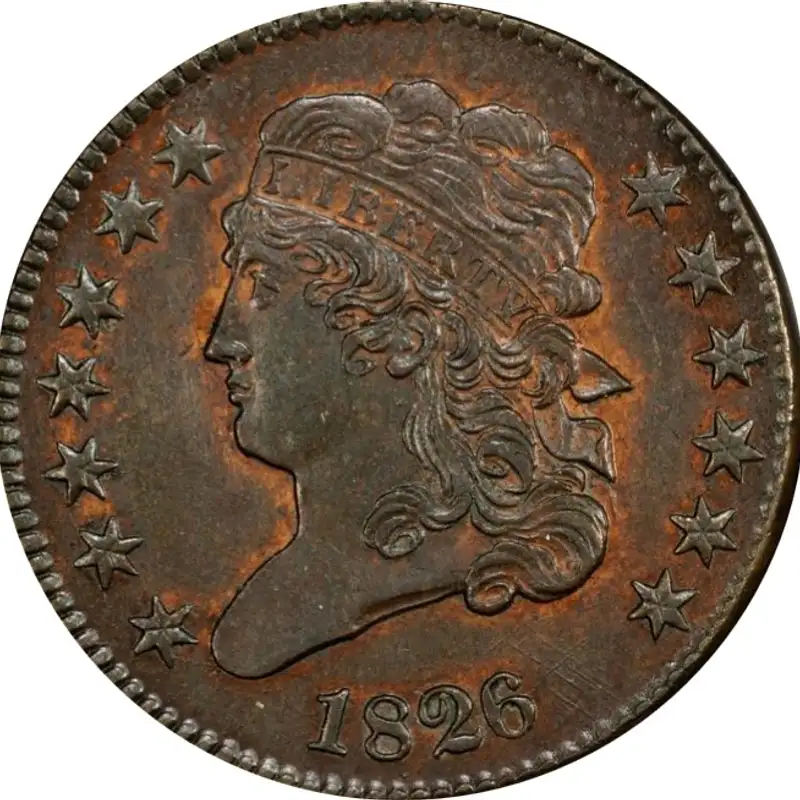
Chad Stachowicz:And then the only other coin that I think is really spectacular, you had that 26 up a couple times. That's a that was a really cool coin. That's a perfect example of, like where was it? The 26. It might have been one of the first ones.
Chad Stachowicz:I don't know how many This guy. This guy.
Tony Gryckiewicz:Yeah. I this caught my eye immediately because of the way that this thing looks. Least in the true view, it looks awesome.
Chad Stachowicz:And in a hand, it did too. Like, that is an electric real red and like this, you know, it's an AU 58. I actually sent it back in for regrading, and it came back in AU fifty eight plus, which will give to go to show you, like, probably the hardest thing for me to tell you, because I'm not like a big loop fearer. Somewhere in that hair, there's just the most minuteness amount of wear. Right?
Chad Stachowicz:Somewhere to somebody. Mhmm. And for me, like, that could easily be an MS 61 or a 62 coin. And so trying to teeter between what a 58 is and, like, what a 61 or a 62 is on a half cent is tough for me. Yeah.
Chad Stachowicz:You know? And that's where the graders get paid the big bugs, I guess. But this was one, like, I looked at it, and I immediately knew that this had to be all original with the red popping through and the areas that the red was. It was not an old cleaning. And so this is one that came up on eBay.
Chad Stachowicz:I just snapped up immediately and sent back to PCGS to see, especially being an old green holder, real old green holder. I really thought for sure it wasn't on coin, that they were way too tough on. And even at an AU 50 8, I still don't know that I agree with them, but, John agrees with them, I guess. So he's better than me.
Tony Gryckiewicz:Well, yeah. I mean, it's tough. It's tough, but I would say I mean, there's maybe a slight bit lightness of the strike, but I think there's maybe, like you said, a little bit of wear somewhere here in the in the hair, just enough for them to I mean, 58 plus is probably the hardest grade to collect and to find out in the marketplace. The difference between an AU 58 plus and an MS 66 or 67 could just be a matter of a tiny bit of where it's on the coin. Something that there's another previous guest, Tony Littlejohn, that he that's the the one of the things that he collects specifically.
Tony Gryckiewicz:He's trying to put together an AU 58 plus CAC type set.
Chad Stachowicz:Interesting. So I think you might have I'm doing this backwards, but I think I think there's a guy named John Q Little or something that's got a really high end twentieth century typeset, and I think he's the guy above me.
Tony Gryckiewicz:I I think so. I think that
Chad Stachowicz:that might be I'm figuring out who this guy is, but his his registry is not visible. So if you talk to him, you should tell him like you gotta publish it so we can see the nice stuff because it's like guys like me wanna look at other people's
Tony Gryckiewicz:Well, he talked about that in the podcast. I think he has a bit of a strategy with regard to putting his stuff visible to the to the public and when he chooses to to do that. But super nice guy, Tony Tony Littlejohn. I can't remember exactly off the top my head what episode it is, but he is the big standing Liberty quarter collector. He's got like the finest all known all time standing Liberty quarter set.
Tony Gryckiewicz:So, yeah, it's a guy when we meet up at Baltimore, you know, I'll point him out to you if if if he's nearby
Chad Stachowicz:and I saw a little bit of that. I saw a little bit of that episode, and I thought it was really cool because I think the Liberty quarters are kinda the prettiest piece of silver they ever made. I mean, it's like the just the design on it's really Sure. Pretty great. So and I know they're they're difficult to come by, especially how I like them, which is blast white because it took me a long time to put the two in my typeset that that I've got.
Chad Stachowicz:So but, yeah, this is neat. And you'll see, like, down there by the six, you know, that's a really almost all of them have that in the 26. That was a bunch scratches in the dye. You see those
Tony Gryckiewicz:Yeah.
Chad Stachowicz:Some other dates too, like, you find a bunch of high end $17.95 silver dollars, the rims always have those on those, a whole bunch of, like, cuts around them too. So
Tony Gryckiewicz:Yeah. This is your sonny knife.
Chad Stachowicz:Yeah. And that's I just got that out of heritage. Like, I'm kinda at the I just wanna get the last four coins in and to the side. But with that, you know, I'll I'll tell the collectors kind of the the other, you know, just sort of tough ones out there that have found to be really tough for me. Eighteen forty nines.
Chad Stachowicz:I've owned literally, like, five or 10. I haven't gotten a sticker on any of them, AU or MS. And you know, at those high braided hair years from '49 to '57, what I found is there's a whole bunch of I don't have any on my set anymore, but I had a 56 recently that I sold. They get this sort of like really mirror y look to them. And at some point, a lot of people must have messed with these things in the same way.
Chad Stachowicz:And so, you know, there's a lot of Unc's and 40 nine's out there that are nice Unc's, but got they this weird mirror. They must have they have some substance on them. And so I've I've found the to be really difficult and the eighteen fifty. See, that's very mute. It's very muted.
Chad Stachowicz:Like, you can tell this is original because even though it's a 54, it's not unbelievably shiny. They get these they get these looks on them that they're like 63 to 65, but it kinda looks like they're almost like a proof surface. And to me that tells me somebody's messed with it.
Tony Gryckiewicz:Yeah. Coincare. I think that's what John mentioned was Coincare that can be applied to give it a wet look possibly.
Chad Stachowicz:It could it could be, but yeah, there's like so so the 40 nines I find out there, everyone I find has got it on it. And so I never can find a good 49 anymore. That's why I've almost like been going for AUs recently because at least, you know, I'm thinking maybe I can get a 55 or a 58 stickered until I can find something that's already stickered. Yeah. And the fifties out there, that's a tough date.
Chad Stachowicz:And somebody tells me that the eighteen fifties that there's a guy out there hoarding like a thousand of them. And so it's not a rare date. There's just one guy that's got a whole bunch of them still in roles. Yeah. But my 50 was really, really difficult to get to.
Chad Stachowicz:I think the rest of them, you know, are are pretty easy to find unless you're trying to get some red in there. You had my 51 up there. That was one recently that I had in '63, and that's a '63 red round in that '50 1. Yeah. This thing, I'm like, I bought it because you just never see anything that red, like, in old copper.
Chad Stachowicz:Right? And and so, you know, this was a sub sub $1,500 coin, and it just caught my eye. And when I can find them, like, I think you could go back and, you know, except for that little you at the top two stars above above the head. I mean, to me, that could get a full red on it. It's it's so nice.
Chad Stachowicz:So Yeah. This is one that popped up, you know, and I think John Albany said it on on his version of your podcast. Like, you just look at it and you're like, that's sweet. You know? It's got the pop.
Chad Stachowicz:It's got the IMPR. That's one that I bid on that I just had no intrigue or looking for that it just immediately hit bid.
Tony Gryckiewicz:Nice. So I wanted to ask you about something because as you're talking, as you're as you're explaining kind of your process, you do mention about how you've owned a large quantity of the coins in a particular date and you submitted a lot of them, have yet to get the sticker. Can you talk a little bit about your approach? How do you buy a lot of coins and do you try a lot and you then sell them and and and, you know, I think some collectors out there who are walking on Divorce floor and let's say they they purchase one coin or two coins max per show. There might be a mentality of just like, you know, saving up and trying to find just that one perfect item.
Tony Gryckiewicz:How do you go about it? I mean, you buy a lot of things, kind of throw a lot of stuff at the wall and see what sticks in terms of CAC and then you sell stuff or you move through coins. What's your general approach with putting together a collection?
Chad Stachowicz:Yeah. So, I mean, when I walk through the like right when I get to the Borst, the first thing I do is I walk by and I see if there's anything in any holder of any type that's like, I can't live without that. And I would say I find one or two of those a shell, and some of them aren't even things I'm collecting, but there's certain coins out there that I just love or I've been looking for. Because again, I browse every auction out there that the dealers I've browsed everything from every category as if it's a circuit break. I just like type coins.
Chad Stachowicz:So I feel like I have a pretty good idea of, you know, the rare dates and the things I'm looking for. I try nowadays to buy I'm I'm happy to pay more to have it already stickered and not put the labor in it. If I was a dealer if I was a dealer, my whole game would be to go around and do one or two things. Buy the highest end coins I can with a sticker that don't have a plus and try and go get plus on them and re sticker them. I think that's a extremely good strategy for a person who wants to make money.
Chad Stachowicz:And and the other thing would be, I would be buying copper coins, and I'll just give you one off the top of my head. You know, there's plenty of coins out there where a sticker's worth well over double. $18.88 Indian cent. You know, pretty much all of them are doubled with the sticker. So $18.87 Indian style.
Chad Stachowicz:You know, there's a bunch out there that are just like, I kinda know the dates and when I see them and they're nice and I know there's a bunch of upside, I'll buy it. And I hope it stickers and I'll upgrade my set. And if it doesn't, maybe I'll deal it. But, you know, mostly it's there. I try not to buy duplicates of things unless I think they're exquisitely nice.
Chad Stachowicz:I got my 1877 Indian scent recently. I had a beautiful four RB that was stickered. I saw a RB that was stickered and somebody jokingly said, do you wanna buy it? And I was like, yes, I do. Because I thought it was assuredly a 66.
Chad Stachowicz:And because I didn't wanna lose my sticker, I plussed it. Don't think it's a six, you know, and that's a 10 to $15,000 difference in a coin. I wouldn't do that unless it's things that I'm used to looking at. And like the $18.77, I don't know every dates that well, but that one has very specific die states, and I can kind of tell in the state where they were based on, like, little l that's on the back. I don't know if you've ever looked sort on the back of the Indian head cent, but they pretty much all have an l die strike state above the end and the o.
Chad Stachowicz:And the deeper you get and the later the die state, that thing gets deeper and deeper. And so, you know, there's there's there's some telltales on there that that that just tell me, like, when I'm used to looking at them. And so yeah. Anyways, I I look for very specific things if it's not outside of my collection. And then the other one is early type coins.
Chad Stachowicz:Like, I'm always looking for '93, '94, '95, '96, '97, '98, '99 with stickers. Like if I can find them, I think they're hard to find, you know, in that VG eight till VF 20 range. You know, that's kind of where I like to buy them. That's kind of the thing I'm working on right now is trying to put together a, the seventeen hundreds typeset sticker.
Tony Gryckiewicz:Well, I think it's a fantastic time to transition a little bit about the grading piece because I was actually going to pull up my $18.77 cent that I have and it is in a 63 brown CAC and I was going to see if how well your AI grading software would do with it.
Chad Stachowicz:But then
Tony Gryckiewicz:we can also talk a little bit about what you just mentioned there. So while I'm doing this, why don't you tell us a little bit about the background here of this AI grading project? So what inspired you to do this? How did you approach it? What was the general high level stuff about how you've built this model to do grading and then we can introduce the website.
Chad Stachowicz:Cool. Yeah. So man, when the AI revolution came around a couple years ago, I run a tech company as my background, and I saw that AI was going to be so impacting even to my company, who is a boutique software development firm that I felt I needed to know as much as I could about it. So I joined an AI PhD program, which I am unfortunately no longer in due to my own decisions. But a lot of that is because even in the two years that I was there, AI advanced so far that it became unclear to me what it even means to be a PhD in something like computer science, or maybe in many fields, that's a different topic.
Chad Stachowicz:My machine learning class, you know, PhD, they wanted you to do something pretty novel. Right? And so one of the things being a guy who doesn't consider himself to be a good grader, I'm pretty good at like a 64, 65, 66 in the series, like in an Indian head because I look at a billion of them. Right? I'm not going to be very good at telling you the difference between an XF 45 and an AU 55 on the exact same series.
Chad Stachowicz:I'm kind of worthless. And so with that, you know, one of the things I was looking for was to see, you know, like if it was even possible. So I pitched this idea to my professor, which was to go to scrape literally hundreds of thousands of pictures from TrueView, from CAC, from auction websites that take high quality photos, normalize all of those and then train computer vision models to detect the difference based on those. And so we did a huge variety of those. It took a lot to get the images.
Chad Stachowicz:So I've made some models specifically. You need to have like 15 to 20,000 of an image to to kinda like with all these grades to kinda even get anything of semblance working. And so the models that are, up on my website were trained on everything 1792 up to present, all just based on training on grade level. I have built some Morgan models because those are easy to get a lot of picture. You know, a lot of people sell and collect Morgans probably more than anything.
Chad Stachowicz:I have written some Morgan dollar specific models, which are a bit more accurate because they're obviously can tell, you know, my model can't tell the difference between 1796 being a week struck back versus other years. Right? So week struck back, not many, you know, things to train off of. They're just going to say, so there's oddities right in the models, but you know, overwhelmingly pretty successful. I'd have to go back and look at my metrics, but I think it was 9096% within one grade and 98% accurate within sort of two grades.
Chad Stachowicz:Yeah. And obviously not, you know, there's so there you go. On the back, just for the record was the L though, you could see it.
Tony Gryckiewicz:Yeah. Yeah. So this is the so this is the 1877 sent here. So where is it?
Chad Stachowicz:Right above there. See above the o in the shield? You see that line coming down?
Tony Gryckiewicz:Okay. Yeah.
Chad Stachowicz:Yeah. Yeah. That's on every '77. That's part of the dye.
Tony Gryckiewicz:No kidding. I did not know that. And so how pronounced it is has some speaks to the age of the dye or how advanced the dye was?
Chad Stachowicz:Yeah. So if it's a less pronounced it is, think the earlier it was stamped. Right? That thing got deeper and deeper over time.
Tony Gryckiewicz:Got it. Got it. Got it. Okay. So this is the site.
Tony Gryckiewicz:So the newest king.com. So I can come over here to the coin grader. This is the AI coin grader. And what we were talking about before, we, you can use the camera that's on your phone, I believe, to take a picture of the coin or to bring in an image like it is from my website, but we can also do something like using these true views. And so I'm gonna go ahead and pull one up.
Tony Gryckiewicz:What do we start with? I wanna start with the well, since we're talking about the half cents, I mean, why not just do a half cent, I guess, to get started.
Chad Stachowicz:Yeah. Let's let's see what that one gives up. So you did just for the record, you can see that there's a little drop down. There's a couple models there. Next time, choose the advanced one.
Chad Stachowicz:It's there's one for Morgan's, but there's another advanced one. I think that this standard one I really need to take off. It is it was the very first one I trained and not the one that the paper is written on.
Tony Gryckiewicz:Well, so it's just we're running it through the standard model. If I were to then rerun it through the advanced model, will
Chad Stachowicz:it take look
Tony Gryckiewicz:Okay. Alright. So what does this thing say? Oh, great. Okay.
Tony Gryckiewicz:Well, now Uploaded I'll pick it. So now I I can pick can pick the advanced model. Right?
Chad Stachowicz:Correct. Yeah. And so all it did was it splits it out and puts the coin the same way as if you took the pictures because what it's actually doing, it's running the model on the front of the coin and giving it a grain and it's running the model on the back of the coin and giving it a grain. And then it's got an internal methodology that I couldn't tell you the AI could that where it meshes those together and comes up with the final grain.
Tony Gryckiewicz:Okay. Alright. So go and hit grade this coin.
Chad Stachowicz:And this will probably take two or three minutes here. Cents is waiting for the AI grinder. It's pretty expensive to keep these really expensive GPUs alive, so they go to sleep after ten minutes, and it only charges you for the time you're awake. So if you go to use the site, use it a bunch in
Tony Gryckiewicz:a row, it'll be faster
Chad Stachowicz:on that.
Tony Gryckiewicz:You are leveraging some kind of GPUs that are available for rent. Is that right?
Chad Stachowicz:That's correct. That's correct. Yeah. So you can kinda see here. I don't know what what that grade of that coin was, but you can tell us.
Tony Gryckiewicz:45, I think.
Chad Stachowicz:It was a what?
Tony Gryckiewicz:I think it's a 45. Let me just confirm on that one. That is a 45. Yeah. A PC PC 45 is what the, what the coin is.
Tony Gryckiewicz:This is pretty close. It's pretty close at AU 50. Maybe it's a little bit, possibly it's a little bit undergraded by PC.
Chad Stachowicz:My gut looking at this with my eyes, so that that was an AU coin when you pulled it up. I didn't know what it was, but I thought it was on the lower scale of an AU coin. Thought it had really great detail in the hair. The other thing that I would be really clear about this model was trained in what and if you go read the paper, which you're free to put in your you can just share the link I shared if you wanna put it in your But that it's trained in what's called step grades. So one of the things that my paper instead of being shelled in true one to 70, because you don't get back an XF 47 from PCGS, it does choose between an XF 45 and an AU 50 for this.
Chad Stachowicz:And so being transparent, when we put in the grades for this, if it was a cat coin, let's say that I had a cat coin that got a 65 and it had a sticker. I actually put it in for training as a Sheldon grade of 65.5. And so what you'll find is that this thing skews to be a bit tougher on grades normally. And so the things that come back as something that's pretty close to what's on the holder or maybe even a little bit better, these are like kind of my automatic sticker candidates to toss in my box.
Tony Gryckiewicz:No kidding. Yeah. I was just so I was just gonna ask if you've used this yet to kind of help you realize a coin could be undergraded and to try it for a sticker or to try it, yeah, for an upgrade.
Chad Stachowicz:Totally. Now now what it doesn't do is, hey, this has got you know, it doesn't notice scratched or details. I do have two other models that I haven't loaded up yet that I made that will just tell you yes or no on a details coin. That's like 92% accurate. Then I've got one that that will tell you proof for circulation too.
Tony Gryckiewicz:Okay. So speaking of that, let me go ahead and pull up another one then. This is actually an 1856 Flying Eagle set proof. It's an AU, it's in an AU details holder for altered surface, but the coin looks really great, really phenomenal. It's actually a snow three, which is I guess considered part of the regular striking or the original striking that occurred in 1856.
Tony Gryckiewicz:It's gonna load up here and I'll see if it what it says. Obviously, right now it does not identify any kind of a details kind of a scenario, right? So it's going to grade it's gonna give it a numerical grade, I'm guessing, right?
Chad Stachowicz:It it is. And I will, after this, like, I've been meaning to load up the details model and allow people to to take it because really it should run through. Yeah. You click grade. It should run through an order.
Chad Stachowicz:So like the details and the proof of circulation model, those will actually be added to this, and just every time you run it, you'll get that out of it. You won't have to, like, pick a special model.
Tony Gryckiewicz:Yeah. Okay. AE 58. Yeah. That's that's nice.
Tony Gryckiewicz:So, I mean, the the coin has the surface issue. The coin has the altered surface issue, which you can tell a little bit more on the reverse than the adverse because the coin kind of faces up well. But I know that this was also graded a 58 by another expert kind of before being sent to PCGS. So that's pretty, it's pretty good. That's really good actually.
Tony Gryckiewicz:Let me go with another copper piece. We have my 77 Indian, which I know is a 63, is a 63 brown CAC. So we'll go ahead and and load this guy up. This is available on the Cabbage Coins website. Of course, you know, take a look at the website.
Tony Gryckiewicz:I got a lot of new inventory up there. If you guys haven't seen the video yet, I just released kind of the, the live of the YouTube live and released all the May 2026 inventory on the live broadcast. So take a look at the website if you haven't yet, cabbagecoins.com. But alright, so we got this here. Let's go ahead and grade this coin.
Tony Gryckiewicz:See what it says.
Chad Stachowicz:MS 60. So here's a, here's an interesting example. So it's got that it's a mint state. And one of the things that we are planning on changing in the newer models is probably just to get rid of MS 61 because this, you know, the really the only coins that generally ever get 60 and 60 ones would be dollars. You pretty much never see a cent with those.
Chad Stachowicz:So they're either gonna give you a 62 or a 58, but like a 60 or 61 is just like not even a thing. Right? So Okay. This doesn't surprise me because the other thing you've gotta realize, there's a lot of people that don't bother to slab mint state brown Indians. And so there's a lot less in the training data.
Chad Stachowicz:And so everyone would go at this, oh man, you know, it's wrong, but you have to understand and that's why, you know, I have disclaimers all over here that like, it's only as good as the data that you get. And since I have to scrape it off, there's just not a lot of people that are uploading enough brown mint states to get it. So this thing was figured out that, but I'm sure because almost all of the mint states that this thing sees are at least red, brown, or red, that the coloring is enough for this thing to drop it down to the bottom.
Tony Gryckiewicz:Just gut. I see. Well,
Chad Stachowicz:so don't take, don't take it personally at all. Try a piece of silver for fun though, or a nickel or something.
Tony Gryckiewicz:Yeah. I actually would love to. Well, let's, yeah, let's go take a look at the Buffalo nickel that we have here and see what happens here. This is graded the PC 66 plus CAC. This is a '29 s.
Tony Gryckiewicz:It's better date. Really gorgeous coin actually. I'm really happy with this coin. I don't expect it to last very long. I want to take it to a
Chad Stachowicz:couple of shows, but I'm interested. I'll be interested to see because I have a pretty high end typeset. Like I said, once you get above 66, this doesn't do pluses. So I bet
Tony Gryckiewicz:So we're either looking for it to if it hits 66 or 67, then that's a that's a win or that's
Chad Stachowicz:Yeah. And then and again, I I think I think this thing does best on men's dates between '62 and '65 on most things. And I think, you know, kind of the same deal. Interestingly, your dime your dime would do really well because there's a 16 d low grade mercury dimes out there. So there's a there's at least a lot of those in all dates to be seen.
Chad Stachowicz:Same thing, you know, most of the 70 sevens that it, that it got trained on, you know, you see them all the way from figure two all the way through AU58s. There's a 70 sevens. Most of the ones that I would have seen that were, you know, 65.
Tony Gryckiewicz:Saying a 65 on it.
Chad Stachowicz:And that doesn't surprise me. You know, some of these things, they're a little weird and high higher grades. And there are things that I was gonna kinda work on, you know, to train this model, I think took four GPUs about four days. So it was, it was a couple grand.
Tony Gryckiewicz:Well, you had a ton of images, an absolute ton of images. It sounds like.
Chad Stachowicz:I think a 140,000.
Tony Gryckiewicz:Yeah. Yeah. And okay. So here we have the 16 can actually process pretty quick. So let me go ahead and grade the 16 D see what this says.
Tony Gryckiewicz:I actually think this 16 DMO websites a little overgraded personally. Think they were a little bit generous. I think this coin is closer to an AG three and that's exactly what it said here.
Chad Stachowicz:Was going to guess AG three when you showed it to me or G four.
Tony Gryckiewicz:Yeah. It's a good four is what is what PC has it as is a good four. I just think that the rims and the reverse are way too weak to be a solid G four, so I think they were, they were a little bit generous on the coin on this one. The AI said AG 3, I did notice it's having a little bit of trouble with identifying correctly the coin itself.
Chad Stachowicz:Oh, the membark. So this is all terrible chat GPT. This is where I like to show you. So what we do after we process it, I'm just throwing in that chat GPT. Now what I do have, because most of what gets wrong is the mint mark.
Chad Stachowicz:I have a mint mark model that is also going to run that is, like, 99% accurate. So the mint marks will get fixed, but it's almost always the mint mark that's messing up what it what it's reporting back. And, yeah, these are part of the reasons why I haven't like rushed it out the door. I actually haven't had a chance to work on it in a couple months.
Tony Gryckiewicz:This is super cool. I mean, because here's the thing, man, and I'll just kind of say this, you know, we're getting late in the episode, who knows who's paying attention even at this at this point. But for me, what I really appreciate is the fact that you applied this theory to something practical. Built something, you've tested out a prototype for AI grading where up to this point, just have seen a lot of people talk about the theory of AI grading and how it's gonna affect the industry. So kudos to you to actually build something and it's usable.
Tony Gryckiewicz:Somebody can sign up that's watching this, they can sign up and they can start grading stuff and see what happens. So anyways, so for this one, this is Morgan. Should I use the Morgan model?
Chad Stachowicz:Yeah. Try the Morgan model on this guy. Okay.
Tony Gryckiewicz:Go ahead and grade this. This is a '95 s and an AU 55 holder. A vest is a fantastic grade. Great, great coin. Happy to have it in the inventory, but just the fact that it's an AU coin, I'm curious if it's gonna actually call it AU or if it's gonna bump it into MS for some reason.
Tony Gryckiewicz:No. AU 53. Good job. Nice. AU 53.
Tony Gryckiewicz:Oh, yeah. It does allow me to zoom in a little bit. Yeah. I mean, there's a good healthy amount of wear kind of it, but there's this is borderline. I I this cone would never sticker, but it's borderline between a 53 and a 55.
Tony Gryckiewicz:And also
Chad Stachowicz:What holder is This it on
Tony Gryckiewicz:is a PC. This is a PC 55.
Chad Stachowicz:Okay.
Tony Gryckiewicz:Yeah. Yeah. One second here. Let me go ahead with the 66 plus piece dollar. See how it does with the 66 plus $19.25 piece dollar.
Tony Gryckiewicz:This one is available. I think all of these coins are available on my, on my website, I believe.
Chad Stachowicz:The other thing that's The The other thing this is gonna do, and we're not gonna have time for it, but if you poke around the website, it has the ability to build an inventory and be on leaderboards. And so if you go AI grade your coins, you have to, to put them into the inventory, but it allows people that are collecting raw to sort of get in on the collecting game because you'll use our grades, you know, the registry. So I just think that's kind of neat too, you know, that you can sort of
Tony Gryckiewicz:a lead in or what my, some of my thoughts are on this topic because right now the Sheldon scale, in my opinion, it's not graduated enough. There isn't enough separation between the different, especially when you get into the ministate grades between sixty one and sixty two. There's almost, don't wanna say an infinite number, but there's a large number of gradations between what a 62 to 63 is. That's why some coins ended up getting stickers, not. So to have AI being able to grade them quickly, it might be more cost effective to dump it into you know, MS62 grade, but do you feel that there is a potential here for there to be more specificity in terms of what, where exactly does it land between, you know, 62 and 63?
Tony Gryckiewicz:And you do you find that the hobby is going to change or collectors are going to appreciate that because they're going to get a 62.8 or something one day. What would have you thought at all about that? The implications of this?
Chad Stachowicz:I haven't thought about it as being a better alternative. I guess I just I don't think that people will stop tossing things at slabs. I do know that I I hear the dealers walk around and kinda ask, well, who's grading at the show this week? Right? So they know who the graders' names are.
Chad Stachowicz:They you know, that that tells me there's some level of personality and bias that that happens in the grading process. And so for me, I think it gives a more sort of third party opinion, you know, to it's like, it doesn't have bias. The robots don't care. Right? This thing has it's not a large language model.
Chad Stachowicz:It doesn't do anything, but look at the coin and compare it to other coins of its standard and try and figure out what how much wear is on it and what whether toning is good or bad or so, you know, for for me, I I think it gives the uneducated a better third party opinion to start, you know, doing something. It gives them a level of comfort. Right? Like, the thing that hurts the hobby the most, guy gets some stuff in his change. It's a state quarter.
Chad Stachowicz:He thinks it's cool as hell. He goes and stops at at at a local coin store. Local coin store guy's busy with real gold buyers and stuff. He says, ah, you don't have anything. Maybe the guy has a bunch of Morgans out there, and he has things of value that he now is never gonna bring into that coin stories.
Chad Stachowicz:He's kind of turned off from the hobby. And so we deal with a very educated collector base and we're sitting here talking about three, five, 10,000 coins like it's nothing. The average guy who's gonna come out and buy a 7 or $10,000 coin someday started by finding something cool that his grandpa left and or finding something cool and has changed and thinking maybe I got something neat. Like, you know how many people text me and they're like, I found this gold silver dollar. And I'm like, it's not gold and it's not worth anything, but it's cool that you looked at it and you thought about your share.
Chad Stachowicz:Could you weigh a dollar? And your thought was to text somebody about it. So I think, you know, if you go look, there's a and I don't wanna like advertise, but there's other AI grading little coin things that are on the iStore, you know, that you can go download with your app and they're not at all as accurate as this are, but you go look and over the last five years they've had 20 to 30,000,000 downloads.
Tony Gryckiewicz:There's no doubt that there's a huge demand for it and people are interested in it. And there's a lot of people that are downloading those apps because they look, I mean, it's interesting. It's something fun to do. You go and pull out a whole jar full of coins. You use your app and you can find out if you have anything that's rare or valuable.
Tony Gryckiewicz:But what we're finding is that these models are very inaccurate. They're identifying coins, I think pretty inaccurately. They're also giving people inflated expectations of what those coins are actually worth. They're then phone calling over to coin shops or coin dealers or so forth that they, and they think they have this thing that's worth a whole lot more than, I mean a lot, lot more than it truly really is. So it's a, you know, I just, there's obviously a ton of hunger for it and hopefully an app that is just a lot better and more accurate with being able to identify what the coin truly is and an approximate grade.
Tony Gryckiewicz:And what I appreciate about yours is that you actually do pull up. Let me go ahead and grade this one from some of these you do pull up auction records. So people have an idea of really what they would sell for. But it's it's undeniable that it's going to get people into the hobby, which is really cool. So this is a 66 plus and this is a 65 on the peace dollar.
Tony Gryckiewicz:This is a 25 P, which is correct.
Chad Stachowicz:And I don't doubt us. I you know, I'll say it again and again that I think my grading program is wrong on the higher end of the scale. You know, I think one of the things, you know, you talk about this, these true views resolution's really high, maybe. Yeah. Maybe a thousand, you know, couple thousand of pixels each way.
Chad Stachowicz:I think the grading lowers these down to 200 and well, maybe 384 pixels each coin. And so it shrinks them a lot because the GPU power is radically higher, as the pixels increase. And so, you know, it it's something that needs to be tried in a longer term, which would be taking these and actually maybe instead of training the model at 384 pixels, train it at 712. I think the model would be much more accurate. I also didn't exactly have like the 10 or 20 grams that's sitting around to train on that level of imageizing right now.
Chad Stachowicz:You know, nor did we have the time at the university cluster at that time. So, yeah, I think it can be better. But, know, for the person that's out here just trying to figure out kind of what they got in a general range for most people, you know, I think it's a good start.
Tony Gryckiewicz:Yeah. This is a 93 P. This is graded by PCGS as a 62 and it has a CAC sticker. It's blast white. It's a gorgeous coin.
Tony Gryckiewicz:It's on my website for sale. And this is, it's very, very close. A 100 very close. And it is a 62 CAC. So not surprised that this thing graded a 60, a 63.
Tony Gryckiewicz:And given the luster, how do you think the model factored in luster?
Chad Stachowicz:So I think that the model doesn't care as much about luster. I think what it really cares about is it's having a trouble dictating whether toning or spots. Yeah. And that's what I think probably happened on your peace dollar. I think heavily toned silver, I think it's a bit weird on.
Tony Gryckiewicz:Got it.
Chad Stachowicz:You know, and so that would be like, for example, on our side, when we pass in the picture of the coin, we do give it, here's the grade of the coin. Here's the denomination of the coin. So we give it labels of information with the coin so it can differentiate. Probably one of the biggest ones I could do to improve the model would be to give it toned yes or no. And then it would probably get way better at training based on that label.
Tony Gryckiewicz:Well, there's a lot of degrees of toning for sure. Yeah. I I I think, you know, it'd be great to have a round table discussion on this whole topic of and and its implications for the hobby. I think that folks, if you're still watching at this point, if you leave some questions below for Chad or for myself or for, you know, dealers, graders, people that are, you know, are interested in this topic and they want to discuss, we want to if we want to discuss AI grading at some point in the future, if you've got questions, throw them in the comments below. We'd love to, you know, invite you back, Chad, and have you chime in for sure, given the fact that you've actually built a program around this, but any final closing thoughts, man?
Tony Gryckiewicz:I mean, you strike me as obviously a very multifaceted guy. You got a lot of talents, got a lot of a lot of areas that you are very talented in, and you pour yourself into an area and you become an expert in it. You are clearly a super collector. Just what you put together in the half cent series is very impressive. Any last bits, words of wisdom for the folks out there watching this about just what you've learned in collecting coins, general tidbits of wisdom that you would share with people out there?
Chad Stachowicz:Well, the biggest thing that I can share is you got a lot of new collectors out there that especially can be really focused on what the slab size, what the grade is. And I think that there is no underestimation for making sure that regardless of what the price of the slab says that you find it to be a pretty coin. And that's the number one thing that I look for is like, do I find this attractive, especially compared to all the other ones I've seen or that I could see? And I generally have done really good. We've done some some business back and forth.
Chad Stachowicz:I've done pretty good moving on from my collection to collect other things because most people look at the stuff that I have and go, these are really nice, right? And I think if you're a new collector, that it that is one of the things that that those little stickers could can sort of help you learn is at least they lead you to the really, really nice stuff. And I'm a firm believer that really nice stuff holds its value and sells well. And I generally believe that you're way better off having one $3,000 coin than $3,100 coins, especially when you you wanna go buy something and start doing some moving and and and shaking and trying to trade and get to where you wanna be. Because I think every every collector out here will tell you, most of us don't just have like infinite amount of cash rolling around.
Chad Stachowicz:We usually see something we can't live without, and the first thing we do is go to our safe and go, what can I live without? And it's a lot easier with what what you can live without is one or two coins that are worth a lot versus, know, a bunch that you really couldn't figure out how to move at any any reasonable rate. I've gone, you know, the final little tidbit, I've gone down from 1,800 unique slabs. That's a lot. I've got probably, I think 400 ish unique slabs sitting around here, which I'd like to get rid of another 150 of those pretty soon.
Chad Stachowicz:So I've really been trying to refocus on things that I think I just won't see again or I won't see anytime soon. That's, you know, that's what I'm looking for at divorce nowadays. Something that I just, I'm at four or five big shows a year. The one thing where I'm like, wow, I haven't seen that. That's usually what
Tony Gryckiewicz:I Well, I'll be at Table 655 at Baltimore. So come on by, For sure. Love to see you and take a look at the coins you got.
Chad Stachowicz:Awesome.
Tony Gryckiewicz:Alright, man. Well, thanks. And hopefully see you at Baltimore. So appreciate you doing this.
Chad Stachowicz:We'll see you again soon. Thanks for the time. All right. Bye. Thanks.