Ep.48 - Taboo Topics in Coin Collecting (Part 1) with Ben the CoinGeek & Tony Gryckiewicz #gold
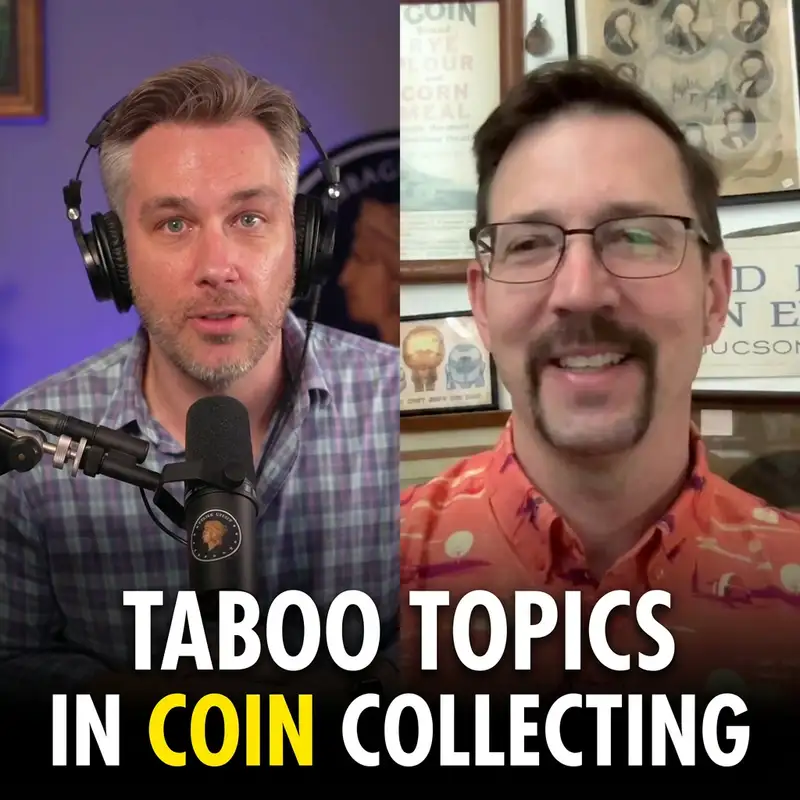
Hey, folks. Welcome back to the Cabbage Coins Podcast. My guest today is none other than the infamous Ben the CoinGeek of Ben the CoinGeek fame. He runs a little shop called Old Pueblo Coin Exchange down in Tucson, Arizona. I think he's very instrumental in leading up a Tucson coin show that happens in January.
Tony Gryckiewicz:I'm hoping to do it this coming year. Ben is also very famous for having a very successful coin podcast and coin channel on YouTube and makes incredible videos. You just made a video about like worst purchases of 2026. What was the coin? It's been blowing up.
Tony Gryckiewicz:It's been doing really well.
Ben TheCoinGeek:Yeah. Well, thanks for having me on, Tony. I appreciate it as always. You know, sometimes I just look at things and I think, you know, I don't know how creativity comes, but I'm like, okay, there's a few things that are on my mind, let's talk about this, let's make a list of some of the worst things that you could do with coins, but the one thing I will say that most people put on that list that I did not, was the US Mint. So, and I don't know if you read some of the comments, but a lot of people were like, you forgot to put the US Mint on there.
Tony Gryckiewicz:Okay. Well, we will definitely talk a little bit about them today. We are talking about today's topic is the taboo topics of coin collecting, coin dealing, numismatics. What are those topics that everybody thinks about or wonders about but nobody wants to discuss or some things that we maybe should or should not be discussing here in the YouTube world. We're going to tackle these.
Tony Gryckiewicz:We're going to go for it. I've developed with the help of course Claude, a little bit of a random question generator that we're gonna use for this little endeavor.
Ben TheCoinGeek:So when Tony uses technology, he actually uses technology. I did this once with somebody, but I literally wrote like on sticky notes and I put numbers on the back, said, pick a number, and then I was like, got a computer generated thing to give us some questions, I like it.
Tony Gryckiewicz:Yeah, yeah. Okay, so this is completely random, we have 19 questions here, topics, I grabbed some of these from the YouTube post that I made yesterday or day before asking for some suggested topics for this. Ben and I have been kinda chatting about this one for a little bit of a time, so that's what is the driver for a lot of these, so go ahead and dip right in.
Ben TheCoinGeek:Like the fact Okay. That you start with one that's supposed to be kinda like a a breakup from the serious stuff and put
Tony Gryckiewicz:it Yeah.
Ben TheCoinGeek:What's the divorce rate of coin dealers?
Tony Gryckiewicz:Yeah. I don't know
Ben TheCoinGeek:if you'll answer that question. It's impossible. People ask funny things at shows though, so maybe this is a good thing to start with as being taboo, because you'll go to shows, and customers will walk around, they'll be like, there's just, you know, people are curious creatures, so they'll look and be like, how does that work out? What are they, are they So, I would say that I actually know a number of coin dealers that have been married for decades, So I'm gonna start here with leaning into the positive side of this
Tony Gryckiewicz:Mhmm.
Ben TheCoinGeek:Which is the couple that collects together stays together. Okay. So good news for you, Tony. So, like, when you look at literally, know people that they've traveled together for decades, and it's just been a great, great experience for them. The other side of that, and I don't do shows as many shows, some of the guys out there just do shows every weekend, and 40 shows a year kinda thing.
Ben TheCoinGeek:There's a reality when you meet somebody and all of a sudden, you're like, wait, they're married? Question mark? Because I see the way they act on the road, and there's a real trouble in paradise thing, think, generally for any type of industry where a spouse is always at on the road, always at conventions, a lot of time away from the spouse. I don't have a statistical number for you though, maybe you can chime on that one.
Tony Gryckiewicz:I have no idea, I will say that you do see all sorts of things, there's a number of couples that do the business together at shows, and you see them in a lot of shows. Obviously, they've both sort of have signed up to do the show scene and to do the coin business. It is a very fun, interesting business. You get to see a lot of different places. Every city you go to, we just went to Baltimore and there's Baltimore actually is a lovely city for food.
Tony Gryckiewicz:I think it's not talked about enough with reasons to go to the Baltimore expo is the food in that city in different parts is amazing, is actually quite incredible. But you go to the different cities, you get to, you know, go out into the town, see a new place, go to a bunch of different places to eat and enjoy the atmosphere in different cities around the country or maybe even around the world. It's a great life to to share with somebody. So you do see couples that are out there that do the business together. On the other side of the coin, no pun intended, I have talked to dealers that that sort of bemoan and lament, you know, about the conversations they have with their spouse when they get back from a coin show, and it's it's one where the the spouse isn't necessarily as psyched about this business.
Tony Gryckiewicz:If they make money, they're very happy about it. If they lost any money at the show, don't let them hear the end of it sort of thing. That's of course not great. I don't know what the divorce rate is or could be. I haven't really heard of a whole lot of people getting divorced because of being a coin dealer, but it could be yeah.
Tony Gryckiewicz:I don't know. Look at Yeah. The
Ben TheCoinGeek:I mean, this is a topic for the John Deloney show, but this this, not not necessarily for us, but my you know, like, one of the reasons why I don't do 40 shows a year is just because it wouldn't be good for my relationship with my wife, you know, and and getting out about once a month is probably a good pace for us, you know, but we've had those discussions, you know, it's, you know, good marriages take work. Alright, I'm gonna go, next question.
Tony Gryckiewicz:And just last thing I'll note is, I am very fortunate to have a girlfriend who is in this business with me and we share a table together. It's one of the real blessings of my life in the last year has been able to do that. So I'm very, very fortunate in that regard. All right, moving on. So what are behaviors in the industry you don't understand why anyone wastes time doing?
Tony Gryckiewicz:Wanna tackle that?
Ben TheCoinGeek:Oh, great. Cracking out slabs. Yeah. There's that's the funny thing is, so the videos that we make, if I do any type of a crack out video, people watch those endlessly. They over formulate their opinions about how the industry works from those videos.
Ben TheCoinGeek:So I've started to put a, you know, disclaimer on almost all those videos of don't do this at home. It's not worth your time. It's not worth your money. So why do people do it? Well, I mean, at the end of the day, it's the same, well, two things.
Ben TheCoinGeek:There's a gambling aspect, which is people get addicted to anything that's gambling, which is why parts of whatnot work, it's why the the slab pulls work, like vault box or like wood or brick. There's just an element of that to it. You know, for me, I've some of the stuff we do as tests for the channel to show people like, oh, we took a bunch of this stuff and did something different with it, and we're gonna show it to you, So there's an educational format to it. And some of that stuff is things that I wouldn't have traditionally cracked out. You know?
Ben TheCoinGeek:Why do people crack out slabs? Of course, the real answer is I'm trying to get this coin into the holder I think it deserves to be in. That is that's something that I think cracking out has always been there for that for that reason, but it's expensive. And, you know, the risk reward is not great, especially if you're not skilled in grading coins.
Tony Gryckiewicz:Yeah. So the two things that I would cover on this one, both have to do with dealer behavior and both are things I experienced at coin shows. One is gonna be on the topic of endless low balls. What I mean by that is like, there's this guy who always comes around to my table every show and he always asks if I have GSA Morgans, you know, Carson City GSAs. On a couple of cases I do.
Tony Gryckiewicz:And then he proceeds to like low ball on what he wants to pay for those GSAs. And I'm like, this is a really good retail piece for me to put in my case. There's a lot of people come to the show looking for these. And so every show you ask me and when I do have them, you don't want to pay anything for them really. So why ask?
Tony Gryckiewicz:Why waste the time? Why you know, I don't understand that as a as a business strategy. And that's sort of same vein, but on the opposite side, I don't understand how some dealers make money who carry around a couple double row boxes of coins at shows to other dealers, they sit down at your table, they want you to look through coins if you want, if you see anything. Every coin inside the box is maxed out from a grading perspective, they've all been cracked out CAC like they're like the coin you're looking at is in the highest probably rate you're ever gonna see the coin in and the prices are high retail numbers. They're almost always above a CPG or price guide number.
Tony Gryckiewicz:Price them at the latest comp that is comparative sale at an auction. So there's nowhere for me to go with this coin if I were to purchase it as a dealer buying for resale at my website or whatever, there's nowhere for me to go at this. I don't understand how they make money. I don't understand what the point is. Feels just like a, again, a giant waste of time, but.
Ben TheCoinGeek:Yeah. Well, certainly, there's lots of different wastes of time within the industry, whether whether you're talking about guys that they just come by and they always offer you the lowest possible price for stuff and you're like, who is selling this guy coins? And then the other end of it's what you're mentioning, guys that it feels like they're always asking way over market for stuff. Who is buying coins? How are they in business still?
Ben TheCoinGeek:I guess it's the the format must work on some level with somebody, unless it's just they've got a hobby of walking around and spending time and maybe they're just there for the food. What's the Rock Coins dispute one? What is that?
Tony Gryckiewicz:This is quad generating what they
Ben TheCoinGeek:thought was a
Tony Gryckiewicz:wasted time Oh, oh,
Ben TheCoinGeek:oh, gotcha.
Tony Gryckiewicz:No idea what that I'll one
Ben TheCoinGeek:tell you, we used to have customers that would come in and argue over a quarter with the owner, and it was like, man, just here's the quarter, I wanna go home now, can you guys stop fighting? Yeah. That some people are just too cheap for words. So
Tony Gryckiewicz:Gotcha. Yep. Alright. So next one here, Coinsworth $40 sold for $2.99 in television. I love this.
Tony Gryckiewicz:This is Oh, nice. Telemarketing to see underbelly nobody wants to discuss.
Ben TheCoinGeek:Yeah. This is actually a really good topic because you had done an interview with Greg Allen and he he went right by this. He mentioned it and it's a it's it's very accurate, but dealers don't really talk about it. And he wasn't trying to avoid it. He was super matter of fact about this is what these are the term you'll hear people use is programs.
Ben TheCoinGeek:They'll have a program for coins. So you'll have a dealer say, hey. I need all the MS sixty four Morgans you can get. This is my buy price is $94, or whatever their number is. They need to be white.
Ben TheCoinGeek:No toning, please. No spots. Boom. And a huge amount of the coin market is generated by telemarketing. In other words, there's just large quantities of similar products go to these companies that then get turned around and sold, as you can see here on the screen.
Ben TheCoinGeek:All of a sudden, they're on the late night TV shows, or they're popping up now because the technology is different. They'll pop up on your as like an advertisement or something on your phone. If you're looking at something on on YouTube, as an example, never click on ads on YouTube, by the way. If you're getting Coin related ads, they're gonna be bad for you, and and I would say that from here, not only is the telemarketing a big part of the market, there's been a big conversation about Whatnot more lately. I think Whatnot is actually doing the same thing with Coins, but instead of it being like all of these Coins going from hundreds of different sources into one big thing that then gets distributed, Instead, it's like all of these coins are all getting distributed to hundreds of little micro sellers, and instead of it being, you know, business to business, and then the coins go to the consumer, business to consumer, Now it's directly consumer to consumer, so whatnot is almost like Uber ing, if you will, the telemarketers.
Tony Gryckiewicz:Yeah. I've often described to folks that it's fascinating to me how a coin can be sold and then resold and then sold and then resold. And along the way there's people that are making money and there's an industry and there's there's Yeah. There's all this commerce that can occur. Where's the value being created?
Tony Gryckiewicz:And the value is being created because there's this undervaluing of this asset or there's this overvaluing of this asset along the way. And it's fascinating how much of this coin market in The United States is actually driven by both sides of that equation and the overvaluing of things on a telemarketing kind of TV program, audience that somehow believes this thing is worth $299 and therefore they, you know, there's limited supply call now, blah, blah, blah. It's a vast number of people that are on that buying side in that scenario that are creating value, so to speak for the person that is, you know, selling and is financing the program. Greg did mention how there's like a entertainment aspect to that. You're kind of paying a little bit for the entertainment there.
Tony Gryckiewicz:But you know, that's kind of one side. Then of course there's the side where people come to sell their items and they're considerably undervalued compared to what the market might value them at. But put that aside for a second. It's really that side about the telemarketing. It's what I call it the CD underbelly is because that's actually driving so much of the demand at the coin show.
Tony Gryckiewicz:I mean, whatnot is driving a lot of the demand at a coin show. There's these people showing to up with large buy huge quantities of coins to take them in onto whatnot. How is that possible other than the fact that a lot of people on whatnot are overpaying for coins? How is it possible that there's a need for a thousand Franklin halves and 67 full bell lines, NGC, black, blast, white, whatever it is at a certain dollar amount other than you can take them and sell them on to these programs. Like you said, there's this huge demand.
Tony Gryckiewicz:So real quick, if you guys are watching this video for the first time, there are two things that I would love for you to do. First, every time I look at the video, I see the analytics that's roughly about 60% of the viewers are not subscribed to this channel. If that's you today, I'd ask you please to hit that subscribe button. Please like the episode. Put a comment below.
Tony Gryckiewicz:I try to respond to as many of them as as I can. The other thing I'd like you to do is to go out to cabbagecoins.com, and here on the homepage, if you scroll down, you will see on the left hand side, it says first look at new inventory. This is the way that you get onto our email list. Basically, I send out emails roughly about once a month or so, and I get a whole collection of the latest newest inventory and I put it into your email inbox, and that way you get first look, so to speak, on all of the new coins I've had come into the inventory. And without any further ado, let's get back to the program.
Tony Gryckiewicz:Alright. So this is interesting. Where is the line on slabbing or selling forbidden items? You wanna take this one away?
Ben TheCoinGeek:Yeah. This is this is really interesting one to me because there's a combination of if you're in a certain area, you can't get certain coins graded, certain world coins. And, of course, we had done a video on, like, too hot for eBay where, you know, you can't use the term Cuba. You can't sell Cuban coins on eBay because there's, like, a trade embargo. And and for me, there's a lot of countries that are going around passing laws, like in Italy, and, you know, if you have an ancient Sicilian coin, they want it back.
Ben TheCoinGeek:I'm sorry, that's ours, we want it back. You know, it's this weird, weird, to me, huge jumps of logic to believe that somebody today who happens to have been born in Italy has a right to something that was created in Italy twenty five hundred years ago. And so all of these laws and rules and stuff and restrictions, I find them to all be somewhat in the mode of erasing history, so to speak. I have a group of Mexican medals, the Mexico City Mint made I wanna say they made in the eighties, and it was celebrating a cartoonist from, like, the nineteen twenties. And they have a coin.
Ben TheCoinGeek:One of the medals, one of the cartoons has an African American kid eating a watermelon. And it's like, well, PCGS, I said, do you guys grade these? And they said, we will grade all of them at that one. And, you know, their position is pretty normative in the marketplace, but also, like, what do you do with the set? And, you know, it's a coin.
Ben TheCoinGeek:It's a medal. It's showing you how people thought and what they think of. It's a real thing. And to me, still, I don't wanna ever erase history. I wanna preserve it.
Ben TheCoinGeek:I wanna understand how people saw the world, what they thought. And here with, like, the swastika is a big one because some of these things aren't posted anywhere, but, you know, if you know, the swastika had totally different meanings before Nazi Germany came out, and then you've got today, you know, if you have a Manji countermark on a coin, which is basically the backward swastika, and it's a chop mark actually from Asia, CAC won't put that in one of their holders. And it's like, well, what are you are you telling me that, like, someone who has a Buddhist background can't have their coins in a holder because that's a good luck symbol for them? Like, what are we I saying right find this to be all kind of fascinating and unnecessary because it's just history.
Tony Gryckiewicz:Sure. Well, yeah, there's something there with the idea of symbols and where the meaning for symbols comes from. You know, it's arguable of course that the true meaning behind a symbol is what the original creator of that symbol meant it to mean when they created it and they developed it. This is where you might read a particular text from some kind of an ancient text and you're very interested in what it is that the author meant by this thing that they said or when they use this particular word or whatever. But then the, you know, kind of what's in vogue now is more of this postmodern view of symbolism and what it means, which has a lot more to do with how does it make me feel today?
Tony Gryckiewicz:What meaning do I put to it today? If I put a meaning that is somehow negative or reminds me of oppression or reminds me of some kind of a historical event, therefore that symbol is bad. It's definitely a very, I don't want to call it, it's a very contemporary thought, a thought that's developed, especially since the 1960s, a lot of the French philosophers that wrote in the nineteen sixties. Anyways, it's an interesting topic and I'm more on the side that you are on that one then. I think of these as being symbols from real historical events and things that should not be forgotten.
Tony Gryckiewicz:And you know, especially on the side of like you just describing about this kind of, you know, Buddhist symbol that is on a coin that came out of Asia and so forth. It's not even in the right direction as Nazi swastika.
Ben TheCoinGeek:Even if you're you know, but even within the coin market, are we gonna get to a place where all of a sudden, oh, by the way, we're not gonna grade or certify any German coins from that time period, and is no one gonna be allowed to collect them? Because that's where this all leads to, and it's like, well Yeah. I mean, if if CAC grading decides to start grading more world coins, are you gonna say, by the way, we're not gonna grade Nazi Germany coins? You know, it's it's something that's kinda still hard for me to comprehend, and, like, I'm I'm like an overly sensitive person, generally speaking, so, like, but to me, history is so important, and it teaches you so much, and that's a whole part of the coin industry, to be able to hold something and see something and say, oh, this is real. This does make sense.
Ben TheCoinGeek:I know that this actually happened. You know, that's important. You don't wanna forget that things actually happened. So, alright, anyways, that's to me it's a fascinating topic. There's really it's one of the few places where you actually have real decisions being made by either grading companies or by selling platforms, where they're just saying, nope, you know, you're not doing that, so.
Tony Gryckiewicz:Sure. Yeah, yeah, and who knows, who knows what the real reason is behind that, I feel like we could keep going in this one, but for the sake of time, Okay, I will move on to the next so, what is the deal with the US Mint lately? What? We that's pretty good, Seinfeld. Thank you.
Ben TheCoinGeek:What's with the US Mint?
Tony Gryckiewicz:That's better, there you go, you nailed it.
Ben TheCoinGeek:So this was this was a jaw dropping surprise, You know, I saw the the product coming out. We just did a video the next day as soon as we saw the announcement. Bell shaped coin, bell shaped metal, gold and silver, and and the mint producing those at $19,600 is fascinating. They're only making 2,026 of them. There were getting absolutely shellacked in the comments section.
Ben TheCoinGeek:You know, people saying either they're out of touch. Who wants to buy it? It's hard, you know, it's hard enough to convince an old school coin collector that a bell shaped coin is a real thing. You know, it's just but then to price it with gold at 4,300 or whatever it's at, at five x the price, And with silver at, you know, $70, they've got a half ounce of silver, so $35, and the price in that at $7.50, you know, so 20 x. Man, it I don't know I don't know exactly how they're coming to these conclusions, you know, but they're just doing all kinds of different stuff, and you have the changeover of leadership there constantly.
Ben TheCoinGeek:So it's hard for me to really understand what the spirit behind what they're doing is, or how you get to that price point.
Tony Gryckiewicz:If I had to guess, I would say that somehow, some of the folks are sitting around, there's a couple things driving it. One is, I think somewhere in government, they're driving for more revenue. I I I think they're trying to figure out what are all the different ways that we can create more revenue through special releases of this thing or that thing, and coming up with a special mid coin that they're gonna ask some crazy exorbitant number for that somebody's gotta have to have and so forth. You know, that's it's maybe one of the drivers possibly. It's kinda hard to to just predict that or assume that, but the other thing would be that they've looked at the secondary market for some of their releases.
Tony Gryckiewicz:And for example, the corn of the year that that Mustang from what year that was twenty ninth? I can't remember '20, 2019, 2020. I forgot what the year was for the high relief. You know what mean? The Mustang gold Yeah.
Tony Gryckiewicz:And they've looked at the resale values of those MS70s I think go for close to close to $15,000 now in the market is where those things go for. They sold them for whatever gold was a little bit of a premium above gold. They sold those not that long ago. Now in the secondary market, these things have huge premiums. So maybe they're saying, how can we tap into the premiums that some of our releases have?
Tony Gryckiewicz:Well, maybe we create a special release item that we're gonna ask You a crazy number
Ben TheCoinGeek:know, the Omega Cent, which came out last year, these sets, there was only like two thirty one of them, and those were selling between like 45 and 75,000 or something like that for the set of three coins. So I in those instead of going to the consumers directly, they went ahead and put them into an auction format, and that's what they sold for. And they got a lot of pushback from consumers about that because it's like, well, now I gotta, you know, this is just gonna run all the way up, and then I think the concept from the average consumer is, I would love to have a shot at these, at what is the opening fair market, the opening sales market from the US Mint, and many people who buy them, and if these items, say the ounce of silver was $6,000 or something like that, and someone could afford that, and the secondary market was really $15, Would they sell it or not? Some a lot of them are gonna resell it. Sure.
Ben TheCoinGeek:You're gonna make $10, but also a lot of are gonna keep it, and they actually have a chance to own it, and I think from the consumer, the average US Mint buyer's perspective, there's no opportunity to own those in the auction format. There's also no opportunity to own these at this price point, and the kitschy idea of we made 231 of those pennies because that was the two hundred thirty one years that we had a penny, and this they're making 2,026 of these because it's the year 2026. I I get that, but also they could have just as easily made a special release that had a large quantity, and they were selling them with the number somewhere else. And, you know, you could sell make 200,026. So you could play with the numbers still, but make it affordable for the average consumer.
Ben TheCoinGeek:Not that they could sell that many of these things, because I'll tell you that the average consumer's not really interested, I think, in a bell shaped coin. The average, the old school market guy, so like a lot of the guys that are watching right now are are probably post 40, 40, 50 years old and older. Right? So most of those guys are not interested in bell shaped coins. So Yeah.
Tony Gryckiewicz:I think you can capture it there. I will be curious to see what happens. I'm really bad at predicting where prices are gonna go on on anything, whether it's rare coins or modern issues. So I'm not gonna take a stab at what's gonna happen to these prices, but when you make 2,000 or something, it's a modern issue and you start at you start at this crazy number, I don't know, I I can't see it going much higher.
Ben TheCoinGeek:If you wanna go taboo on this topic, we can the taboo on this topic, by the way, is the fact that the US Mint will still pre sell items like this. I don't know if they're selling this or not, but you will see items like this coming out in PCGS and CACG holders, NGC holders, because the US Mint will still be selling to preferred sellers instead of to consumers direct. So a lot of their products, they still have a preferred sellers list that they sell to, and almost all of that backroom, backdoor gets into an NGC, a CAC, or a PC holder, and so those coins aren't actually evening in the market for us. And they haven't announced that here, but I will be very curious to see how quickly we see these things in holders. If they're in holders the same day that they're released, and I don't mean an image of a holder, I mean if they're actually actually in holders and for sale, they these come out, then that means the US Mint didn't have 2,026 for the consumer.
Ben TheCoinGeek:They had 2,026 minus however many they allotted to their telemarketers, you know, to me, that's the one thing that I don't think the US Mint should be doing. If you're gonna do this, at least it's going, at least the consumer with the money has a chance, but if there's really only half of them available, you know, I think that's I would love some more transparency from The Mint about how those products work, or how they deal with those type of companies, because that's not really forthcoming. I just know it still exists.
Tony Gryckiewicz:Nice. That was good. That's really good. Definitely interesting. Alright, do some people Perfect, perfect time, we could not have planned a better segue here, and this is supposed to be random, so do some people get special treatment when spinning coins for grading?
Ben TheCoinGeek:Well, from the US Mint's perspective, I mean, there is the products that come out, and they are actually allocated to companies and mail order companies before they are allocated to everybody else, so that is a true thing, that I know. For me, everything else is kind of rumor mill stuff, because I don't experience it myself, I have not experienced it, you know, if, well, I'll have guys watch my video, and they'll actually make the opposite comment, they'll be like, Ben, knew they were your coins, they're beating you up. It's like, I I don't think that's really true either. I I will say that from stories I've heard on the Boris floor, that to me are very believable stories, there are certain coins that can get into a preferred holder at a preferred grade, I know that it's happened. I know that the stories are true, but also, in the same way that this is something that has happened, it doesn't mean it happens all the time.
Ben TheCoinGeek:It's almost like the exception showing the rule. In other words, I don't think for a second that Greg Allen, when he sends in thousands of coins to NGC, gets preferred treatment for the coins that he sends in on their larger scale. I've seen too many of his coins at shows, and so, for me, there's an example of someone that I know that sends in a lot of coins with a good eye. Like, he's got a good eye for what he does. Almost everything he does is just kinda like proof coins from the, you know, mid century modern kind of stuff.
Ben TheCoinGeek:So I don't think that in general, there's like really special, special treatment as far as grades go, except for very, very, very few outliers. So you may look at name a brand coin, so to speak, such as the grading companies will fight to get name brand coins in their holders. What do I mean? So an 18 of $04. Eliasburg Coins.
Ben TheCoinGeek:Right? So the grading companies will, so to speak, bid on better coin collections to try to get their coins, those coins and their holders, so like Eliasburg or something like that. Yeah. It means something to PCGS, NGC, or CAC, to have all those coins in their holders. Yeah.
Ben TheCoinGeek:So, this is the type of thing that it is kinda tangential to the actual question, but it's a real thing that happens in the marketplace. You know, companies will say, hey, you know, we will cut you a deal on grading because we want your coins in our holders.
Tony Gryckiewicz:I've never heard, I didn't hear that before, but that makes a total, makes a lot of sense. And there's certainly a desire for a new grading company to, or any grading company for that matter, to try to have those best coins, those famous coins, those Eliasburg coins in their holders and to be able to use their labels and so forth, because those are desirable coins. People are therefore going to buy a coin from that. That means that those coins are going to be in The US cases or in people's collections. That means that those people are going to put those onto the registry for that particular grading company and that grading company's registry is going to gain more attraction, more desirability, whatever you want to call it.
Tony Gryckiewicz:One thing I do hear, I agree with you, I hear rumors around the board floor, I talk to people who say that, you know, I just bought this coin, it was an NGC slab, we had a conversation with somebody over that works for other grading company and they said that they would be able to put it into X, you know, particular grade. And all of this is outside of the submission process. You're like, well, how did you have that conversation? You know, I hear about a lot of dinners and a lot of kind of wining and dining that takes place and conversations, real conversations are being had about stickering coins or about grading coins and so forth that are happening outside of the process. So you have to think, and again, there's no real hard evidence aside from rumors or things you hear people saying or people telling you that so and so agreed that they would do this.
Tony Gryckiewicz:So it's really hard to say exactly, but I would like this, I think is the case. I do think that, you know, there are
Ben TheCoinGeek:some subsequent treatment. During the regular submission process, I don't really think that any of this stuff really happens. You know? I, you know, I just think that graders are just looking at coins and sending them through. It's a brutal job, honestly.
Ben TheCoinGeek:It's not easy. It's not something that you know, I don't think it's something that I would even really wanna do, like, be a actual coin grader. That's Me neither. Yeah. That's that's a long much fun.
Ben TheCoinGeek:It's a long day of, like, ugh, staring at coins all day. I know it's a dream job for some people, but you gotta watch what you ask for. Oh, okay. Our auction house
Tony Gryckiewicz:is charging.
Ben TheCoinGeek:This is a fascinating topic, actually. I find it you know, the coin the coin auctions houses have actually been behind the curve on this because, you know, places like Christie's, etcetera, they've been at 25 to 35% for years, you know, when Really? Yeah. When I mean, I think we're still at that 15 or 18% range when, you know, you see some of these really expensive auction houses being at 28%. So, okay, there's two things at work here.
Ben TheCoinGeek:One, it's very expensive to run an auction house. You know, I've gone through the auction process in person at Heritage. I've been down to Stacks. You know, at Heritage, there's like more than a dozen people that will touch your item during the process of you selling your item. Right?
Ben TheCoinGeek:And depending on how you look at things in the world well, here's the I'll get to the taboo actually in a second. I find these numbers to be high only because there are other auction formats, like Great Collections, where the auction prices, the fees are much lower, and I think technology is the thing that's gonna really start to separate things. I think that the companies that charge 20 to 25%, I think will continue to lose market value, market share. Places like Great Collections that can do a lower fee. I'm amazed at the amount of product Great Collections goes through, and Great Collections, by the way, gets it's interesting, they get expensive coins also, but what I was gonna go at is it's like, it's a the consumers are not the same consumers necessarily.
Ben TheCoinGeek:Heritage has guys that are in their seventies and eighties that won't even look at great collections, that will always bid on at Heritage. It's like they're they're it's what they know. It's what their go to is. So, anyways, I think that they could be uprooted on some of that stuff. The taboo portion of this is, of course, where does that money go?
Ben TheCoinGeek:Right? So, one of the things that happens with the way the auction companies, and they've changed over the years, but a lot of that premium actually can go to a seller if they have a big enough collection. So just like PCGS or NGC may go to a major coin collection and say, we want all of your coins in our holders. We're gonna do this, this, and this. Right?
Ben TheCoinGeek:In the same way an auction house can will bid on a collection, so to speak, and say, okay, we're gonna give you whatever the the sells for plus 5%, plus 10%. We'll give you 15%. You know, I've heard stories of auction houses almost basically breaking even on massive coin collections that were done because of how strong they bid on the collection. Because you gotta think of there's there's different and there's different layers of this. Right?
Ben TheCoinGeek:So if you just wanna try to sell stuff through a major auction house like Heritage Saxe Bowers, they may have minimums on coin value, minimum total value, as like a normal guy, just like, hey, I wanna sell a few coins. They might not even take the coins that you wanna send them, but on the other side of that, they're looking at guys, like the huge collection out of Norway, and they're putting in bids saying, hey, we wanna sell your coin collection. This is a massive deal, and let's go ahead and we're gonna do this for you, and this for you, and this for you, and this for you. And so a lot of that 20%, 25%, actually in a big auction, a lot of that money goes to the seller and it that which cuts down the actual usage or actual fees that the auction house is collecting or keeping for themselves, so to speak. In the meantime, if they're selling a lot of smaller guys' coins, they may be taking both the above hammer and below hammer price to the auction house.
Ben TheCoinGeek:So the value of what they're actually making as a percentage can be very large off of this this smaller dollar amount consumer, whereas the huge collection guy that's sending in a like $20,000,000 collection, he's probably getting all of the money, you know, so it's actually, there's a whole lot that goes into how those numbers work.
Tony Gryckiewicz:Interesting. Yeah, very interesting. I mean, I've always looked at auction houses as where, you know, those buyer premiums first off, that's the portion of the total sales price, final sales price that the consignor does not get. That is the portion that the auction house gets. They get that portion whether the item sells for a lower amount than you expected or it sells for a higher amount than you expected.
Tony Gryckiewicz:They still get their 20 to 25%. I do think that, you know, in terms of the market for auction houses, you have kind of an oligopoly basically, oligopolist. Thing. It's been a while since I've tutored econ. But oligopoly is what you have, you have a couple of major players and they can work in tandem so to speak if they see an auction house that's charging 25%, even if one that's overseas.
Tony Gryckiewicz:Now they have, I don't want say licensed to, but they can potentially see, all right, well, we can either keep our auction rates at 15% or 20% on the lower or 18% on the lower side and potentially get more auction lots, or we can increase our percentage in order to kind of take advantage of some additional revenue because our expenses are higher, energy costs are higher, just the cost of living is so much higher. You know, this is now an area to do that. If you're one of the first ones in that market to bump your price high, you run the risk really of everyone taking their auction items and going to a different auction house for them. I'm actually quite surprised and pleasantly surprised and I admire what Great Collections has done because they're it's a fantastic platform. Yeah.
Tony Gryckiewicz:Dealers and collectors all work on
Ben TheCoinGeek:This this is we could we could go on and on about this because I know how much you like econ, but, like, it is fascinating to think that you're in a marketplace where someone can get HAMR plus 25%. I mean, there's something there, but we'll talk about that some other time. That's a good question.