Ep.50 - Russell Augustin on Coin Auction Pricing #numismatics #gold #silver #coincollecting
Hey folks, welcome back to the Cabbage Coins Podcast. My name is Tony Gryckiewicz. I run a little company called Cabbage Coins out of Lancaster, Pennsylvania. As I've mentioned so many times, a big thrust of this podcast, one of the main things I try to do here is education. So today's education is going be kind of like an Ivy League education in coins and coin statistics and pricing.
Tony Gryckiewicz:This is be very interesting. And I think a lot of people out are going to learn a ton. I'm actually going to learn a ton in the course of this conversation. Who we have with us today is Russell Augustin. So Russell is a senior numismatist at Rarcoa.
Tony Gryckiewicz:He's been doing that role for about ten years or so, and he also runs a small boutique retail business called aucm.com, which stands for AU Capital Management. I've had the pleasure of getting to know Russell over the last couple months, I would say, especially hanging out at some coin shows and we've done business in a number of times and Russell is he's a wealth of information. He's a very smart guy and he's got a lot of good I mean, of experience in this market. Before we hit record, Russell mentioned the Morningstar report that he kind of got started or he was trying to create a report back when he got into the industry kind of giving pricing analysis, it's called Numis Tech, United States Gold Coinage and the Auction Price Activity Report that he designed to basically be like the Morningstar Report for stocks if you're familiar with equities and that kind of research stuff that you would use in trading. But he's like, you know, this was really helpful for me when I started in the business in 1982.
Tony Gryckiewicz:I kind of smirked because I was born in 1982. He's got a ton more experience than I do. So hopefully it should be really entertaining for everybody out there. Russell, welcome to the Cabbage Coins Podcast. I will intro people to know what we're going to do, but just to get started, maybe I always ask these people this question, what initially got you excited about Numismatics and got you into the hobby?
Russell Augustin:Thanks, Tony. It's nice to be here, and thank you for the invitation. I didn't like most people, I didn't collect coins as a kid. How I got into it was I I went I worked for Pinkerton's private investigations in Boston in the early eighties, and I did an armed escort for a diamond dealer out of New York, and I then latched onto a coin dealer. Thought that was a pretty good cool market.
Russell Augustin:I didn't necessarily want to work across the street at Fidelity because stocks and bonds were boring to me, but Numismatics had this wonderful aspect of true value art history. It's small. There's lots of moving parts to it, and it just really intrigued my attention. I mean, I just got into it and found out fairly quickly that pricing of coins was probably more difficult than the grading of coins. So I've sort of cut my teeth on looking at the various aspects of pricing coins all the while, you know, I've learned about grading coins and things like that.
Russell Augustin:That was kind of my foundation.
Tony Gryckiewicz:Yeah. So today, what we're going to do for you folks is we're going to do a little bit of a post auction analysis on There was a recent auction for Stax Bowers called the June 2026 showcase and it featured the Young Dakota collection of barber coinage. As part of that, there was a barber half dollar section. There was wonderful, colorful proof barbers, some business strikes as well, but a lot of proof coinage that was incredible, very high grade, a lot of it had CAC stickers. And we just saw incredible numbers that were prices that were realized for these coins.
Tony Gryckiewicz:So we're going to actually bring up the auction and we're going to kind of talk through what exactly would be the components that perhaps led to the prices that we saw realized, and what exactly is going on in the numismatic market right now. So, was that a fair summary? Is there anything else you want to throw out there in terms of a lead in for this analysis?
Russell Augustin:Yeah, very fair. But what I also find, and I'll add on to what you're saying, is that when a name collection like this comes up, and this is in the top, depending upon which denomination, the barber dime, quarter, or half dollar, the Young Dakota was generally in the top three. And when a collection like this comes up, you know it's just kind of a unique situation, and there are times that collections like this happen. This one happened to be unique in that it was all certified by PCGS and all endorsed by CAC. And there's a big movement right now for not only people who are committed to PCGS registry sets, but also to get their coins with the CAC endorsement.
Russell Augustin:The prices trying to price these things can be very difficult. And what I hope to do with you today is kind of go through what I did and what you did because we were both there in lot viewing at the same time, and we were both looking at these coins, you know, in the in the dark room with a bright light. And I'd I'd like to share, you know, the methodology behind how do you figure this? What do you do? And when you get to the auction, what do you expect or what you what you might be able to expect?
Russell Augustin:So we might, you know, dance around a few of these barber half dollars. It would take too long to do the entire sale. But if we dance around these half dollars a little bit, maybe starting at $18.92 and working our way up, Maybe we can reflect upon what we saw then and what I saw during the auction. I wasn't sure if you were watching that auction or not. And then, know, is the history a little bit of the history of the coin, because many of these coins actually appeared at auction within the past five, ten, fifteen, maybe even twenty years.
Russell Augustin:And so we'll cover a little bit of the appreciation that these coins enjoyed over that period of time, and hopefully the owner of Young Dakota benefits from that greatly.
Tony Gryckiewicz:Yeah. Well, I think they definitely benefit in terms of the auction price because I mean, these coins went for huge numbers, absolutely huge numbers. Shows the strength of the coin market, shows the strength of PCS plus CAC stickers. Hopefully, we'll talk a little bit about that.
Russell Augustin:Let me start with a little bit of a review on the 24 coins that were sold, these 24 barber half dollars. We figured out that the total price realized was $606,000 and the average was $25,000 per coin. The average versus the CAC ask, the highest of the three denominations was 26 points more than the CAC ask. If So you look at the CAC ask price, we're looking at 25% more than that on average. It's the market for these coins, and I think it's touching on what you said about the rainbow toning, which we'll get into in more greatly greater detail.
Russell Augustin:You can expect to say that to to see that coins that are real works of art are going to you just kinda have to look at the price guide, kind of know it's there, but if you're going to own this coin, you have to stretch for it.
Tony Gryckiewicz:Yeah. Yeah. And just to clarify, you know, when we say CAC ask, and correct me if I'm wrong in this one, I think this basically corresponds with the CPG number or the consumer price guide number, that is the number that would be published under CDN publishing, I think is the same as the CAC ask. Is that right?
Russell Augustin:No, I disagree with that. In fact, I had to take the CPG number out in most cases because they don't publish a price for a plus grade. Oh, okay. So the criteria that I used here was actually more than just pricing, but for the pricing, it was the CAC ask price, which is what you can find on the caccoin.com website underneath the population data, and then the collector's universe price, the published price that PC just puts out. Those two could only find the prices that really made the most sense here were those two prices.
Russell Augustin:The Coinsular Newsletter and the CPG, it just didn't make any sense because there was such a there was a huge variation between what the coin sold for and what those published numbers were.
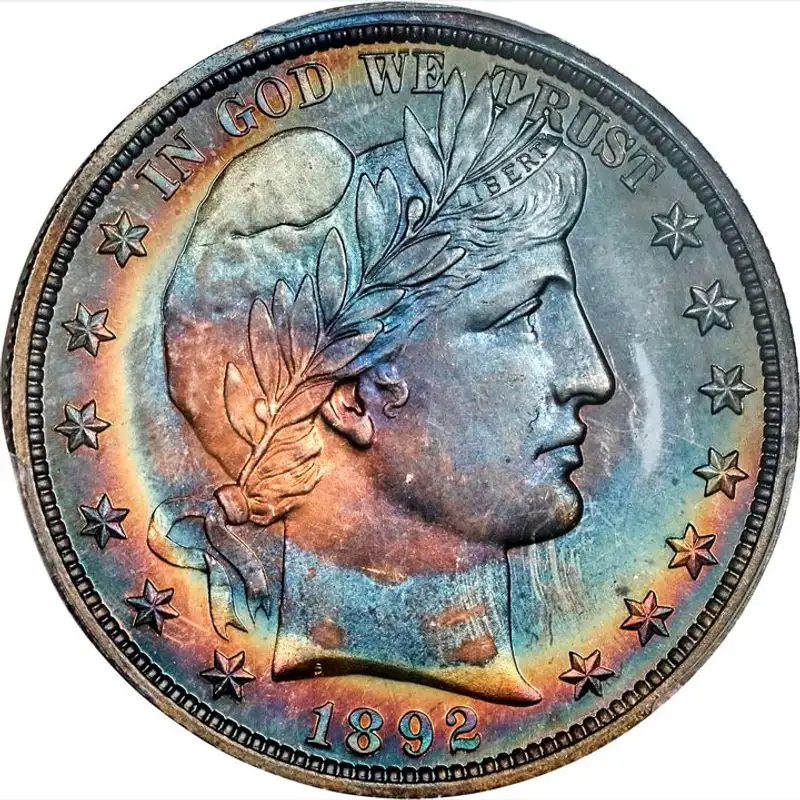
Tony Gryckiewicz:Alright. I promised you folks I was gonna learn something during this episode, and I've already learned something. Alright. So, alright. So it's $18.92 half dollar, proof 67 plus with the CAC approval.
Tony Gryckiewicz:I saw this one in hand. I was definitely very impressed with the coin. Yeah. Take it away.
Russell Augustin:It was gorgeous. Interestingly enough, this coin actually came out of a NGC Proof 68 holder back in January 2015. It sold for $7,600 then. It realized $19,500 a week ago. The bidding started at $8,000 and it ended up at 16,000.
Russell Augustin:It's definitely in the top top category of of for grades. Deloitte Hansen's registry set has a 67 deep cameo, and the there's another what is it, it's lax dive, another registry set candidate has a 67 cameo. So this one was not a cameo, but yet it brought money that was very much close to a 68 level.
Tony Gryckiewicz:Yeah. In your opinion, when you saw this in person, I mean, what caught my eye was the coin does not really look like this true view here in person in in hand. Looks a lot more like this.
Russell Augustin:It's a
Tony Gryckiewicz:bit darker and that was kind of what I noticed and I mentioned to my client and so forth. That was kind of the darkness. So when you look at this color, what are your thoughts on it? I mean, this considered rainbow toning in your in your estimation? Or is this a dark or was going
Russell Augustin:off the description that that Stack Sparrow has very keenly put together. Mhmm. And I agree. Coin photography is one of the most tricky subjects in the world. My I grew up in a household where my dad worked for Polaroid, so I was around cameras all the time, and I still find that taking accurate pictures of these coins is a real challenge.
Russell Augustin:I think it's somewhere in between what you're seeing there, which is the PCGS cert verification picture and the actual picture done by SBG. Yeah. Yeah. Which is I mean, I found it was I don't I didn't find it to be as dark as that's coming out to be.
Tony Gryckiewicz:And This one is
Russell Augustin:Yep. I
Tony Gryckiewicz:yeah. I mean, I kinda remember it being a bit dark. I mean, the room is kinda dark and and you gotta get the the the color and toning right. You also have this view as well, which is I think this is considered to be the the the true view. And then there's these ones which are even more attractive and I don't know exactly how they, you know, get this particular this image, but it's a very attractive image.
Tony Gryckiewicz:I just I wonder like how much of this bidding this is just speculation here or just kind of wondering how much of this bidding with the numbers that we saw realized is a function of the online auction environment where they're looking and they're seeing a coin that looks like this on the screen and you're like, this is incredible. There's orange and colors and blues and greens and I mean I'm color blind and I still even, you know, love this coin and people are just chasing it and they're like, gotta have it. I gotta I gotta have it. Do you do you think there's I mean, but but at the same time, it's it's kind of a slightly darker coin. Think, you know, in hand, you gotta have a nice light kinda in order to really enjoy it.
Russell Augustin:Yep.
Tony Gryckiewicz:Any thoughts there? Am I whack on that one or is
Russell Augustin:No. That No. I Is that I get it. I will say though that I wrote down each one of the bidder numbers that bought these coins, and then I did another column that had the bidder numbers on it. I think that when a coin like that starts out at $8,000 you have everybody all in.
Russell Augustin:And as it gets to 10, where it ended up at 16, with the buyer's fee, it's 19.5, I think fewer and fewer people are looking at it. They've already seen the coin. They know they want it for their collection or for a client of theirs. And so I think that then the people who would look at the color of the coin on the website have dropped out by then, or just realized that it's going far beyond what they wanted to spend. Yeah.
Russell Augustin:The published price for that coin, for example, was for the CAC ask was 6,000 and the CU price was 9,500. So it opened at eight. You know, it it obviously was, you know, a a a real important coin to somebody. Yeah. Actually, more than somebody.
Russell Augustin:He was a minimum of two bidders to get it to 16.
Tony Gryckiewicz:Yeah. And what is the what is the CAC ask for a 68? Do you know by chance?
Russell Augustin:Yeah. I do.
Tony Gryckiewicz:I wonder how close that came.
Russell Augustin:By the way, Sachs Powers just does a fantastic job with a preliminary analysis because what you don't see underneath Coins in Motion at the bottom there is that they have all this data already printed out for you. So I printed all this out before the auction, and I can tell you that the PCGS price guide is $15,000 for a 68, and the CAC market review is 12. Wow. So maybe it is destined for a 68 holder. But Yeah.
Russell Augustin:Don't forget, I think we've talked about how the color can influence people's buying decisions.
Tony Gryckiewicz:Yeah. A 100%. Yeah. I would imagine too the provenance. What are your thoughts about the provenance here?
Tony Gryckiewicz:So, Yongnikota, I have no idea what collection this is or really the background on who owned the coin previous, but the provenance here on all of these coins must have been some bit of a factor, I would think, sale prices.
Russell Augustin:Yep. Without a doubt. I mean, I'm not familiar with the individuals behind the collection,
Tony Gryckiewicz:but
Russell Augustin:I know that they're quite prominent. And I think that you and I are not the only ones who know this name, you know, in the numismatic world, and therefore, when we see coins with that provenance, we're just drawn to it like bees and honey.
Tony Gryckiewicz:Yeah. Well, I'll tell you what now, when I'm walking a coin show floor, if I see a young Dakota provenance coin, which they are, you know, out there, they are in dealer showcases. I might, you know, jump on that coin, especially if it's reasonably priced, and I think that, you know, this thing could actually be undervalued compared to all these auction sales.
Russell Augustin:What I'm hoping too is that as we go along here, is that, you know, we could influence some of the price guides to maybe adjust numbers. I mean, when I was doing the Numis Tech publications, I figured out there was 333,000 different prices that, you know, people had to adjust at any one given time. It's almost impossible. Maybe with AI we can do it, but if we could just influence the price guides to stay on top of these things, it would make everybody's job a whole lot easier from the collector who comes up to your table and says, Well, what does the gray sheet say? To us saying, Well, look at this auction price.
Russell Augustin:Have a coin like this that I was asking $14,000 for, and now it's 19,000 How do I adjust that price? Well, maybe I'll What go to
Tony Gryckiewicz:I found, and you can tell me, got a lot more experience than I do, especially on pricing guides in the market and so forth in auction sales. I mean, guides, they develop their numbers looking at auction sales, but also dealer bids. You know, what we saw for example with the seed of Liberty Dollar coins maybe a year ago or whatever it was when that old Chelsea collection came out and all those CAC sticker coins went bonkers compared to price guides is what we found is that there was this huge demand amongst dealers, collectors, everybody wanted to buy seeded dollars, especially anything with a CAC sticker, but it didn't even matter if you didn't have a CAC sticker, long as it was a seeded dollar and looked nice and looked old and crusty and so forth. It seemed like everyone was demanding those coins. And eventually I think all of the price guides kind of have caught up at this point.
Tony Gryckiewicz:And I think that is a function of, all right, well you have this auction record, which is no longer just an outlier. It's no longer just this one sale from this one providence, this one collection, everybody showed up and bid it up to, you know, double what the bid amounts are. You now no longer have just this outlier event, you actually have all of these dealer bids, these real dealer bids for these coins because they want them now because the auction created a lot of hype and pandemonium for these coins. Demand essentially increased, if you will, for the coins and prices started to rise and thus the price guides eventually caught up.
Russell Augustin:That yeah. And eventually is underscored. And it's you know, we're not as efficient as like the stock market or a Morningstar, you know, a mutual fund analysis company. I wish we were. Some kind of algorithm might actually work out really well for these things, so that you just don't take the one instance where this is two or three times the amount, but you average it out over a period of time, to at least stay a little bit more current, and also to say, Well, I mean, do comparative analysis instead of like an 1892 selling, you have an 1894, but someone has gone through and said, Well, the two are kind of the same, and so therefore, if the eighteen ninety four goes up, so does the eighteen ninety two.
Russell Augustin:And so every, you know, the water that comes in raises all boats in the harbor kind
Tony Gryckiewicz:of thing. Yeah. Yeah. A 100% makes a lot of sense. Alright.
Tony Gryckiewicz:Well, just for the sake of keeping this boat moving, to use it to use the same metaphor, we will move on here to what's another lot that you wanted to kinda drill into?
Russell Augustin:The next one, the eighteen ninety three, I thought was absolutely stunning.
Tony Gryckiewicz:Yeah. This one in hand was incredible. Yeah. I I noted this. It was awesome.
Russell Augustin:Now here here are the kind of see you, the collector's universe price overall more closely matched the auction price than did the CAC ask, which I thought was interesting. Here, the CU was 27,500. The auction price realized was $31.07. But, you know, look at this. I mean, this coin was just mind boggling beautiful, and so therefore, I I don't blame anybody for, you know, stepping up and trying to buy that coin because I I just I can't see it going down in value.
Tony Gryckiewicz:Yeah. This is the way I like my proofs, by the way. It doesn't have the color that the previous one did and some of these other ones that were in this collection have, but this kind of deep came in contrast, the frostiness of the devices, the incredible, you know, black white kind of contrast between the the devices and the fields. This is exactly how I like my proofs and I probably wouldn't expect to have this coin for more than a week or even just one coin show if I put it on display.
Russell Augustin:Not only that, with what you do and what I do, you offer this coin to one or two clients and one or two of them will buy it. You want to see this coin again five years from now. So you're creating like an annuity for yourself, hopefully that client will come back to you with this coin wanting to maybe trade it for proof gold or something like that. So this is really a keeper coin. Yeah.
Russell Augustin:Yeah.
Tony Gryckiewicz:Yeah. This is absolutely incredible. Do you have any history, pricing history in this one?
Russell Augustin:Yeah. I do. Let's see. I can't confirm it because the when you try to photo match a black and white proof coin, that's a little bit more tricky than the toning because toning is, you know, like But a I think it came out of a March 2019 Legend sale at 15,800. Doubled in value.
Tony Gryckiewicz:Okay. Well, March 2019 no. Okay. That would have been on the heels. That would have been on the or just before COVID.
Tony Gryckiewicz:All right.
Russell Augustin:So But it was also like when a certain buyer came into the market in 2017, the market kind of took off. He was a very prominent registry set buyer now and was at the time, and the market was just on fire at that point. So even in the face of, like, that kind of market, you find that a $15,000 coin then goes to 31, you know, seven years later.
Tony Gryckiewicz:Yeah. I'm sure we're gonna touch on this kind of as we as we go, but you mentioned about how, you know, rising tide raises all ships. Yep. I've kind of had this theory that this asset class of numismatics is just that. It is one asset class amongst others.
Tony Gryckiewicz:There's stocks, there's bonds, there's precious metals of course, there's private equity investments people might have, stocks or real estate, but numismatics is one of those asset classes and we've seen recently there's been a concerted effort to reduce interest rates again, which means everybody knows means printing money, which means the larger supply of money in the economy. And just like in 2020, 2021, the coin market went bonkers. All right. I mean, it went really, really kind of crazy. And that was also kind of on the heels of, you know, we reduced interest rates down to 0% or whatever it went down to post COVID there was a lot of money and a lot of money means that rising tide metaphor and that raises ships and so forth.
Tony Gryckiewicz:But that being said, just because the water kind of comes into the bay, it seems like some ships rise higher and faster than others. So what is it about this coin where you're like, you know, a 100% return over seven years given macroeconomically what happened? Know, it makes sense, but there's got to be something about this coin because it's not that all coins are raising, you know, a 100% returns in these last You're six
Russell Augustin:absolutely right. It's I think that you and I both, like, did a wow. You know, I have a a certain way of marking my catalog, my auction catalog when I'm doing lot viewing, and this one got the highest marks just because of its presence, you know, and the way its state of preservation is just it's just unheard of. Even and that's even in light of the fact that I did a study on, you know, on the half dollars, like, what performed better, rainbow or black and white? And rainbow actually performed better than black and white, but I think this is definitely an outlier coin, and I think we both agree on that.
Tony Gryckiewicz:Yeah. Yeah. And speaking of that analysis, the worst performance was modeled toning.
Russell Augustin:Modeled. Yeah. And
Tony Gryckiewicz:Yeah. What was if I could switch back to the coins here, what would be an example of modeled? Would it be something like this nineteen o four here?
Russell Augustin:How about number eighteen ninety six?
Tony Gryckiewicz:All right. Let me go back up here to the $18.90.
Russell Augustin:There you go.
Tony Gryckiewicz:This one.
Russell Augustin:I think we both agree that that's modeled. I think they might even say modeled in the description.
Tony Gryckiewicz:Oh, do they really? Let me see here. No, they say iridescent. Because me personally, I would call this iridescent. I've got a '92 o or what what date is it?
Tony Gryckiewicz:It's a quarter that I have that has beautiful kind of pastel iridescent toning on it and I would call this iridescent. Wouldn't I wouldn't call this modeled. I think of I think of this as modeled. This is a little bit
Russell Augustin:That's certainly more of a little bit over the place. Yeah. So for the half dollars, I just did rainbow black and white modeled, you know, because I wanted to distinguish between the black and white I'm sorry, the rainbow and the color like what you're pointing out on the 1894 here. So the 1896 definitely did not have rainbow toning.
Tony Gryckiewicz:Okay. Got
Russell Augustin:it. So I was trying to rather than get too much down the rabbit hole on different classifications of, you know, like the eighteen ninety eight is like peripheral toning.
Tony Gryckiewicz:Yeah.
Russell Augustin:I read the number two zero seven seven.
Tony Gryckiewicz:Yeah. This is definitely peripheral toning. It's usually from album placement.
Russell Augustin:But back to the 1896 and your question, interestingly, like the published prices are 82.5 and $11,000 and the coin realized $97.6 right in between. So here's, you know, a coin that's falling more in line with the published data that someone has access to prior to the auction. Yeah. Well, I wouldn't I'm
Tony Gryckiewicz:not super surprised. Mean, I think about the coin here. If this is close to the in hand, there's a little bit of haze. I mean, you do come across this with proof coins, the existence of haze. Any thoughts about that in terms of of, you know, the haze on the surface of a coin?
Tony Gryckiewicz:I don't know what, I don't know, don't personally I don't like it. It's one of these factors that when I'm looking at proof coins for a client, I kind of let them know, okay, this coin's got a serious amount of haze that is kind of making everything look kind of, well, hazy, I guess when you look at it, you know, in hand. This one, I feel like, just does not have a great in hand appearance to it whatsoever.
Russell Augustin:Well, when you're comparing it to, like, the one previous to that and the one previous to that and the one next to it. Know, very easy to become jaded, I think, with this. But what I found out about this coin, which I thought was very revealing, is that twelve years back now this coin sold for $9,700 The same coin sold for $8,225 back in February 2014. So, to me, it's been priced to market, yet the demand is not there to make it advance further or
Tony Gryckiewicz:chasing other coins, not this one.
Russell Augustin:Yeah. Yeah.
Tony Gryckiewicz:Yeah. I also noticed just right now that they goofed on the lot description they call a barber dime here.
Russell Augustin:Oh, good one. So I didn't notice that one.
Tony Gryckiewicz:Yeah. Yeah. What was another one that was if I look at these prices, I mean, at this $19.00 9. This is a 68 Cameo, but this sold for 30,500.
Russell Augustin:Okay. Alright. So the nineteen o nine sold for 30,500 and published prices were 21,525 thousand dollars with a CAC pop of two point zero. So you think that, wow, it's either one or the other. I think that this coin, I couldn't pull it up because their website archive is down, but I think that this came out of a 2010 Goldberg auction for $19,550 which was a record for the issue at the time.
Tony Gryckiewicz:I see.
Russell Augustin:Not a very good return on investment.
Tony Gryckiewicz:Right. Right. That was not a joke. When did it sell?
Russell Augustin:Sold In 2010.
Tony Gryckiewicz:Oh, 2010. I mean, 2010 and it sold for 19,000?
Russell Augustin:Yep.
Tony Gryckiewicz:Yeah. It went up for went up to 30,000. I mean, yeah. Don't know annualized rate of return right there from from 2010 to 56%.
Russell Augustin:I mean, it's just that's not a good investment. I mean, at least it's held held as value, but I think at one point in time, you know, I think whoever bought it paid more more than they should have.
Tony Gryckiewicz:Yeah. Yeah. Well, yeah. Mean, do you chase do you chase a coin in an auction? And I guess the question now is is whether or not this person is going to really kind of make some money on this coin eventually when it goes back to auction again?
Tony Gryckiewicz:I don't know, another sixteen years from now.
Russell Augustin:I'm gonna be around. Aren't you?
Tony Gryckiewicz:I certainly plan to be.
Russell Augustin:But interestingly enough, it's a 68 grade and, you know, it it opened at sixteen, jumped to eighteen, and and hammered at 25.
Tony Gryckiewicz:Mhmm.
Russell Augustin:And I've I learned that that d l Hansen registry set has a 68 plus, not a cameo, and the and the the lax dive collection has a 68 cameo. So this was a like a tie for the lax dive, which is the, I think, the second finest known registry set.
Tony Gryckiewicz:Got it. How much of that do you think was affecting was playing a factor here in this particular sale? This would be a sale for the registry set guys to all kind of get in front of the keyboards or to have authorizations working on their behalf, bidding on these coins, trying to get the to, you know, to to affect their registry set specifically. Do you think that was a big factor here with with these coins particularly because they're kinda so close to the finest known examples?
Russell Augustin:Yes, I do. And that's a really good point because although I haven't seen, like when I went in, actually today, just before our meeting here, I went into the registry sets to see if any of these coins have been included in any of these collections, and I couldn't positively say that they had, but there were plenty of new entries that had sort of blank images. So it's possible that not one, but two, maybe three buyers were participating in the sale to upgrade their collections. There are five, maybe five active major buyers of proof barber type right now.
Tony Gryckiewicz:Okay. So what happens there? So there's five buyers and one of those buyers says, Alright, well guys, this has been fun. I'm out. I'm going to sell my collection.
Tony Gryckiewicz:Maybe there's two of them that happened. So what happens to coin prices in that scenario? I think a lot of people would have this question. I mean, do other buyers, those other three step up and do they buy up those coins or because they have the one that they need, do they let them go? It's just the lack of the fact that there's fewer buyers or fewer big buyers.
Tony Gryckiewicz:Does that mean that there's lower demand and so prices kind of shrink a little bit? What's your experience kind of perspective on that one when you have big buyers, big players who decide to move on to a new coin type and to sell their collection? What sometimes happens?
Russell Augustin:Well, couple of things. One, I do know that I can make the assumption fairly clearly that the Dakota collection here either had someone buying for them at auction or participated themselves at auction. Along those lines, and conversely speaking, the biggest buyer in this sale for the dimes, quarters and half dollars was probably a dealer. And the only reason I say that is because I was recording the bidder number, and well established dealers typically have very low numbers.
Tony Gryckiewicz:Yeah.
Russell Augustin:And I won't mention the number, but this one well established dealer bought more coins than anybody else did, to the tune of about 300,000.
Tony Gryckiewicz:Okay.
Russell Augustin:So I actually think that you have registry set buyers there, but you also have this one dealer perhaps feeding coins to newer collectors or collectors who don't necessarily believe in the registry set system or want to. And you know, they're they're they're kind of going away. So we don't we we don't see that evidence like on the PCGS registry website.
Tony Gryckiewicz:Yeah. Interesting. What do you think the strategy is there? Do you think that's, like you said, trying to kind of feed coins to some newer collectors and and own these coins in order to, you know, set up these sales? Is there an attempt there to kind of corner the market on this particular collection or these kind of finer known examples?
Tony Gryckiewicz:If you have to speculate, what would be the reasoning behind that from a dealer's perspective to go in and participate in these auctions and bid them up to where they went?
Russell Augustin:Well, I'm not necessarily known for my expertise in barber proof coinage, although I have like four right here. But like if I were to draw the same conclusion as to like early bust type, like early bust dollars, like early, you know, you've known me for having a fair amount of early coins like that. I will stretch when I find it, when I see a coin that just makes that makes my head spin. You know, that's kind of the coin back to, you know, I want to park it. I want to like, you know, we're all custodians, but I unfortunately can't own every single coin that comes my way that I want to own.
Russell Augustin:But there's a great pool of collectors who will. And as long as, you know, you maintain a positive relationship with those people, the chances are really good that you're going to see that coin again.
Tony Gryckiewicz:I mean, makes total sense and we I think we've talked about that about that fact and and I do like to know kind of where some of the coins that I placed were where they've landed in order to hopefully be able to see them again. At the same token, I do think I it surprised me to to see some of the rarities that have come across Auction Blocks actually wind up in dealer showcases. There's a large portion of the demand for coins in this marketplace that is a function of dealers and dealers, I mean, some ways we are the biggest participants in the numismatic market from an asset's perspective. I mean how much of my net worth is tied up in coins right now? I mean it might all be transitory, but you know, kind of move it here and there.
Tony Gryckiewicz:All right. So I'm sure you want to get back to some actual hard examples here to discuss. So what else? What do we want to look into?
Russell Augustin:So interestingly, one thing I I've talked with John Danrather before we went on on live, and, you know, the the cameo, deep cameo situation, I think, is really, really interesting. Yeah. That's And maybe now is a good time to bring it up. Not all proof Barber coins are gonna come cameo, and when you can find certain coins like those struck between nineteen o one and pretty much 1915, that's a real major score because they just don't come that way. Maybe the 1911 comes a little bit like more cameo than not, but in John's analysis in his United States Proof Coins book volume three on silver, the deep cameo for $19.00 2 to nineteen o eight coins is zero.
Russell Augustin:Just none come deep cameo.
Tony Gryckiewicz:So
Russell Augustin:finding a deep cameo coin here will distinguish, I think, collection over another. So any kind of attention to detail like that is pretty significant. And like see, we have we have a 19 o '9.
Tony Gryckiewicz:You just reminded me. I noticed that these heft hours have a designation at JD one. This is not John Dannerov member, is it?
Russell Augustin:Yes, it is. In fact Oh, wow. Many of these coins were actually used as the plate coin in his book.
Tony Gryckiewicz:Interesting. Good to know. That's another individual, John, if you're watching out there, I'd love to have you on the program for sure.
Russell Augustin:He's just amazing. I mean, where he finds the energy to do this, God bless him.
Tony Gryckiewicz:Yeah. Yeah. Yeah. I do have to note this one here. One's sold a whopping almost $50,000
Russell Augustin:Yeah. That coin, I don't know how you felt about it, but I just thought that was the coolest thing ever, I was not able to find that. That's kind of like out of the woodwork. I kept on staring at it and staring at it, and I just couldn't figure out, you know, it must have been some sort of a tissue paper toning or something like that.
Tony Gryckiewicz:Yeah. For sure. Well, there's a little bit of geometry on it. So right on the face there, it's like something was placed, must have been placed right over it.
Russell Augustin:Yeah. I actually bid 22 and then I bid 26,000 and you know, I just got left behind in wake. And I thought that that was, you know, those are healthy bids at the time. Obviously not.
Tony Gryckiewicz:Well, I mean, I would say that if you like color and you like white coins, kind of brilliant sort of frosty surfaces, this has got a little bit of both, plus if you like your because you know, you of course have through the hair and through the head, have a bit of kind of a frostier, brighter, whiter, you know, look to it, but then you have this incredible orange kind of color. And that that's so
Russell Augustin:that's way too dark that those images on that that the final. I thought I thought yeah. Like That's just too dark. I the coin was brighter than that. Yeah.
Russell Augustin:And much
Tony Gryckiewicz:more colorful. Didn't look at this one. I I I may have flipped through it when I was walk running through the box, I but was running out of time. I did a deep dive analysis on some coins for a client of mine and spent a lot of time writing those analyses up. But I was asked, I like, I just say about I mean, you look at this true view, that's absolutely incredible.
Russell Augustin:You know what I also found out, and I should have realized this when I was bidding, is that in the registry set world that we've been covering,
Tony Gryckiewicz:the
Russell Augustin:DLH example for this coin is a 67 plus Cameo, and the LX dive is 67 Cameo. Here's a 68 plus Cameo. So it's entirely possible that these two gents were going at it.
Tony Gryckiewicz:Yeah. That makes a lot of sense for sure. You're talking about Delroe Hanson, then who's the other one?
Russell Augustin:It's Laxdive. I I don't know who or what that means.
Tony Gryckiewicz:Okay. Alright. Not familiar myself.
Russell Augustin:No. There's another there's a quarter a diamond a quarter registry set guy whose number one is RSD, and he's locked down his images, so you can't see, you know, what he owns. But he's been number one for six years, for dots and quarters.
Tony Gryckiewicz:Would you say that you have a particularly keen eye for toning, specifically knowing what type of toning is gonna bring a strong premium, specifically for the color?
Russell Augustin:Yeah. Maybe. I know what I like. Yeah. But, you know, I also, like, have been around at Coins enough to know what more more over what I don't like.
Russell Augustin:And I think that, you know, something that turns me off hits my hits my instincts pretty quickly.
Tony Gryckiewicz:Well, I think it's I think it is interesting because I do think because a lot of people would look at some of these coins and they might say, all right, well, yeah, I'm going to buy some attractively toned coins. I'm going to make some money because I'm going to buy some some coins that have some great toning on them. I'm going hold them for six, seven years, and I'm going to put them into an auction and hopefully I should have some kind of price appreciation. It doesn't exactly work like that. For one, developing an eye for what is attractive.
Tony Gryckiewicz:You know, it's not just what appeals to you, but it's also the fact that your taste in color and in the design on the coin, the artwork that's on a coin is kind of in line with what other people's taste for what they like on coins.
Russell Augustin:I agree.
Tony Gryckiewicz:So that's not simple. I feel like some people have had that gift and they're able to look at a coin and recognize that this is a, you know, it's a common deep Morgan dollar that's a $130 coin, because of the color on this coin, this is a 4 or $56,000 coin. Some people have that. I feel like I'm still kind of climbing that very steep learning curve myself.
Russell Augustin:It's it's like the gold CAC situation. Mhmm. For this Okay. In this collection, there was one gold CAC coin. It was the nineteen ten barber quarter, and it was in '66 grade, a gold CAC.
Russell Augustin:And as I was crunching the numbers, this one coin screwed everything up because it sold for like four times the amount that it was So I had to throw it out. You know what I
Tony Gryckiewicz:mean? Yeah.
Russell Augustin:So, you know, who knows, like, about, you know, the toning, and then the gold CAC is another dilemma. I mean, it's a great dilemma to have. Even old black NGC holders are now realizing multiples of what a normal coin would bring. I'm sure you might have seen like an old first generation NGC black holder. We had a Saint Gaudens regular common data in '63 not too long ago, and it sold for $10,000
Tony Gryckiewicz:That seems actually kind of light.
Russell Augustin:Dollars 3,500 was a It was a black holder? Was a black holder.
Tony Gryckiewicz:I feel like those are even closer to 20, I would think, but
Russell Augustin:Yeah. Well, I know that now.
Tony Gryckiewicz:Yeah. Well, I mean, you're touching on a segment of the market, which I haven't done yet a Gold Cack podcast specifically, but those folks are very intense and very committed and they're crazy about Gold CAC stickers and not just the stickers, but also specifically on old PCGS Rattler holders. They hunt those things. They build sets of them. They pay strong numbers on those.
Tony Gryckiewicz:My feeling on that is actually that you have to be really weary and careful about that because I've actually been noticing a lot of gold cacks being made on recent slaps like on very modern, very recently graded coins. So the coins recently graded graded in the last has a very high serial number, you know, whatever. It's been graded like this year, 2026. And then it's sent over to CAC and there's gold CAC stickers being put on it. So, you know, to me, put a word of caution on chasing those things.
Russell Augustin:Actually noticed that if you go I think Great Collections is a good place to look at for gold CAC activity. And I've noticed more modern singles, you know, the Buffalo Nichols, Mercury Dimes, Walking Liberty Half Dollars. Some commemorative silver commemoratives will have the gold CACs, but it's very rarely that you find something that's an eighteenth century coin with a gold CAC. Right now, I think Great Collections has a seventeen ninety three half cent with a gold CAC on it for sale. Mhmm.
Tony Gryckiewicz:You know,
Russell Augustin:I mean, so how on earth do you figure out the price for that? I mean, it's it's gonna be a very interesting situation. Yeah.
Tony Gryckiewicz:There's only one solution, that is to put it up for auction.
Russell Augustin:In fact, I did a little dive into that, and there's only like three gold CAC 1,700 baited copper coins. I mean, it's like, wow, really?
Tony Gryckiewicz:Alright. Is there any other kind of lots you wanna tackle or talk about or any other parts of your analysis?
Russell Augustin:I don't I don't necessarily think so. I will say that just in summary, for the half dollars, there were what I would call seven rainbows, and the average price was $30,000
Tony Gryckiewicz:and
Russell Augustin:the average of that over the CAC ask was 137%. There were three black and white average price realized was $18,000 and the average over the CAC ask was 105%. And there were eight modeled with an average of 14,000 and the average over the CAC ask was 60%. However, those numbers are far less when you looked at the CU prices. So people look, you know, in our business on the wholesale end of it, at CU as being like that you've got to be below CU, otherwise you're paying retail plus.
Russell Augustin:Necessarily. I mean, this is an auction where and I was really fascinated by that, that even the modeled prices were 6% under CU, and iridescent was seven over, and black and white was 37 over, and rainbow was 17 So rather than get drowned out numbers here, I just thought that this is very these kind of coins definitely go on the upper end of the spectrum, and I think the collector's universe is definitely the one price guide upon which to make all other decisions.
Tony Gryckiewicz:Okay. So I think there's a couple of questions that are out there that might be looming out there. One of the ones that people are watching, they might be curious about how to gain access to pricing information about coins, about the market, about how did they accurately price a coin. We talked a lot about in this episode, price guides and when to step away from price guides. The fact that sometimes, so many of this, so much of this auction sold well above what any kind of price guide estimated it to be.
Tony Gryckiewicz:So for the average collector, the person who wants to get out there and make intelligent decisions, not pass up on dream coins of theirs because the price seems to be too high. What advice would you give them out there about getting information to data?
Russell Augustin:Surround yourself with as many resources as you can to come up with a general idea because I think that as we've touched upon here, not one particular source is going to be the answer to all questions. Many of the resources that I use to determine prices and provenances are free on the Internet. So first of all, get on the Internet. Make the Internet a friend. Pcgs.com cert verification for PCGS coins is excellent.
Russell Augustin:It's free. You can go to their website. You can locate that at the bottom of the homepage and you can type in the suffix of the serial number on the holder and you can find out if that coin has been in any kind of public auction. Secondly, if you have accounts with Stacks Bowers and Heritage and Great Collections, the three major companies at the moment, they provide a wealth of information. They go out and they grab all the different pricing information and the data that you need, and you know, don't forget CAC Coin because if you're looking for CAC Coins, they also have a population report, and they offer that CAC Ask price.
Russell Augustin:You can gain access to that without a subscription. With a subscription, in addition to all those, you can go on to CDNEX or the CCE, and then you can see all these different auction prices put together, and I use all of that. I use all of that, and plus, I keep track of these coins as I buy and sell them internally on my own platform. So hopefully, of that, you know, gives me a pretty good idea of what's a good deal and what's not a good deal.
Tony Gryckiewicz:Do you expect so these prices, these price gains that we're seeing in these this auction, do you expect this to pop up in other coin series to follow suit in upcoming auctions?
Russell Augustin:It's been happening already. The James Stack collection that just happened earlier a few months ago, prices were going crazy. Of course, it's easier for me to say that if you're talking about generic gold because the underlying spot gold prices pushed everything up. But I think that the buying of quality and I appeal and, you know, pay attention to the pops. If you want the insurance policy of the CAC endorsement, that's the way to go.
Russell Augustin:I mean, it's the safest route.
Tony Gryckiewicz:Yeah. Very off topic, but relevant given your background and given what you do with Racoa. What's your interpretation of gold markets or the precious metals markets in general, but specifically gold markets right now? We were at a high of 5,400 and now we're below 4,000 again. What do you think is going on?
Russell Augustin:It's doing exactly what it's done over the past half a decade. You know, it let's take January for example. It comes off of a high, it peaks, it's kind of like muddles around until April or May, it drops, and then in the middle of the summer, although actually it used to be the fall, it started going up and every year it's kind of like two weeks earlier, it starts going back up again. So we're just following a normal cycle and we are at the bottom of that cycle. It just seems a little aggravating because there's so much money involved in it now rather than it's the same percentage, you know, it's 2,000 to 1,500 or 5,000 to 4,000, it's kind of the same percentage.
Russell Augustin:It's just a lot more money involved, but I firmly believe, and I think some of the banks are still holding true to $6,000 gold by the end of the year, that we're in good shape, you just have to pick your time. I just talked to a client. He said, if gold hits to 3,500, back your truck up and load up. Yeah. 3,500.
Russell Augustin:I'm not selling.
Tony Gryckiewicz:Yeah. No. Makes a lot of sense. Makes a lot of sense. Alright, man.
Russell Augustin:Am selling SpaceX.
Tony Gryckiewicz:I I don't know what's going on with SpaceX, doc.
Russell Augustin:SpaceX, you could have kind of anticipated that that was gonna happen.
Tony Gryckiewicz:I you know, honestly, I don't even know. Like, so the space SpaceX had an IPO and then, you know, Elon Musk was a trillionaire, and then what's happened since then?
Russell Augustin:It's gone down like 25 or let's let's say it's lost 400,000,000,000 in market cap or 600,000,000,000 in market cap, I read, like, over the weekend. Holy mackerel. Interesting. Now, you've to look at it as a contrarian. A lot of sheep bought in gold and SpaceX conversely at the kind of height of the market.
Russell Augustin:There's a lot of passion going on. If you just hold back a little bit, now might be a good time to buy into SpaceX. Now is a good time to buy into gold, especially when it's under 4,000. As long as you can't as long as you don't have an idea of putting your money somewhere else where you can make a greater return.
Tony Gryckiewicz:Yeah. Yeah. Well said for sure. You don't make a whole ton of money jumping on the bandwagon, so to speak, but
Russell Augustin:you know, fine. Never pays. Yeah.
Tony Gryckiewicz:Yeah. 100%. Okay. So from folks out there that wanna get ahold of you, they got questions, they wanna pick your brain about something or do some business or whatever, how can people get ahold of you, Russell?
Russell Augustin:Well, email's best. I think Russell, russell,@AUCM.com.
Tony Gryckiewicz:Alpha What's universe Charlie that?
Russell Augustin:Alpha universe Charlie Mary.
Tony Gryckiewicz:Okay. What is the next major show you're doing?
Russell Augustin:Fun. Summer fun. Yeah. Right after July 4 weekend. We'll see you there.
Russell Augustin:Yeah.
Tony Gryckiewicz:I will definitely see you there. And and lastly, just for folks that are, you know, still hanging around at this point, if you want to get access to the analysis that we did of this particular auction, I think Russell's gonna have it hosted on his website. That's is it aucm.com? Is that right? Yep.
Tony Gryckiewicz:It's also gonna be hosted on cabbagecoins.com as well. And the I believe in the podcast page, I'm gonna get a link put up there for for the analysis. You can download it. It is definitely a bit high level. There's a lot of information, a lot of data, but if you got some time in your hand and you're interested in this topic, I think it's gonna be great for you guys.
Tony Gryckiewicz:So without any further ado, thanks a lot Russell. I'll see you later and I will definitely see you at fun and thanks again for doing this.
Russell Augustin:Appreciate Alright, Be well.