Ep.53 - How to Price Colorful Morgan Silver Dollars w/Jacob Matiyevsky #numismatics #coincollecting
Hey, folks. Welcome back to another episode of the Cabbage Coins Podcast. My name is Tony Grukiewicz, and today I have Jacob Matiyevsky. For long time viewers and listeners, you might recognize Jacob. Jacob was one of my first guests back in the early days when this podcast was first taking form way back almost pretty much about a year ago at this point, which is cool.
Tony Gryckiewicz:But Jacob was episode four. We did Monster Tone Morgans. Jacob is the owner of a business called Monster Tone Morgans LLC, and you might see him at any major coin show really, and he's the guy that's got all the really crazy toners. He specializes, I believe, in in Morgan toners and some really amazing crazy stuff. So first off, I mean, Jacob, welcome back.
Tony Gryckiewicz:What has life been like for you in the last year? How's your business going? Kinda what's the tales on on the front of the the Morgan toner business?
Jacob Matiyevsky:Yeah. Thanks for having me on again, Tony. Things have been great. Business has been very busy. We're doing about 12 to 15 shows a year.
Jacob Matiyevsky:So K. Trying to be pretty consistent with that. Toners have been doing very, very well. I think a lot of people have been getting into that, especially with all of the live bidding platforms like Whatnot, eBay Live, TikTok, all of that has really spurred the market. So it's been super cool, and I've had some some viewers from the first podcast come up and and recognize me off of there, which which is awesome.
Jacob Matiyevsky:I always love meeting new collectors and people who kind of enjoyed what we talked about, so it's been really cool.
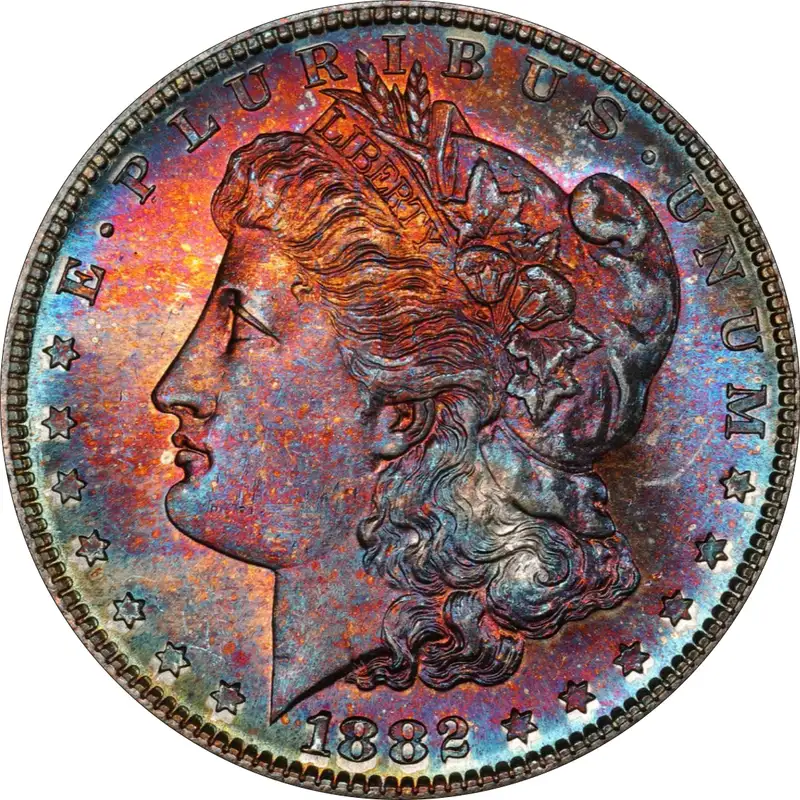
Tony Gryckiewicz:Awesome. Well, episode four, now episode 53, I think this is gonna be. So thank you so much again for for joining us. So today we are going to talk again about Tony Morgans, but I thought it'd be really interesting to give folks an education about how to approach toning in terms of the expected premium that the color should bring for a coin above, let's say, just kind of being a flat white plain blast white example for of that particular, you know, Morgan dollar. And I asked Jacob, right, well, could you give us an education about what is the difference?
Tony Gryckiewicz:Like what are the characteristics, the diagnostics, the things that I would look at on the surface of a coin to say this is a $200 Morgan, toner versus a $2,000 toner, or a $400 toner to a $4,000 toner, or a 4,000 up to a $10,000 toner. And so I believe we've actually we got 35 examples today, and we're gonna walk through everything from the lower end of premium all the way to the higher end of premium. Is that a pretty good summary? What else do
Jacob Matiyevsky:you Absolutely. That's I got together examples that really range from almost no premium to the color, just something very, very light all the way to what people would consider a full on monster tone Morgan.
Tony Gryckiewicz:Cool. That's I'm excited. We might as well just go ahead and jump in. We got a lot to show folks, and we are getting started here with what appears to be an eighteen eighty one. All these almost all more obverses, so you'll have to remind me what the, what what exact issue it is.
Tony Gryckiewicz:And also if you know the, any of the grades, guess off the top of your head, you know, let folks know as well because I I think that factors into some of the the price on some of this.
Jacob Matiyevsky:Yeah. So what I wanted to focus on here for today is really just the color and how that plays a role into the value. Because you can factor in grade or a rare date, and that will affect things too. But, actually, what I did is all of these examples are all graded MS 64. So they're all the same grade, and they're all common dates just to keep things simple in terms of learning about the the color, which is really the main driving force.
Jacob Matiyevsky:Grade does matter too. You know, you could have m s 64 Morgan that's a thousand dollar toner. If it's a m s 65, the price could certainly jump maybe even to $2,000. It just depends. But to keep things simple, the biggest driver of the value for toners of any grade is always gonna be the color and the coverage of the color as well as its brightness.
Jacob Matiyevsky:So on this coin, for example, it's mostly white, mostly untoned. There's just a little bit of light color around the periphery, around the rim, some of those light kinda peaches, oranges, and blues. It's really just starting the tone. So something like this is not gonna bring a huge premium. Some collectors or dealers may not may not consider this to bring any premium other than maybe just a little bit extra eye appeal for a m s 64 Morgan.
Jacob Matiyevsky:But this is something that in today's market probably brings $10 of premium. So if a common m s 64 Morgan is gonna sell for a $100 to a $120, this coin might go for, like, $1.15, maybe to $1.35, something around that.
Tony Gryckiewicz:Yeah. Yeah. That's exactly what I would do with with something like this. I would probably take the normal coin and look at kind of a range of where these things sold for, and I would put something like this kind of on the premium end of that range, but not a huge not a huge premium in addition because it's a very and a super nice example. I mean, you get kinda like this added bonus of some blue and some yellow, basically, is way I look at it.
Jacob Matiyevsky:Yeah. There's there's thousands and thousands of m s sixty four eighty one s's that all look the same. This one just looks a little bit better, and so it might go to the top end of the 64 range.
Tony Gryckiewicz:Okay.
Jacob Matiyevsky:Now here's one that is a little more coverage of color. Right? So we see the entire coin is toned, which is a big plus. However, the color itself is pretty light, pretty muted. It's actually the same first cycle colors that we saw in the previous coin, that kinda light peach color and blue, but it's not very bright here.
Jacob Matiyevsky:So all of those factors together would make this coin have a decent premium, probably in the $50 range premium wise. So if $85.00 and m MS 64 goes for about 100 and $100, $120, this might go for $1.50 to $1.70, something like that. Maybe a little bit more just depending on who's who's looking at it, mainly because the colors are just very light.
Tony Gryckiewicz:Yeah. My gut feel on this one is this is a type of toner where it can appeal to somebody and they can feel that this is a really special item. Usually when they're on the side of the table trying to sell me some some coins. And I look at this and I say, you know, it's yes, it's got color and it's got coverage, but there's no brightness at all to this. Okay.
Tony Gryckiewicz:So I I'm not personally really, you know, I'm not gonna probably inventory this, me personally. But I I see what you're saying in terms of the of of the premium. So moving on, we have a little more brightness.
Jacob Matiyevsky:So now, again, we have a coin with full coverage. There's toning over the entire coin. But this one, that brightness has just turned up a notch, and we start to see some more rainbow colors. As soon as you get into the rainbow colors, so the reds, the greens, the blues, even sometimes yellows, that's where the premium starts to jump quite a bit. Okay.
Jacob Matiyevsky:So, yeah, like, we can see on on the right side of of this coin behind the bonnet, we see a lot more of those bright colors. And Yeah. Typically, a toner's main value, it's gonna be color coverage. So how much of the coin is toned, what colors we actually see. So are we seeing the first cycle, you know, peach and blues, or are we seeing some of those later cycle colors, and the brightness or pop factor of the colors.
Jacob Matiyevsky:So this coin, we see some of the later colors. It's not super bright. It's, like, a little bit muted. There's a bit of haze to it, if you will, but it's still much more eye appealing. So this coin probably going to command a higher premium.
Jacob Matiyevsky:This is something again, these are all common date sixty fours that trade around that $100,125 dollar mark. This coin, though, probably getting a trade for about $250 in today's market, give or take a little bit.
Tony Gryckiewicz:Yeah. Yeah. Props to you also with, like, helping isolate this thing down to MS 60 fours. I think that's an excellent way for us to instruct and to educate on this topic because the other variables are are are, you know, isolated or held constant, which is which is perfect just as an aside. Kudos to you.
Tony Gryckiewicz:But anyways, I mean, I love the color back here and I think that's obviously driving the price. How much of the the coverage here would you consider to be this kind of taupe? I I mean, this way at least it's it's appearing on this image, you know, kind of over the face of of Liberty. It's not bright. It's not even a real color.
Tony Gryckiewicz:It's kind of a brownish or a darkish kind of color. Is that part of the coverage, or is it the coverage here really kind of more like 20% of the coin because that's where the color is?
Jacob Matiyevsky:So personally, I I consider any the presence of any toning at all coverage. So Okay. I would call this coin fully toned, but it's not fully toned with the colors that are really desirable. So it it has that light. Like, the coin we saw in the prior example, it was fully toned, but with just that color that we see on on the cheek of this coin and in front of the face, that light peach kinda brown color doesn't bring a huge premium.
Jacob Matiyevsky:It's not super attractive. So most of the value for this coin is coming from the the rainbow colors.
Tony Gryckiewicz:Yeah. The rainbow colors behind the behind the bonnet. I mean, they're pretty stellar. Overall, very attractive piece. I mean, still Yeah.
Tony Gryckiewicz:For what it is. Alright. So moving into something that has much less coverage, more in color. So go ahead.
Jacob Matiyevsky:So, yeah, this is this one's an interesting example because unlike the coin before, this one is only really toned on one small portion of the coin and around the rim a bit. However, the colors are a lot more dynamic. We see pretty vibrant blue, pink, yellow, green, even a little bit of darker, like, royal blue in there too. So it's it's a much more interesting coin. It's kinda like a cool character coin.
Jacob Matiyevsky:Something is unique about it. And the other thing that's important to keep in mind, and this is where toners get completely weird, is where the where the best colors are located on the coin. The focal point for Morgan's is the front third. If you kinda chalk the coin lengthwise into thirds Yep. The front third is where your eye just naturally goes to because it's looking at the face of the of Lady Liberty of the design.
Jacob Matiyevsky:Mhmm. And that's where all the best colors are on this coin. So that's a really nice plus even though the rest of the coin isn't toned. Whereas the previous example, the rainbow was on the back third of the coin, which is less the focal area. So our our new example here is actually gonna sell for a very similar range typically, around $250, $2.75.
Jacob Matiyevsky:I would say both coins are probably in a similar price range.
Tony Gryckiewicz:Okay. Yeah. I mean, the presence of this rainbow yeah. I could I could see that. If there was even more of it, of course, it would dramatically raise from rise from there.
Tony Gryckiewicz:But I see what you're saying. I mean, this just in terms of of grading a Morgan dollar, you're looking at the cheek and you're looking at this field right in front of the right in front of Liberty. Those are Yeah. Two of the primary focal areas. They're both within that first third as Jacob just described.
Tony Gryckiewicz:To the fact that you have the presence of the colors right there. Yeah. Super important. So now this is a reverse toner. This is our first reverse toner.
Jacob Matiyevsky:Yeah. We'll talk about reverses in a moment here too. One other thing I wanna mention is on all these coins, the price ranges are gonna fluctuate. You might see Mhmm. You know, if you're if you're out at a show buying these from dealers, you might see them range from even 50 to $100 difference sometimes.
Jacob Matiyevsky:So, like, those two earlier examples we just looked at, you could see some you could see them in a dealer's case for $275. You could also see it for $303.25 sometimes. That's just import important to keep in mind there can be a bit of a range. In terms of reverse toners, they are typically a little bit less desirable than averse toners. So and it's just because the averse is the more focal side of a coin.
Jacob Matiyevsky:This coin has actually really beautiful colors. It has really nice blues, even a little bit of light violet, some of that peach color as well. It's those early first cycle colors, but the blue here really stand out. It's pretty vibrant and frames the coin very attractively. However and normally, if this color was on the obverse of the Morgan, it would probably bring in that 250 to $350 range.
Jacob Matiyevsky:But because it's on the reverse, this coin is typically going to sit closer to that 250 range.
Tony Gryckiewicz:I'm surprised. Yeah.
Jacob Matiyevsky:It's not gonna go quite as high even though it's really pretty. It might. Some someone might price it higher, maybe $300, but it would bring a lot more if it was an aubers toner.
Tony Gryckiewicz:Interesting. Yeah. The vibrancy of this red, I guess, or or orange shower. I've mentioned before I'm color blind, so I'm not like the worst person to talk about this stuff, but the vibrancy here of this reddish oranges area to me would command a higher number, especially also with this, I guess you would call this kind of turquoise through here, I guess. Anyway, interesting.
Tony Gryckiewicz:I I I would have expected a higher number, be honest with you.
Jacob Matiyevsky:And, you know, it's one of those coins. Sometimes there's coins that can be a range of numbers. It's a little bit like grading, actually. Most coins I don't know if if you've maybe talked about this in prior episodes before, but coins in general typically are gonna have three grades that could work for the coin. The coin could be a 63.
Jacob Matiyevsky:It could be a 64. It could, on a really good day, be a 65. That can happen oftentimes. And it's a bit like that with pricing toners too. So this is a coin where maybe I, because of what I like personally, may price this coin closer to that 250, $275 range, but someone else might really love the vibrant blues there and the and the purple like you talked about and might price this coin at $350, $375.
Jacob Matiyevsky:It definitely can range. That's where pricing can get subjective.
Tony Gryckiewicz:Very, very much so. I think it's gonna get more subjective here as we go on. But
Jacob Matiyevsky:It it certainly will. So this is a this is an interesting coin because, again, it's not fully toned. Most of the coin is white, but the color we do have is very, very vibrant, and it's also in a very defined pattern. It's a beautiful crescent, and we see a lot of different colors. So, yeah, this is one that's gonna range a lot depending on who you ask.
Jacob Matiyevsky:But, typically, this, the vibrancy of the color here as well as just the variety of color, you actually see almost the entire color spectrum on this one sliver, that's gonna bring a much larger premium. So something like this is going to probably bring something in the $450 range on the lower end, and it could even go a bit higher than that, maybe up to $505.50. Just depending. Wow.
Tony Gryckiewicz:Yeah. I mean, that's that's how to put it? I mean, I feel like on retail, I feel like you're light. I I because these colors are are incredible, but you're the expert. I'll I'll definitely defer to you to your pricing here for sure.
Tony Gryckiewicz:If you want to sell me something like this for $400, I I think I would buy it because I mean, you have all yeah. The various You got all of the colors of the spectrum here altogether. It's incredible. I mean, I'm really, really impressed.
Jacob Matiyevsky:The thing that doesn't launch this coin, at least in my taste, to the next level is just the color coverage. If I had a little more color coverage or if the color was even brighter, we're gonna see an example a bit later on, that's kind of a good comparison to this coin. But that is really what starts to catapult this even higher. But it's Gotcha. Certainly beautiful, and beauty is in the eye of the beholder.
Jacob Matiyevsky:Sometimes someone might fall in love with this coin, and, you know, $650 may not be absolutely crazy for it either.
Tony Gryckiewicz:And and that is the premium above the grade, above the standard coin. Right?
Jacob Matiyevsky:I'm now I'm kind of more so going with just relatively speaking about the value of the coin. So they're all about $100 coins without the color.
Tony Gryckiewicz:Got it. Got it. You're not a $100.
Jacob Matiyevsky:So here's another this is a bit of a counterexample. So it's a reverse toner. We see a lot of color coverage. So unlike the reverse toner from before, this has even more blue. It's almost fully toned with blue and then some of the kind of orange color on the left hand side.
Jacob Matiyevsky:So this is starting to get into a really beautiful coin in terms of the color. But because it's on the reverse, it may not bring as much. So this one, even though it has way more color coverage, is probably in a similar range to the prior example.
Tony Gryckiewicz:Because it's on the reverse.
Jacob Matiyevsky:Because it's on the reverse. This coin were on the if the toning were on the obverse for this coin, you're starting to get almost into the thousand dollar range price wise. But because it's on the on the side that's looked at a little bit less, it's not gonna bring as much of a premium.
Tony Gryckiewicz:Yeah. I mean, I love this coin so much more than I do this one. Yeah. Be honest with you.
Jacob Matiyevsky:And that's where that's where it gets a little bit subjective too. Right?
Tony Gryckiewicz:Oh, yeah. For sure. For sure. I mean, because all of these rules are not cut cut and, you know, hardened whatever the expression is, they're not cut and dry rules, it's not a hard and fast rule. Like, it's it's a bit of a you know, you're kind of factoring in a variety of different factors.
Tony Gryckiewicz:And like you said, on one day, could be a $400 toner, and then, say, it could be a $650 toner depending on kinda who's looking at it and the the the how much it, you know, appeals to the person that is ultimately, you know, buying it. Mhmm. So alright. So this is clearly a a stellar piece. I mean, I I like this coverage and color a lot.
Jacob Matiyevsky:Yeah. So this this one is really interesting. This is one that's gonna range a lot too, but now we have full coverage. It's got a lot of that blue, some of that same color as we saw on the reverse toner that we looked at just before, except it's on the obverse. Now I would argue and, Tony, let me know what you think as well.
Jacob Matiyevsky:I would argue that the reverse toner actually has brighter, more attractive color than this coin even though
Tony Gryckiewicz:This one?
Jacob Matiyevsky:Even though this new coin has more coverage. But I really like the luster on the prior example.
Tony Gryckiewicz:This one?
Jacob Matiyevsky:Yeah. You see how especially, you can see it in the right field. That color is kind of glistening. And in hand, that coin is really flashy.
Tony Gryckiewicz:Yeah.
Jacob Matiyevsky:Where this one has a really cool pattern. It's pretty dynamic, but it's just a little bit more a little bit flatter, a little bit Mhmm. Darker as well. So this is something that would probably sell for a little bit more than the reverse toner, but not not a ton more.
Tony Gryckiewicz:So remind me of the numbers here. What what are we looking at here approximately?
Jacob Matiyevsky:This could probably go for $6.50, $7.50, something like that. Wow.
Tony Gryckiewicz:I would have said 12 to 1,500.
Jacob Matiyevsky:And and you and you know what? Both of us are right and both of us are wrong at the same time.
Tony Gryckiewicz:Yeah. Yeah. I mean, this market is kind of I mean, there's no price guide for
Jacob Matiyevsky:Yeah.
Tony Gryckiewicz:Yeah. There's no there's no price guide for Tony Morgan's.
Jacob Matiyevsky:There isn't.
Tony Gryckiewicz:Isn't. I'm just I take a chance on a lot of things that I purchase in the marketplace, and sometimes those those those gambles and those bets work out. Sometimes they don't. I learn a whole lot through the process of owning things, but I feel like if I really appreciate and like the color in this coin, I can kind of convey that enthusiasm when I put it into my showcase and I show it to prospective customers and so forth. So, that's my logic on it.
Tony Gryckiewicz:I think it's gorgeous. I mean, I just think that the variety of color throughout it, saturation, the coverage like you've mentioned, maybe it's not as bright and as flashy as this in terms of the the luster here that you can see, which is a little tough on these, you know, on images to kind of really get the luster, but I like it a lot. I love I really like this coin quite
Jacob Matiyevsky:It has a cool look to it.
Tony Gryckiewicz:Yeah. So moving on then to definitely more pop, more luster in this coin for
Jacob Matiyevsky:Luster is probably the most important factor when it comes to the pop of the colors. You can have awesome, beautiful greens and reds, but if there's no luster on the coin, they're gonna be pretty flat. They're not gonna be as dynamic when you look at the coin in person. This is a coin where we are starting to see a little bit more range of colors. So it's not just the peach and blue.
Jacob Matiyevsky:We have a little bit of, like, seafoam green, a little bit of yellow in there as well. So it's going further along the color progression. But you can also clearly tell that the coin has a lot of luster. So in hand, if you twirl this coin around, it's gonna be beautiful and really flashy is what we'll call it. So something like this, it's not fully toned like the one we looked at before, but because of the luster, this is gonna start to bring that next price range to probably to the $850 range, possibly even a bit north of that.
Tony Gryckiewicz:Okay. Gotcha. Interesting. Alright. So then we have much more saturation.
Tony Gryckiewicz:We got this green color, which I think green is more of a pricier, more valuable color.
Jacob Matiyevsky:Green is definitely more valuable. This is like a seafoam green, so there's a few different greens that we'll get on toners. And as we look at some more examples, we'll see the more the bright emerald green, which is really the the one that you want. But this coin, it just has a wonderful look. It's pastel colors, but there's a lot going on in terms of how the colors flow around the coin.
Jacob Matiyevsky:It's what you would call a character coin. It's kind of interesting to look at. The colors are very smooth on it. There's good luster to it. So this is gonna sit sort of in a similar range.
Jacob Matiyevsky:It's a less defined pattern, but it's a very interesting pattern to the color, and you do have some of that some of that seafoam green, which is quite attractive.
Tony Gryckiewicz:Yeah. Yeah. Okay. So this is the seafoam. I would have called this so, I mean, the lesson you guys are gonna take away from this is don't buy toners from the color blind guy.
Tony Gryckiewicz:I think that's gonna be the thing that most viewers, I think, get from this because I look at this and I think this is emerald green, but I guess this is more of a sea foam, which I'll be honest with you, I don't even know what sea foam looks like. So I don't know. I'm trying to find an image that's flashing on the screen of what sea is for people. Alright. Alright.
Tony Gryckiewicz:Cool. So so then we have this. Got a lot more colors of the rainbow. We got the the definitely some luster I see here for sure.
Jacob Matiyevsky:Yeah. So this coin this coin is really, really beautiful. We have bright rainbow, which is great. We have a lot of luster. Now it's not full coverage.
Jacob Matiyevsky:The other thing that's important to keep in mind with toners is you sometimes don't want to get too dark. So this coin Yeah. It has a decent amount of coverage. Probably almost half of the coin is actually toned, but a good chunk of that is terminal, what we would call terminal color. It's that dark, almost black color.
Jacob Matiyevsky:It's actually a mix of maroon and few other colors in there, but it looks almost black. So that can be appealing if the coin is extremely, extremely lustrous. But a lot of the time, it's gonna detract slightly from the overall look if that, for example, if that area were a brighter color instead, that would make this coin more valuable. But it still has a really, really cool pattern. It has bright color.
Jacob Matiyevsky:It has luster. So this coin as a MS 64 is also gonna sit in a pretty similar price range, maybe a little bit higher than the ones we just looked at.
Tony Gryckiewicz:So as you as we were going along, please be sure to to specify that price range. So in the case of this, just so we can keep track of it all, this is where on the low end, where on the high end?
Jacob Matiyevsky:On the low end, this coin would probably bring at least 750, $850, and I could see this retailing closer to about a thousand
Tony Gryckiewicz:Interesting.
Jacob Matiyevsky:Just because it's so bright.
Tony Gryckiewicz:Wow. Okay. Fascinating. So then moving on to something like this. We got a lot more colors.
Tony Gryckiewicz:We have some bright colors and a variety of colors in this case.
Jacob Matiyevsky:Yeah. So this coin has a lot going on, a lot of different blends of colors here. Now the colors are lighter. They're more of the early cycle colors, so you don't have the bright pink fuchsia green that we had on the previous coin. But we have a little bit of a deeper blue.
Jacob Matiyevsky:The coin is fully toned. So there it has a lot going for it. In that sense, this something like this would probably range on the low end, $707.50, to the high end, probably also towards a thousand.
Tony Gryckiewicz:Okay. Interesting. Alright. So back to a reverse toner.
Jacob Matiyevsky:Back to a reverse toner. Now this coin is really cool. We have fairly bright color. It's fully toned, especially up in the top half. The color is very, very vibrant even though it's a first cycle color.
Jacob Matiyevsky:What we also start to get on this coin is a little bit of textile toning. So on the left hand side by the wing, you can see some of those dots. That's a really, really neat feature that is gonna bring more interest just because it's actually imprints from the mint bag that this coin sat in at one point. So this is, I would argue, very, very attractive. I would say more attractive than the previous coin just because of how smooth the colors are.
Jacob Matiyevsky:We have some textile. This one has that other obverse toner has a lot of color, but it's there's areas of it that look a little, what I call, dirty. Like, we can see at the top, there's, like, little bits of brown, things like that, a little streak of untoned areas.
Tony Gryckiewicz:Yep. Yep.
Jacob Matiyevsky:Whereas our reverse toner is very, very smooth.
Tony Gryckiewicz:Yep.
Jacob Matiyevsky:Nice, bright color, lustrous. So this coin, even though it's, my opinion, at least more attractive than the prior example, it's not gonna bring more than the prior one most likely. So this would probably fall right around the $850 range as well.
Tony Gryckiewicz:Okay. Yeah. I do like this one more than this one. This one is a nice interesting collection of colors, but it's kinda disorganized and kind of all over the coin. Like you said, it's Mhmm.
Tony Gryckiewicz:Sort of dirty in parts as opposed to being very kind of smooth in terms of the of the color saturation. This one is a much better it looks more like a work of art. It looks more I put like it. I like it a lot more. Alright.
Tony Gryckiewicz:So very attractive piece. Moving on.
Jacob Matiyevsky:So now we're now we're getting into having a lot more of the the colors that you really want, which is the green, and that's more of the emerald green. That's starting to get into the emerald green.
Tony Gryckiewicz:Where is that?
Jacob Matiyevsky:Can see that that band right there on the neck.
Tony Gryckiewicz:This is emerald green. Okay.
Jacob Matiyevsky:Or that's that one's orange, but below that, actually.
Tony Gryckiewicz:Oh. This right here, you mean?
Jacob Matiyevsky:Yeah. That's the emerald green.
Tony Gryckiewicz:Got it. Okay. Alright.
Jacob Matiyevsky:And it starts to get more brighter and brighter as you go up in price range typically. But this coin is really cool. So it has the colors you want. It has a kind of a neat pattern with the way that the orange slopes up. It's a Yeah.
Jacob Matiyevsky:Partial crescent with the the actual crescent part being toned in blue as well. And you can tell that the coin is pretty lustrous and flashy. So now we're starting to jump over the thousand dollar hump, and this is a coin that could probably bring even into the $12.50 range.
Tony Gryckiewicz:Okay.
Jacob Matiyevsky:Price wise.
Tony Gryckiewicz:And so the primary factor there is gonna be the presence of the emerald green, this yellow, and sort of the placement of this, but also the fact that over 50% of the obverse here is covered in rainbow.
Jacob Matiyevsky:Yeah. So lot of lot of rainbow to this one. It's lustrous, so it's gonna be flashy and pretty dynamic. And, yeah, presence of some of those bright colors is really important.
Tony Gryckiewicz:Yep. Yep. Okay. I like this one. I like this one a lot.
Tony Gryckiewicz:I like the redness
Jacob Matiyevsky:of it. This one is kinda cool. It's it's almost completely toned a red fuchsia color, which is a very desirable color. It's actually one of the most probably second only to green, to the to, like, true emerald green.
Tony Gryckiewicz:Yep.
Jacob Matiyevsky:So it has that going for it, which is really, really nice. The only drawback to this coin is it also has a little bit of the the dirty look.
Tony Gryckiewicz:Dirty look. Yeah.
Jacob Matiyevsky:It's not the smoothest color. It's also you can tell it's not the most lustrous. So you're kind of weighing both sides. If this coin were as lustrous as the previous example and as smooth as the previous example, because of so much bright fuchsia color to it, it would probably bring 2,500, 3,500. It could bring a lot of money.
Jacob Matiyevsky:But because it's muted, this one is gonna fall in a more similar range to the prior coin. It might still bring more, maybe as much as 1,500, but it could certainly bring a lot less as well. Some people might look at this and not like the dirty color. They may not even wanna pay $850 for this coin. Yeah.
Jacob Matiyevsky:But someone will appreciate the the monochromatic nature of this one and the that pink color.
Tony Gryckiewicz:So Yep.
Jacob Matiyevsky:I could see this going anywhere in that range.
Tony Gryckiewicz:I will say that I haven't seen many coins recently in the marketplace that look like this, like this color specifically. That might be because I'm now on more the dealer side of the table kind of stationed at the table as opposed to being able to walk the floor. But it is an unusual color when you do come across it, it kind of pops out, jumps out at you from from showcases. You can tell why people why people like it.
Jacob Matiyevsky:Mhmm.
Tony Gryckiewicz:So this is great.
Jacob Matiyevsky:So now now we have a really beautiful coin. This one is striking when you look at it. You can immediately tell that it has a lot of luster. The colors are very bright and dynamic. You also have a lot of red, a lot of some of the green and blue peeking through as well on the right hand side.
Jacob Matiyevsky:So this one, it's gonna be a flashy coin in person, which is which is great. Now some of the drawbacks, the colors that you really want, they're behind the the hair. So they're not in the focal point of the coin. That's a little bit of a drawback. You can also see what looks like a fingerprint on the cheek, which is gonna be another thing.
Jacob Matiyevsky:It's it's a little bit like having the dirty look to the color. Yeah. It's it's something that your eye tends to catch on, and it's something that you know, someone put a big fingerprint on the artwork, which is not what we wanna see. So that's a little bit of a drawback to this one. But because of the color, it's so flashy and bright.
Jacob Matiyevsky:This is still, even as a 64, probably gonna bring a pretty pretty significant premium. So this is a coin that would probably trade for, again, somewhere in that $1,250 range, give or take, probably $250, maybe even more than that sometimes, just depending on who looks at it and who appreciates it.
Tony Gryckiewicz:I mean, I think it's great. I could see what you're saying there in terms of the price. I probably would have put more of a fifth maybe a little bit a little bit have a stronger number, but anyways Yeah. Yeah. Like, it could
Jacob Matiyevsky:be 1,500. It could Yeah. I could even see someone retailing this coin for 7 $17.50, But then you may have people that just the fingerprint is a deal breaker.
Tony Gryckiewicz:It's a deal breaker. Yeah.
Jacob Matiyevsky:They wouldn't buy it for anywhere near that. You just call it textile. What's that?
Tony Gryckiewicz:You just call it textile Joking. Joking. Nice. Alright. Well, actually, we'll speak to textile.
Tony Gryckiewicz:We got the real deal.
Jacob Matiyevsky:Yeah. So now now we have a really cool pattern on the coin, very defined textile. Textile immediately is is gonna bring a much stronger number. So this coin, it's not fully toned. It's not nearly as bright or flashy as the previous example, but it has really cool character to it.
Jacob Matiyevsky:So that's a huge plus. And the other thing to notice is it's problem free. So there's no fingerprints. It doesn't really look dirty anywhere on the coin. The colors are pretty smooth.
Jacob Matiyevsky:It's still a 64, so you can see some chatter on the cheek and in front of the eye. But the coin itself, it's it's a pretty cool character coin. So this one, I would put it right around because of the textile, right around that $1,250 range as well. Again, there's a bit of a buffer on either side there.
Tony Gryckiewicz:Yeah. I think it for when it comes to textile, when you have presence of it, I feel like a minimum is $800. I feel like.
Jacob Matiyevsky:A lot of the time. Yeah. If it's as defined as this,
Tony Gryckiewicz:it's It's gonna be
Jacob Matiyevsky:more than Yeah. At least 800, but probably more than that if the coin's toned nicely.
Tony Gryckiewicz:I love it. Yeah. This is a great education. So let's keep moving. So we got wow.
Tony Gryckiewicz:I mean, incredible.
Jacob Matiyevsky:So now we have this coin. This is interesting because it's it's another crescent toner. Most of the coin is not toned. It's toned percent in terms of percentage of coverage, really just a little bit more than the example we talked about earlier that had the really differentiated bands of color. But the difference with this coin is that color is super bright.
Jacob Matiyevsky:It is saturate like, the saturation is up Yep. All the way on this coin.
Tony Gryckiewicz:Yep. To 11. And that's
Jacob Matiyevsky:that is actually how it looks. But you can just tell that color is neon, and there's a ton of luster as well to this So even though it's not a lot of color, this is, in the market today, gonna bring a pretty strong premium. This is a coin that would very, very likely sell quickly at 1,250 to $1,500 even as a 64.
Tony Gryckiewicz:Yeah. If somebody has something like this for I would gladly pay that myself, I think, to to own this one. It's excellent. I mean, it's just such such an eye appealing piece, which, you know, if you're a coin dealer out there and you're watching this, just as a nice rule of thumb is to have a couple pieces in your case that bring people to your table. They may not be the pieces that you have the largest margins on, you're not going to pay your rent with them, so to speak, but at the same time, they're going to bring people to your table.
Tony Gryckiewicz:They're gonna get people looking at the coins that you have in your case, and some nice, incredible toned coins like this really help in that regard. So if you're getting started and you have a table and you need some, definitely talk to Jacob.
Jacob Matiyevsky:Yeah. No. Alright. It's interesting to think about the psychology of that. When you really, the the easiest way to think about toners is what just stands out the most.
Jacob Matiyevsky:And amongst a sea of white coins and, you know, there's copper coins, there's gold coins, if you see super bright neon rainbow like on the coin we just looked at, it's immediately gonna catch your eye, especially if it's glistening kinda like a diamond. But that's why diamonds are so desirable in part is because they glisten and they just catch the light a certain way. That's what a really nice toner does too. And the more it does that, the typically, the more desirable and expensive it's gonna be. So this is a coin where we have full coverage of color, and it's not we're no longer in the light peach and blue colors that we saw earlier on in our first few examples.
Jacob Matiyevsky:Now we have there's quite a bit of green to it. There's some some fuchsia red, a little yellow, and a lot of kinda deep purple to it or maroon. So a lot more of the colors that we typically want. However, the coin is a bit on the darker side. So even though we have dramatically more color coverage on this coin than the previous one, the premium for this one is not gonna be all too different or too much higher.
Jacob Matiyevsky:It's probably gonna be around that $17.50 range. Maybe it could get into 2,000 or so on the top end. But
Tony Gryckiewicz:Interesting.
Jacob Matiyevsky:Because it does have some nice colors, but it's not super, super bright.
Tony Gryckiewicz:Yeah. I mean, just to be honest with you, don't I don't like this coin very much. It's a little bit too dark for me. I mean, aside from I think what saves it for me a little bit is the the color down here. Maybe it's just I don't there's something about the the the greens and the purple through here that just doesn't really do anything for me.
Tony Gryckiewicz:I mean, when I look at a coin like this one, I have an emotional, you know, kind of wow kind of feeling to when I see it. This one, not so much, but it's just different cups
Jacob Matiyevsky:of tea for for their folks. Definitely. The thing that one has going for is just color coverage. It's more full toned. So this one, a little less color in terms of the coverage, but the color on this coin, I would argue, is is more attractive than the one we just looked at.
Jacob Matiyevsky:It's a little bit dark as well. It gets into the dark colors towards the bottom right hand side, but it's pretty interesting to look at. We see a lot of green on the coin, and it's also in the area that you want. So it's right over the face, and that's where the red is as well. That's a very, very big plus to this coin.
Jacob Matiyevsky:And it's got a cool pattern just the way the colors move over the coin. It's a little bit more unique. So although there is a little less color on it and it's possibly even slightly darker in areas than the previous example, it's gonna typically trade for a pretty similar range to the one we just looked at, probably around 2,000.
Tony Gryckiewicz:Okay. For the sake of time, we'll keep moving here. So this is pretty great. It's got a lot of different colors. Obviously, I like oranges and blues, but go ahead.
Jacob Matiyevsky:Yeah. Yeah. This coin, you can see, is very lustrous. It actually exhibits what we call bull luster. So it almost has a bit of a three d effect.
Jacob Matiyevsky:If you look around the rim Yep. Compared to the the inside, it almost looks like the coin is a bowl shape, and that's just Yep. Due to the way that the luster is on it.
Tony Gryckiewicz:More concave. Yeah.
Jacob Matiyevsky:A little bit concave. Yeah. So this one, it has lighter colors, but because of the luster, that is we talked about how important luster is for Yeah. For a toner. That's gonna make the lighter colors actually stand out way more than the coin that we just looked at, which had pretty bright, a little even some neon colors to it, but the luster was pretty flat on it.
Jacob Matiyevsky:It wasn't as dynamic. So this coin could start to get into the 2,000 to 2,500 range because the luster is so nice on it, and you do have some some vibrant colors as well.
Tony Gryckiewicz:Yeah. Yeah. I feel like 2,500 even is a deal in my eyes on on this particular coin. Especially if the luster is the way you're describing in hand, I feel like 2,500 is a deal.
Jacob Matiyevsky:This is this sort of range is also where grade starts to matter too. It is important to keep in mind that these are 60 fours. As soon as this coin jumps into 65, that opens up kind of another level of possibility to the value a lot of times just because it's a a cleaner coin. So that may bring more. Like, if this coin were a 65, it would probably start to bring at least 2,500 and go up from there and even more if it was a 6.
Jacob Matiyevsky:But as a 64, it's still pretty pretty strong.
Tony Gryckiewicz:Yeah. Okay. So moving on, we have yeah. Interesting point.
Jacob Matiyevsky:This is a point. The reason I chose this example is it's it's very different. It has more of the pastel colors that we saw earlier in the in the episode. But what's cool about this coin is you can tell it almost looks like we're looking at, like, a mirror or something Yeah. That's reflecting colors.
Jacob Matiyevsky:That's because this coin is semi proof like as under the surface. So it's not graded PL. It's just a 64. But you can see that the semi PL surfaces in the fields of the coin are creating almost like a a back glow to it, and it's giving it a really, really
Tony Gryckiewicz:unique Yeah.
Jacob Matiyevsky:Backlight and making the colors glow. So when you pop this coin in the light, these colors really stand out. And so although the colors are not as desirable perhaps because of that pop factor, this is a coin that's gonna trade probably in a similar range to the prior example around the 02/2500 range.
Tony Gryckiewicz:Yeah.
Jacob Matiyevsky:So PL coins are very, very desirable if they have toning.
Tony Gryckiewicz:So proof light coins. So we're talking about the character of the of the surface. It makes it appear like a like a proof, but it's a business strike. Often it's measured by the reflectivity of the the fields of the surface and the contrast of the fields and the devices. In the case of this coin, yeah, it's obviously that you have kind of that reflective kind of quality of a proof like coin.
Tony Gryckiewicz:That's what jumped out at me immediately when I saw the the picture here. So what was the price tag approximately on a coin like this?
Jacob Matiyevsky:Some probably in a similar range to the one before. So about 2,000, maybe as high as 2,500.
Tony Gryckiewicz:Okay. Okay. So we got this. So this is the appears to be a little bit more muted. We got these greens and these blues.
Tony Gryckiewicz:Mhmm. So go ahead.
Jacob Matiyevsky:So this one, yeah, you can tell that the the colors are a little more muted especially near the top of the coin. However, we have a ton of green on this coin. And Okay. There's a really nice outline around Liberty's portrait in fuchsia, which is something that collectors really, really like that that outline and where some of the devices, so the lower points in the design get different colors. It creates a really cool contrast with with the green.
Tony Gryckiewicz:That is cool.
Jacob Matiyevsky:Yeah. So this coin, because of the presence of so much green, it's actually almost I would say the majority of the coin is toned green. This is going to bring more of a premium. Even though the luster is not as good, it's not as bright, but this is something that will probably command at least 2,500 and could probably I could see it stretching up to 3,000 or so even as a four.
Tony Gryckiewicz:Yeah. I could see that. I mean, is a pretty monster kind of toner, and you're right. I mean, especially once you get in there, if you like that fuchsia, it's the combination of the the colors, the fuchsia as a highlight against the the blue here or the green makes it pretty special. I mean Yeah.
Tony Gryckiewicz:Well, how often you're gonna see a coin that does this?
Jacob Matiyevsky:So Another neat area to look at. This coin doesn't show it as well as some, but the liberty, the actual liberty on the crown there, will often have some variety in the colors within the letters. Yep. And I'm sure we'll see some examples in a bit that have have more going on there, but that's another really cool area to to take a look at.
Tony Gryckiewicz:Nice.